Preparing for the Discussion
Selection of an appropriate sample is a critical part of research methodology because it directly affects the reliability and validity of study findings. A well-chosen sample ensures that the participants accurately represent the population being studied. Researchers often define both inclusion criteria (who can participate) and exclusion criteria (who cannot participate) to maintain consistency and reduce bias.
Different sampling methods exist, and each has strengths and limitations. Random sampling is often considered one of the strongest methods because it reduces the influence of outside variables, although it may not always be practical in real-world studies.
This discussion requires careful review of a research article and focuses on evaluating the sampling method used by the researchers. The goal is to assess how the sampling strategy influenced the study’s reliability and validity and to identify possible improvements to the sampling process.
What This Discussion Is Really Testing
This assignment is designed to assess understanding of research sampling methods and the ability to critically evaluate research design.
Focus is mainly placed on the ability to:
- Identify the sampling method used in a research study
- Evaluate the strengths of the chosen sampling method
- Recognize limitations or weaknesses in the sample selection
- Determine whether the sampling method supports reliable and valid results
- Suggest realistic improvements to the sampling process
Understanding these expectations makes it easier to analyze the research article in a structured and confident way.
Key Elements Required in the Post
These are the main components that should be clearly addressed:
Strengths of the Sampling Method
Attention should be given to identifying what the researchers did well when selecting participants. This may involve how participants were chosen, how representative the sample was, or how bias was minimized.
Weaknesses of the Sampling Method
This part involves recognizing possible limitations in the sampling approach. Weaknesses may include small sample size, lack of diversity, limited access to participants, or the use of non-random selection methods.
Impact on Reliability and Validity
Consider how the sampling method affects the consistency and accuracy of the research findings. Strong sampling methods usually improve confidence in results, while weak methods may reduce reliability.
Suggestions for Improvement
This section focuses on identifying realistic ways the sampling process could have been strengthened. Improvements may involve expanding the sample size, improving participant selection methods, or increasing population diversity.
How to Approach This Assignment
Begin by carefully reading the assigned research article with specific attention to the methods section, since this is where sampling details are usually explained. While reading, focus on identifying how participants were selected, how many individuals were included, and whether inclusion and exclusion criteria were clearly defined. It may be helpful to highlight key terms related to sampling methods and participant selection.
After identifying the sampling method, take time to reflect on whether the sample appears representative of the target population. Consider whether the number of participants seems reasonable and whether the selection process may have introduced bias. Instead of trying to judge the study too quickly, review the details slowly and compare what is observed in the article to general principles of good sampling practice.
When thinking about improvements, focus on practical changes rather than unrealistic suggestions. The goal is to demonstrate understanding of how sampling methods influence research quality, not to redesign the entire study.
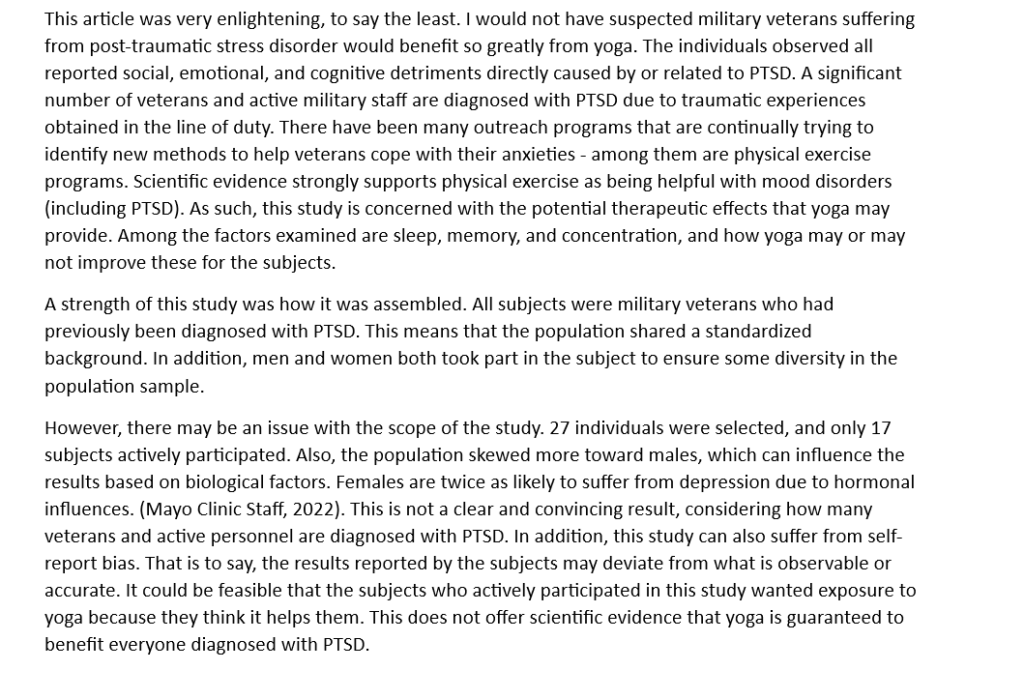
Sample Solution
This article was very enlightening, to say the least. I would not have suspected military veterans suffering from post-traumatic stress disorder would benefit so greatly from yoga. The individuals observed all reported social, emotional, and cognitive detriments directly caused by or related to PTSD. A significant number of veterans and active military staff…..Click below to access the full sample solution (PDF)

