NURS-3150 Week 4: Assignment Methods Used in Qualitative Research

Preparing for the Assignment

Achieving credible and trustworthy results in qualitative research requires careful planning and thoughtful execution of research methods. Unlike quantitative studies that focus on numbers, qualitative research focuses on understanding experiences, perceptions, and meanings. Because of this, the research process must be designed carefully to ensure that findings accurately reflect participants’ perspectives.

This assignment focuses on reviewing a qualitative research article and identifying key elements used in the research process. These elements include research design, sample selection, data collection methods, and plans for interpretive data analysis. Each of these components plays an important role in determining whether the study findings can be considered trustworthy.

The assignment also requires the use of a Journal Club Template, which organizes information into structured sections. This template helps ensure that each important research component is clearly identified and summarized.


What This Assignment Is Really Testing

This assignment focuses on the ability to analyze qualitative research methods rather than simply reading the article.

The main skills being assessed include:

  • Understanding qualitative research design
  • Identifying sample selection methods
  • Recognizing data collection approaches used in qualitative studies
  • Evaluating interpretive data analysis plans
  • Identifying strengths and weaknesses based on trustworthiness
  • Summarizing research elements clearly using a structured format
  • Supporting evaluation points using additional scholarly sources

Understanding these expectations helps maintain focus while reviewing the research article.


Key Elements to Focus On While Reviewing the Study

The Journal Club Template separates the research study into major components. These sections should be carefully reviewed before completing the template.

Research Design

Focus on identifying the type of qualitative design used in the study. The design should align with the research question and allow exploration of participant experiences or perspectives.

Look for:

  • Type of qualitative design
  • Purpose of the design
  • How well the design fits the research problem
Sample Selection

Careful sample selection is important in qualitative studies because participants are chosen based on their ability to provide meaningful insights.

Pay attention to:

  • Number of participants
  • Selection method used
  • Inclusion criteria
  • Relevance of participants to the research question
Data Collection Methods

Qualitative data collection focuses on gathering detailed descriptions and participant experiences.

Watch for:

  • Type of data collection method used
  • Consistency in the collection process
  • Depth and quality of collected information
Plan for Data Analysis

Qualitative analysis involves interpreting participant responses to identify patterns or themes.

Focus on:

  • How data was organized
  • Methods used to interpret findings
  • Whether analysis procedures were clearly described
Strengths and Weaknesses Based on Trustworthiness

Qualitative research uses trustworthiness to measure the quality of findings. This includes credibility, dependability, confirmability, and transferability.

Consider:

  • What parts of the method strengthened trustworthiness
  • What limitations may reduce confidence in findings
  • Whether additional support was provided to justify methods

How to Approach This Assignment

Begin by reviewing the learning materials related to qualitative research methods to refresh understanding of key components such as sampling, data collection, and interpretive analysis. After reviewing these concepts, read the assigned research article carefully, focusing first on the methods section where most research details are located. While reading, identify where each required element appears in the study and make short notes that describe each section in simple terms.

Instead of copying long explanations from the article, concentrate on understanding the purpose of each research step. After identifying the study components, review the information again to determine which aspects appear strong and which may present limitations. When identifying strengths and weaknesses, think about how each research decision supports or reduces trustworthiness. Supporting sources should be used to explain why certain methods are considered effective or limited. Once all elements are understood, transfer summarized notes into the required template, keeping responses brief and focused.


Sample Solution
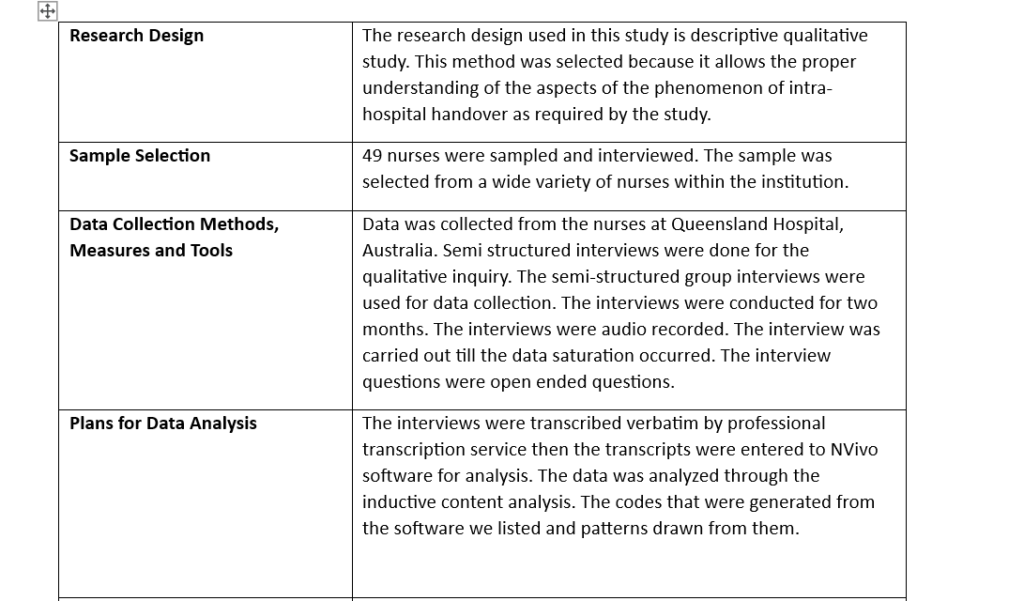
Research Design The research design used in this study is descriptive qualitative study. This method was selected because it allows the proper understanding of the aspects of the phenomenon of intra-hospital handover as required by the study.

Click below to access the full sample solution (PDF)