
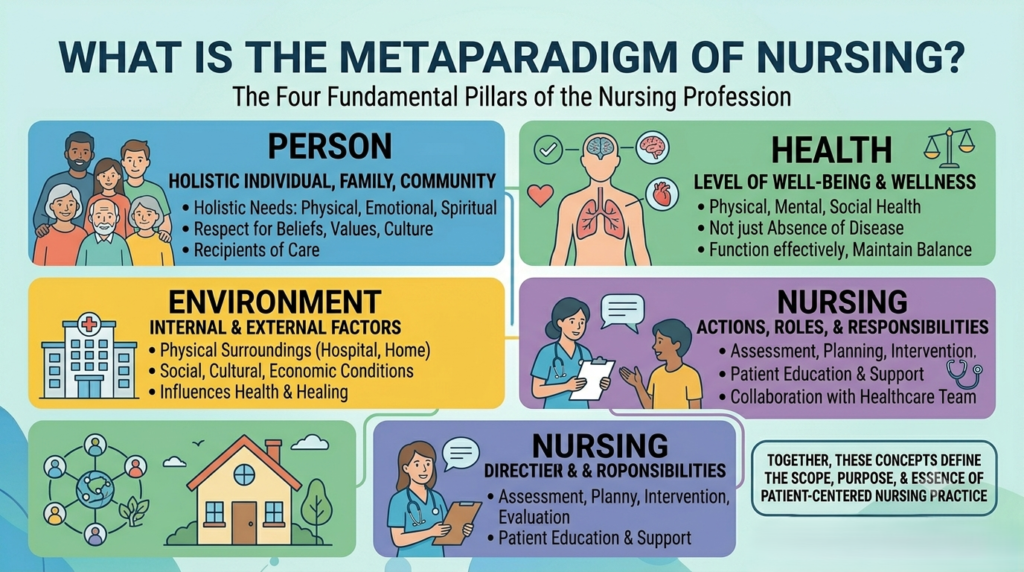
The metaparadigm of nursing refers to the broadest and most abstract framework that defines the nursing profession. It consists of four fundamental concepts that describe the focus and purpose of nursing practice. These concepts include person, health, environment, and nursing, which together explain how nurses provide care and support patient well-being. The metaparadigm helps organize nursing knowledge and provides a foundation for developing nursing theories and models.
The concept of the metaparadigm is important because it gives nurses a clear understanding of their roles and responsibilities in patient care. It helps explain how different elements of healthcare are connected and how nursing actions influence patient outcomes. By understanding the metaparadigm, nurses can deliver care that is holistic, patient-centered, and focused on improving health across different healthcare settings.
Components of the Metaparadigm of Nursing
The metaparadigm of nursing consists of four main components. Each component represents a key area that influences nursing care and patient outcomes.
- Person
The person refers to the individual receiving care, including patients, families, groups, or communities. In nursing, the person is viewed as a holistic being with physical, emotional, social, and spiritual needs. Nurses consider individual beliefs, values, culture, and personal experiences when providing care. Understanding the person helps nurses deliver patient-centered care that respects individuality and promotes dignity. - Health
Health refers to the level of wellness or well-being experienced by the person. It includes physical, mental, emotional, and social health. Health is not simply the absence of disease but the ability to function effectively and maintain balance in daily life. Nurses promote health by preventing illness, managing disease, and supporting recovery, rehabilitation, and healthy lifestyles. - Environment
The environment includes all internal and external factors that influence a person’s health and well-being. This may include physical surroundings such as hospitals, homes, and communities, as well as social, cultural, and economic conditions. Nurses assess environmental factors to ensure safe and supportive conditions that promote healing and prevent complications. - Nursing
Nursing refers to the actions, roles, and responsibilities performed by nurses to support patient health. It involves assessment, diagnosis, planning, implementation, and evaluation of patient care. Nursing also includes patient education, emotional support, and collaboration with other healthcare professionals. This component emphasizes the skills and knowledge nurses use to improve health outcomes.
Importance of the Metaparadigm of Nursing
The metaparadigm of nursing is important because it provides a clear framework that guides nursing education, research, and clinical practice. It helps nurses understand the relationship between patients, their health status, their environment, and the care provided by nurses. By using this framework, nurses can develop comprehensive care plans that address multiple aspects of patient health rather than focusing only on physical symptoms.
Another important role of the metaparadigm is its ability to support holistic care. By considering all four components, nurses can identify factors that influence recovery and overall well-being. This approach improves patient safety, enhances communication among healthcare providers, and promotes better health outcomes. It also strengthens professional identity by defining the unique role of nursing in healthcare.
Application of the Metaparadigm of Nursing in Practice
The metaparadigm of nursing is applied daily in clinical practice to guide patient care and decision-making. Nurses assess the person by gathering information about physical health, emotional needs, and cultural background. They evaluate the health status by identifying illnesses, symptoms, and risk factors. Nurses also consider the environment, such as cleanliness, safety, and social support, to ensure conditions that promote healing. Finally, nurses apply nursing interventions, including treatment, education, and monitoring, to support recovery and maintain health.
In addition to guiding patient care, the metaparadigm supports professional growth and effective teamwork. Nurses use these four components to communicate clearly with other healthcare providers and to develop individualized care plans. By applying the metaparadigm in real-life situations, nurses can provide holistic, patient-centered care that addresses physical, emotional, social, and environmental needs while improving overall patient outcomes.