
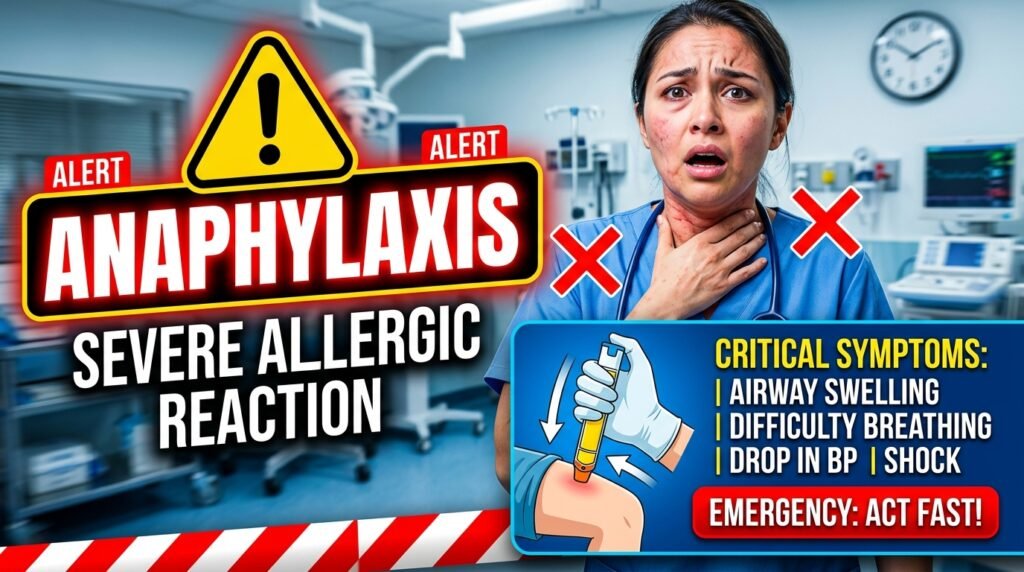
Anaphylaxis is a severe, rapid allergic reaction that can become life-threatening without immediate treatment. It can affect several body systems at the same time, particularly the airway, breathing, and circulation. Recognizing the early warning signs and providing prompt emergency treatment are essential for preventing serious complications.
What Is Anaphylaxis?
Anaphylaxis is a severe systemic allergic reaction that develops rapidly after exposure to a trigger. The immune response causes the release of substances such as histamine and other inflammatory mediators, which can lead to airway swelling, breathing difficulties, blood vessel dilation, and a sudden drop in blood pressure.
Anaphylaxis can occur within minutes of exposure, although the timing can vary. A person may develop severe symptoms even without having experienced an allergic reaction to the same substance before.
Common Causes of Anaphylaxis
Anaphylaxis can be triggered by a variety of substances. Common triggers include:
- Foods such as peanuts, tree nuts, shellfish, fish, milk, and eggs
- Medications such as certain antibiotics and pain medicines
- Insect stings, particularly from bees and wasps
- Latex
- Certain medical procedures or substances
In some cases, a clear trigger cannot be identified. This is sometimes referred to as idiopathic anaphylaxis.
Symptoms of Anaphylaxis
Anaphylaxis can affect multiple body systems. Symptoms may develop suddenly and worsen quickly.
Skin Symptoms
Skin symptoms are common but may not always be present. They can include:
- Hives
- Itching
- Flushing
- Red or warm skin
- Swelling of the lips, face, or eyelids
Respiratory Symptoms
Airway and breathing problems are important warning signs. They may include:
- Difficulty breathing
- Wheezing
- Tightness in the chest
- Hoarse voice
- Difficulty swallowing
- Swelling of the tongue or throat
- Noisy or obstructed breathing
Cardiovascular Symptoms
Anaphylaxis can cause a sudden reduction in blood pressure and problems with circulation. Signs may include:
- Dizziness
- Weakness
- Fainting
- Rapid pulse
- Pale or clammy skin
- Loss of consciousness
Gastrointestinal Symptoms
Some people may develop:
- Severe abdominal pain
- Nausea
- Vomiting
- Diarrhea
Not every person will experience all of these symptoms.
Emergency Treatment for Anaphylaxis
Anaphylaxis is a medical emergency. Epinephrine is the first-line treatment and should be administered promptly when anaphylaxis is suspected.
After epinephrine is administered, emergency medical services should be contacted immediately. The person should be monitored because symptoms can persist, worsen, or return after initial improvement.
Additional medical treatment may include oxygen, intravenous fluids, bronchodilators, and other medications depending on the patient’s condition. These treatments support the patient but do not replace epinephrine as the first-line treatment for anaphylaxis.
What to Do During an Anaphylactic Reaction
If anaphylaxis is suspected:
- Administer epinephrine promptly if available and prescribed.
- Call emergency medical services immediately.
- Keep the person in an appropriate position and avoid allowing them to stand or walk unnecessarily.
- Monitor breathing and responsiveness.
- If the person becomes unresponsive and is not breathing normally, begin CPR and follow emergency instructions.
- A second dose of epinephrine may be needed if symptoms persist or return, according to the prescribed emergency plan and available medical guidance.
Risk Factors for Anaphylaxis
Some factors can increase the risk of experiencing severe allergic reactions or complications. These may include:
- A previous history of anaphylaxis
- Known food, medication, or insect venom allergies
- Asthma, particularly when poorly controlled
- Certain underlying medical conditions
- Delayed administration of epinephrine after symptoms begin
Having an allergy does not mean that anaphylaxis will definitely occur, but people with known severe allergies should understand their individual risk and emergency plan.
Prevention of Anaphylaxis
Preventing anaphylaxis mainly involves avoiding known triggers and preparing for accidental exposure.
Important measures include:
- Identifying known allergens
- Reading food and medication labels carefully
- Informing healthcare professionals about medication allergies
- Taking precautions to avoid known insect-sting triggers
- Wearing or carrying medical identification when recommended
- Keeping prescribed epinephrine accessible
- Having a written allergy emergency plan
Family members, caregivers, teachers, and other people who regularly assist someone at risk should know how to respond to an emergency.
Importance of Anaphylaxis Recognition in Nursing
Nurses play a critical role in recognizing anaphylaxis and initiating emergency care. Rapid assessment of the patient’s airway, breathing, circulation, skin, and level of consciousness can help identify a deteriorating patient.
Nurses may administer prescribed emergency medications, monitor vital signs, provide supportive care, document the reaction, and educate patients about allergen avoidance and emergency preparedness.
Note
- Anaphylaxis is a severe and potentially life-threatening allergic reaction.
- It can cause skin, respiratory, cardiovascular, and gastrointestinal symptoms.
- Difficulty breathing, throat swelling, dizziness, and loss of consciousness are important warning signs.
- Epinephrine is the first-line treatment for anaphylaxis.
- Emergency medical care is required after suspected anaphylaxis.
- People at risk should avoid known triggers and have an emergency action plan.