
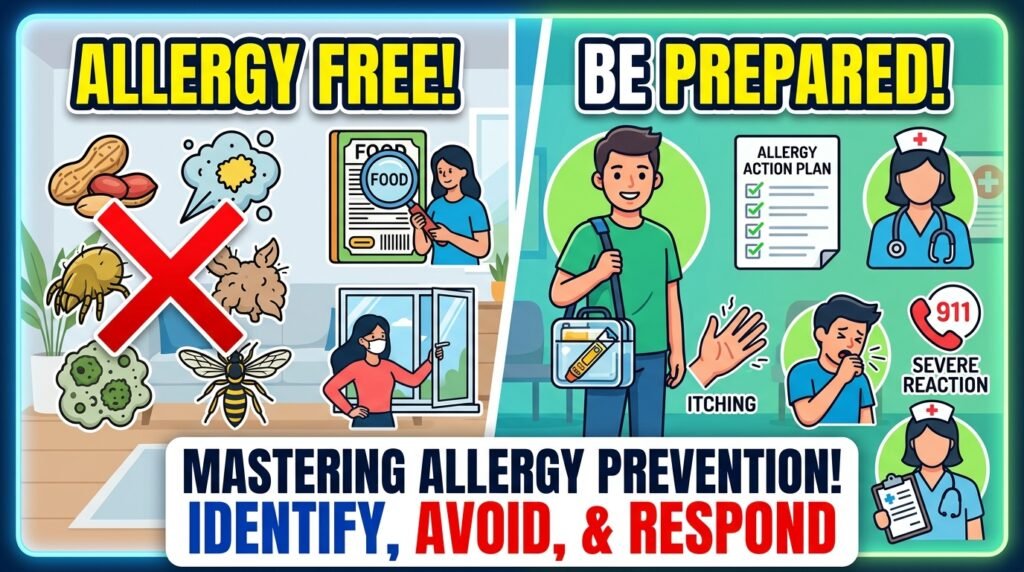
Allergic reactions can often be reduced by identifying and avoiding known allergens. Prevention is especially important for people who have previously experienced allergic reactions because repeated exposure may cause symptoms to return or become severe. Simple precautions at home, at work, and when eating or taking medications can help reduce exposure to common allergens.
How Can Allergic Reactions Be Prevented?
The most effective way to prevent an allergic reaction is to identify the specific allergen and avoid exposure whenever possible. People with known allergies should understand their triggers, recognize early symptoms, and follow the treatment or emergency plan provided by their healthcare professional.
Prevention strategies depend on the type of allergy. Someone with a food allergy may need to carefully check food labels, while someone with a pollen allergy may need to reduce outdoor exposure during periods of high pollen.
Identify Your Allergy Triggers
Knowing what causes an allergic reaction is an important first step in prevention. Allergy testing and medical evaluation can help identify suspected triggers.
Common allergens include:
- Foods
- Pollen
- Dust mites
- Animal dander
- Mold
- Insect venom
- Medications
- Latex
Keeping a record of symptoms and possible exposures can also help identify patterns.
Avoid Known Food Allergens
People with food allergies should avoid foods that have been identified as triggers. Reading food labels carefully is important because allergens may be present in packaged foods or included as ingredients in unexpected products.
Useful precautions include:
- Check food labels before eating
- Ask about ingredients when eating outside the home
- Avoid foods with unclear ingredients
- Prevent cross-contact between allergenic and safe foods
- Inform restaurants, schools, workplaces, or caregivers about the allergy
People with severe food allergies should follow the emergency plan provided by their healthcare professional.
Reduce Exposure to Environmental Allergens
Environmental allergens such as pollen, dust mites, mold, and animal dander can trigger respiratory or skin symptoms.
Helpful measures include:
- Keeping indoor spaces clean
- Washing bedding regularly
- Reducing dust accumulation
- Keeping indoor humidity at appropriate levels
- Addressing visible mold
- Keeping pets away from areas where symptoms are triggered
- Limiting outdoor exposure when pollen levels are high
The appropriate measures depend on the specific allergen involved.
Prevent Insect Sting Reactions
People who are allergic to insect venom should take precautions to reduce the risk of stings.
When outdoors, consider:
- Wearing shoes rather than walking barefoot
- Avoiding brightly colored clothing and strong fragrances when appropriate
- Keeping food and drinks covered outdoors
- Avoiding areas with known insect nests
- Wearing protective clothing when necessary
People with a history of severe insect-sting reactions should follow their prescribed emergency plan.
Avoid Medications That Cause Allergic Reactions
People who have experienced a medication allergy should inform healthcare professionals about it before receiving new medications.
It is important to:
- Tell doctors, nurses, dentists, and pharmacists about known drug allergies
- Keep an updated record of medication allergies
- Check medications before taking them
- Avoid taking a medication that has previously caused a serious allergic reaction unless specifically directed by a qualified healthcare professional
Accurate documentation can help prevent accidental exposure in healthcare settings.
Protect Yourself From Occupational Allergens
Some workplaces involve exposure to substances that may trigger allergic reactions. Healthcare, laboratory, agricultural, manufacturing, and cleaning workers may encounter latex, chemicals, dust, or other potential allergens.
Appropriate protective equipment, workplace controls, and following safety procedures can help reduce exposure.
Carry Emergency Medication When Prescribed
People at risk of anaphylaxis may be prescribed an epinephrine auto-injector. It should be kept accessible rather than stored somewhere that is difficult to reach during an emergency.
Patients should know:
- When to use the epinephrine auto-injector
- How to use it correctly
- How to store it according to the manufacturer’s instructions
- When to seek emergency medical care after using it
Recognize Early Symptoms
Recognizing the early signs of an allergic reaction can help a person respond promptly. Symptoms may include itching, hives, swelling, sneezing, coughing, vomiting, or changes in breathing.
More serious symptoms such as difficulty breathing, throat or tongue swelling, dizziness, fainting, or signs of poor circulation may indicate anaphylaxis and require emergency treatment.
Have an Allergy Action Plan
People with significant allergies should have a clear plan for what to do if exposure occurs. The plan should identify known triggers, early symptoms, prescribed medications, and when emergency medical care should be sought.
Family members, caregivers, teachers, and other people who regularly assist the individual should also understand the plan when appropriate.
Importance of Allergy Prevention in Nursing
Nurses help patients prevent allergic reactions by identifying risk factors, documenting known allergies, providing education, and reinforcing appropriate avoidance strategies.
In healthcare settings, accurate allergy documentation is particularly important because it helps healthcare professionals identify potential risks before administering medications, treatments, or other substances.
Note
- Identifying and avoiding known allergens is an important part of allergy prevention.
- People with food allergies should carefully check food labels and prevent cross-contact.
- Environmental allergies may require measures to reduce exposure to pollen, dust mites, mold, or animal dander.
- Medication allergies should be clearly communicated to healthcare professionals.
- People at risk of anaphylaxis should follow their emergency action plan and carry prescribed epinephrine.
- Recognizing early symptoms can help people respond quickly to an allergic reaction.