
Topic: Antidepressants
Antidepressants are commonly prescribed to manage depression, anxiety disorders, and other mental health conditions. Although these medications can improve symptoms and support long-term mental health, stopping them suddenly may cause physical and psychological symptoms known as antidepressant discontinuation syndrome.
These symptoms can develop when a person abruptly stops taking an antidepressant, reduces the dose too quickly, or misses several doses. Some people experience mild discomfort, while others develop more noticeable symptoms that interfere with daily activities.
Understanding antidepressant withdrawal is important for patients, nurses, and other healthcare professionals because it helps distinguish medication discontinuation symptoms from a return of the underlying mental health condition. It also highlights the importance of gradual dose reduction and appropriate clinical monitoring.
What Is Antidepressant Withdrawal?
Antidepressant withdrawal, more accurately called antidepressant discontinuation syndrome, refers to a group of symptoms that may occur when a person stops taking an antidepressant or significantly reduces its dose.
Antidepressants influence neurotransmitter systems involved in mood regulation, particularly serotonin and norepinephrine. Over time, the nervous system adapts to the medication’s effects. When the medication is suddenly removed, the body may need time to adjust to the change.
This adjustment can produce temporary physical, emotional, and neurological symptoms.
Antidepressant discontinuation syndrome does not necessarily mean that a person is addicted to the medication. Antidepressants are generally not considered addictive in the same way as substances that produce compulsive drug-seeking behavior. However, the body can become physically adapted to their effects, making gradual discontinuation important.
What Causes Antidepressant Withdrawal Symptoms?
Withdrawal symptoms occur because the nervous system has adapted to the presence of an antidepressant. When medication levels decrease rapidly, neurotransmitter signaling may change before the body has adjusted.
Several factors can contribute to antidepressant discontinuation syndrome.
1. Abruptly Stopping Medication
Stopping an antidepressant without gradually reducing the dose is a common cause of discontinuation symptoms. The sudden change may disrupt the body’s adaptation to the medication.
2. Reducing the Dose Too Quickly
Even when a person does not stop medication completely, reducing the dose too rapidly may trigger symptoms. Some individuals require a slower reduction schedule than others.
3. Missing Medication Doses
Missing several doses or taking medication inconsistently can cause medication levels to fall. This is particularly important for antidepressants with shorter half-lives.
4. Switching Antidepressants
Changing from one antidepressant to another without an appropriate transition plan may cause discontinuation symptoms or other medication-related complications.
5. Differences in Medication Half-Life
The half-life of a medication refers to the time required for its concentration in the body to decrease by approximately half.
Antidepressants with shorter half-lives generally leave the body more quickly and may be associated with a greater risk of discontinuation symptoms.
For example:
- Paroxetine: Has a relatively short half-life and is associated with a higher risk of discontinuation symptoms.
- Venlafaxine: Also has a relatively short half-life and can produce noticeable symptoms after missed doses or abrupt discontinuation.
- Fluoxetine: Has a long half-life, including through its active metabolite, and is generally associated with a lower risk of discontinuation symptoms.
Common Antidepressant Withdrawal Symptoms
Symptoms vary depending on the medication, dosage, duration of treatment, and individual response. They may affect physical health, emotional well-being, and neurological functioning.
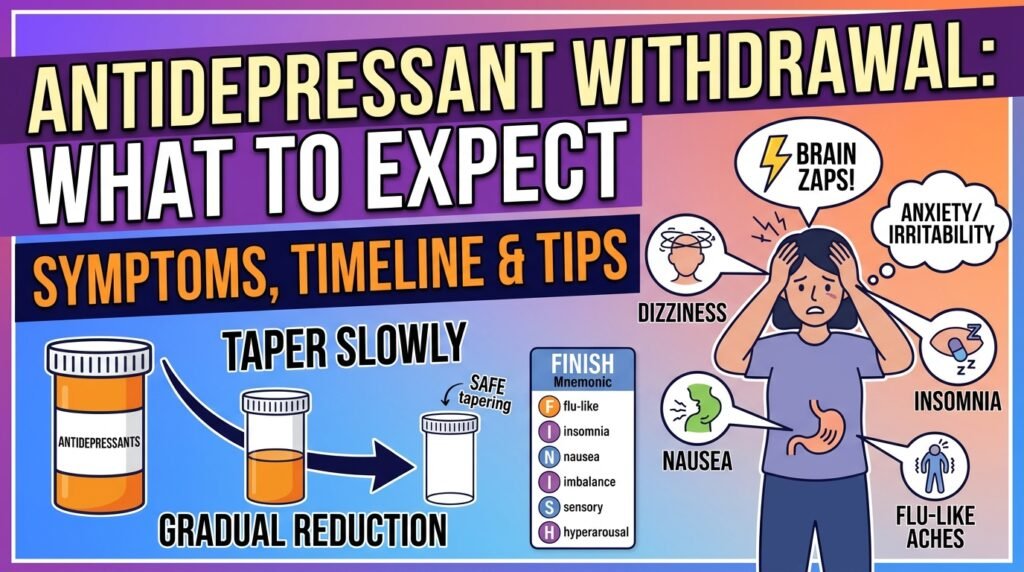
A commonly used way to remember the symptoms is the FINISH mnemonic.
1. Flu-Like Symptoms
Some individuals experience symptoms similar to those associated with influenza.
These may include:
- Fatigue and general weakness.
- Headaches.
- Muscle aches.
- Sweating.
- Chills.
2. Insomnia and Sleep Disturbances
Changes in medication levels may affect sleep regulation.
Possible symptoms include:
- Difficulty falling asleep.
- Frequent nighttime waking.
- Unusual or vivid dreams.
- Nightmares.
- Restlessness during sleep.
3. Nausea
Digestive symptoms are also common during antidepressant discontinuation.
They may include:
- Nausea.
- Vomiting.
- Diarrhea.
- Abdominal discomfort.
- Reduced appetite.
4. Imbalance and Dizziness
Neurological and balance-related symptoms may develop when medication levels decrease.
Examples include:
- Dizziness.
- Lightheadedness.
- Vertigo.
- Difficulty maintaining balance.
- Sensations commonly described as electric shocks or brain zaps.
Brain zaps are brief, unusual electrical-like sensations that some individuals experience, particularly when discontinuing certain antidepressants.
5. Sensory Disturbances
Some individuals experience changes in how they perceive physical sensations.
These may include:
- Tingling sensations.
- Numbness.
- Increased sensitivity to movement.
- Unusual visual sensations.
- Electric-shock-like feelings in the head or body.
6. Hyperarousal
Hyperarousal refers to increased nervous system activity that may cause emotional and physical discomfort.
Possible symptoms include:
- Anxiety.
- Irritability.
- Agitation.
- Restlessness.
- Increased emotional sensitivity.
Not everyone experiences all these symptoms. Some individuals have only mild discomfort, while others may experience several symptoms at the same time.
How Long Do Antidepressant Withdrawal Symptoms Last?
The duration of antidepressant withdrawal varies between individuals and depends on factors such as the medication, half-life, dosage, treatment duration, and speed of dose reduction.
In many cases, symptoms begin within a few days of stopping or reducing medication. They often improve within one to two weeks, although some individuals experience symptoms for longer.
A general timeline may look like this:
| Period | What May Happen |
|---|---|
| First few days | Symptoms such as dizziness, nausea, headaches, and sleep disturbances may begin. |
| First one to two weeks | Symptoms may become more noticeable before gradually improving. |
| Following weeks | Many individuals experience continued improvement, although some symptoms may persist. |
| Longer periods | A smaller number of individuals report prolonged or persistent symptoms that require clinical assessment. |
This timeline is not the same for everyone. Some antidepressants, particularly those with longer half-lives, may produce delayed or less noticeable discontinuation symptoms.
Which Antidepressants Have a Higher Risk of Withdrawal Symptoms?
The likelihood of experiencing discontinuation symptoms differs among antidepressants.
Medications with shorter half-lives are generally more likely to produce symptoms when stopped abruptly.
Examples include:
Higher risk:
- Paroxetine (Paxil).
- Venlafaxine (Effexor).
- Desvenlafaxine (Pristiq).
Generally lower risk:
- Fluoxetine (Prozac), because of its long half-life and active metabolite.
Other antidepressants, including sertraline, escitalopram, duloxetine, and tricyclic antidepressants, can also cause discontinuation symptoms.
A lower risk does not mean that withdrawal symptoms are impossible. The likelihood and severity vary between individuals.
Antidepressant Withdrawal vs. Depression Relapse
One important clinical challenge is distinguishing antidepressant discontinuation syndrome from a relapse of depression or another underlying mental health condition.
Although both can involve emotional changes, they have different causes and patterns.
| Feature | Antidepressant Withdrawal | Depression Relapse |
|---|---|---|
| Cause | Reduction or sudden removal of antidepressant medication | Return of the underlying depressive condition |
| Onset | Often begins within days of dose reduction or discontinuation | May develop over weeks or months |
| Physical symptoms | Dizziness, nausea, flu-like symptoms, and brain zaps may occur | Physical symptoms may include fatigue and sleep or appetite changes |
| Emotional symptoms | Anxiety, irritability, and mood changes | Persistent sadness, hopelessness, and loss of interest |
| Duration | Often improves over days or weeks, but can last longer | May persist or worsen without appropriate treatment |
The distinction is not always straightforward. Withdrawal symptoms and depression relapse can also occur together.
Healthcare professionals consider the timing of symptoms, medication history, physical findings, and changes in mental health when making this assessment.
How Can Antidepressant Withdrawal Be Managed?
Antidepressant discontinuation should be planned with a qualified healthcare professional. Patients should not abruptly stop medication or create their own dose-reduction schedules.
1. Gradual Dose Reduction
Gradual dose reduction, commonly called tapering, involves decreasing the medication dose over time rather than stopping suddenly.
The tapering schedule depends on the specific antidepressant, dosage, duration of treatment, previous withdrawal experiences, and the individual’s response.
Some patients may require a reduction over several weeks, while others may need a slower process lasting several months or longer.
2. Monitoring Symptoms
Healthcare professionals should assess patients throughout the discontinuation process.
Monitoring may include:
- Physical symptoms such as dizziness, nausea, and headaches.
- Changes in sleep patterns.
- Anxiety, irritability, and mood changes.
- Return of depressive or anxiety symptoms.
- Suicidal thoughts or other signs of clinical deterioration.
3. Adjusting the Tapering Schedule
If symptoms become difficult to tolerate, the prescribing clinician may recommend adjusting the reduction schedule.
In selected cases, the clinician may consider returning to a previously tolerated dose before attempting a slower taper. This decision depends on individual assessment.
4. Patient Education and Support
Patients should understand that discontinuation symptoms can occur even when antidepressants have been taken correctly.
Education should cover the importance of following the prescribed tapering schedule, attending follow-up appointments, and reporting new or worsening symptoms.
5. Psychological Support
Psychological support can help patients manage emotional changes during antidepressant discontinuation.
Depending on individual needs, support may include psychotherapy, cognitive behavioral therapy (CBT), stress-management techniques, and appropriate social support.
When Should Someone Seek Medical Attention?
Most antidepressant discontinuation symptoms are not life-threatening, but some situations require prompt medical assessment.
Patients should contact their healthcare professional if they experience:
- Severe or persistent dizziness.
- Repeated vomiting or difficulty maintaining hydration.
- Significant anxiety, agitation, or confusion.
- Symptoms that interfere with normal daily activities.
- A return or worsening of depressive symptoms.
- New or worsening suicidal thoughts.
Suicidal thoughts, inability to remain safe, severe confusion, or other serious psychiatric symptoms require immediate emergency assessment.
Patients should not assume that every emotional or physical change after stopping medication is simply withdrawal.
The Role of Nurses in Antidepressant Discontinuation
Nurses contribute to safe antidepressant discontinuation through patient education, medication monitoring, and early identification of complications.
1. Medication History and Reconciliation
Nurses should review the patient’s current and previous antidepressants, dosage, duration of treatment, missed doses, and recent medication changes.
2. Recognition of Discontinuation Symptoms
Nurses should recognize common symptoms such as dizziness, nausea, insomnia, flu-like symptoms, sensory disturbances, anxiety, and irritability.
3. Monitoring Mental Health
Regular assessment helps identify changes in mood, depressive symptoms, anxiety, and suicidal thoughts. Nurses should distinguish possible withdrawal symptoms from signs of relapse and communicate concerns to the prescribing clinician.
4. Patient Education
Patients should be advised not to stop antidepressants suddenly or change their doses without professional guidance. They should also understand the importance of attending follow-up appointments.
5. Communication and Documentation
Nurses should document reported symptoms, medication changes, assessment findings, and patient responses. Clear communication with the prescribing clinician supports safe and coordinated care.
Key Takeaways
- Antidepressant withdrawal, clinically known as discontinuation syndrome, can occur when medication is stopped suddenly or reduced too quickly.
- Common symptoms include dizziness, nausea, headaches, insomnia, flu-like symptoms, anxiety, and brain zaps.
- Symptoms often begin within a few days, although their duration varies.
- Paroxetine and venlafaxine are associated with a higher risk of discontinuation symptoms, while fluoxetine generally has a lower risk because of its long half-life.
- Antidepressant withdrawal is different from depression relapse, although both can occur together.
- Gradual dose reduction under professional guidance helps reduce the risk and severity of discontinuation symptoms.
- Nurses support safe discontinuation through medication review, patient education, symptom monitoring, and timely communication with healthcare professionals.