
Topic: Antidepressants
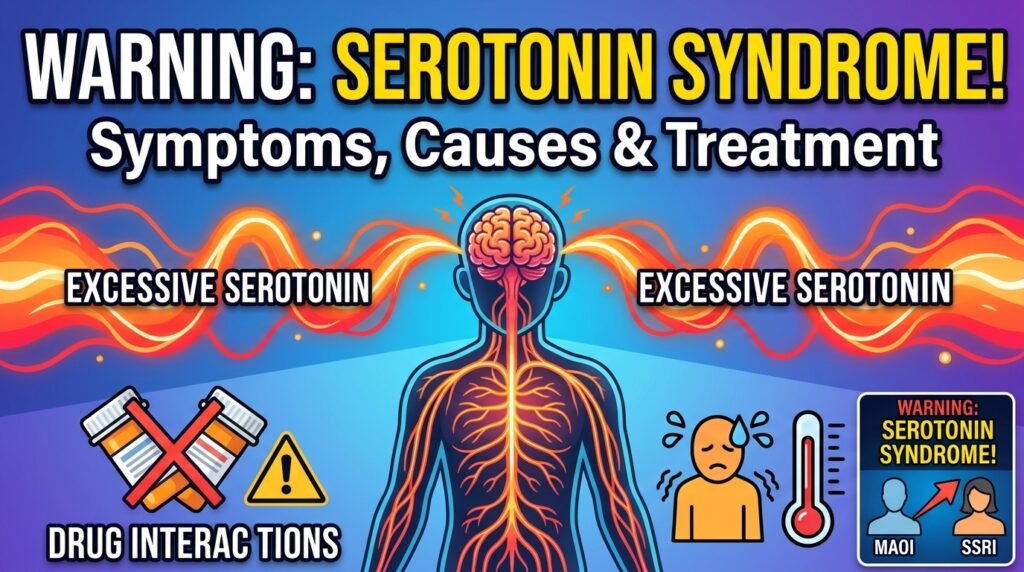
Serotonin syndrome is a potentially life-threatening condition that occurs when there is excessive serotonin activity in the central and peripheral nervous systems. It most commonly develops after taking medications that increase serotonin levels or activity, particularly when multiple serotonergic medications are used together or medication doses are increased.
Serotonin plays an important role in regulating mood, sleep, digestion, body temperature, and other physiological functions. Although medications that affect serotonin are widely used to treat depression, anxiety, and other conditions, excessive serotonergic activity can cause a range of symptoms, from mild agitation to severe neurological and cardiovascular complications.
Understanding the causes, warning signs, and treatment of serotonin syndrome is essential for nurses and other healthcare professionals involved in medication management.
What Causes Serotonin Syndrome?
Serotonin syndrome usually results from excessive serotonergic activity caused by medication use. It can occur when a person takes one serotonergic medication at a high dose, combines multiple serotonergic medications, or experiences a medication interaction.
Common medication groups associated with serotonin syndrome include:
- Selective serotonin reuptake inhibitors (SSRIs): Examples include fluoxetine, sertraline, escitalopram, and paroxetine.
- Serotonin-norepinephrine reuptake inhibitors (SNRIs): Examples include venlafaxine and duloxetine.
- Monoamine oxidase inhibitors (MAOIs): Examples include phenelzine and tranylcypromine.
- Tricyclic antidepressants (TCAs): Certain medications, particularly clomipramine, have significant serotonergic activity.
- Other medications: Tramadol, dextromethorphan, linezolid, lithium, and some migraine medications, such as triptans, may contribute to serotonergic interactions.
Some illicit substances, including MDMA and amphetamines, can also increase serotonin activity.
Common Risk Factors
Several situations may increase the risk of serotonin syndrome:
- Combining two or more medications that increase serotonin activity.
- Increasing the dose of a serotonergic medication.
- Starting another serotonergic medication without an appropriate medication review.
- Switching between antidepressants without observing the required washout period.
- Taking medications that interact with existing psychiatric prescriptions.
- Accidental overdose of serotonergic medication.
Not every combination of serotonergic medications causes serotonin syndrome. However, certain combinations, particularly those involving MAOIs, can create a substantial risk.
Symptoms of Serotonin Syndrome
Symptoms can develop within hours of starting a new medication, increasing a dose, or combining medications. The severity varies depending on the degree of serotonergic activity.
Symptoms are commonly grouped into three categories: mental status changes, autonomic nervous system changes, and neuromuscular abnormalities.
1. Mental Status Changes
Excessive serotonin activity can affect normal brain function and cause changes in behavior and awareness.
Possible symptoms include:
- Agitation and restlessness
- Anxiety
- Confusion
- Increased alertness or difficulty remaining calm
- Delirium
- Reduced consciousness in severe cases
2. Autonomic Nervous System Changes
The autonomic nervous system regulates involuntary functions such as heart rate, blood pressure, sweating, and body temperature.
Possible symptoms include:
- Excessive sweating
- Fever or elevated body temperature
- Rapid heart rate (tachycardia)
- High or fluctuating blood pressure
- Dilated pupils
- Diarrhea
- Nausea and vomiting
Severe cases may involve dangerously high body temperature and significant cardiovascular instability.
3. Neuromuscular Abnormalities
Neuromuscular symptoms are particularly important when assessing suspected serotonin syndrome.
They include:
- Tremors
- Muscle twitching
- Increased muscle reflexes (hyperreflexia)
- Muscle rigidity
- Repetitive, involuntary muscle contractions (clonus)
- Difficulty coordinating movements
Clonus and hyperreflexia are especially important clinical findings that help distinguish serotonin syndrome from other conditions.
How Is Serotonin Syndrome Diagnosed?
Serotonin syndrome is primarily diagnosed through clinical assessment. There is no single laboratory test that confirms the condition.
Healthcare professionals evaluate the patient’s medication history, recent medication changes, symptoms, and physical examination findings.
Hunter Serotonin Toxicity Criteria
The Hunter Serotonin Toxicity Criteria are commonly used to help identify serotonin toxicity in patients with a history of serotonergic medication exposure.
The criteria consider specific combinations of neuromuscular findings and other symptoms.
A patient with serotonergic exposure may meet the criteria if they have any of the following:
- Spontaneous clonus.
- Inducible clonus accompanied by agitation or sweating.
- Ocular clonus accompanied by agitation or sweating.
- Tremor accompanied by hyperreflexia.
- Muscle hypertonia, temperature above 38°C, and ocular or inducible clonus.
These findings help clinicians recognize serotonin toxicity and distinguish it from other medication-related conditions.
Additional Assessments
Although laboratory tests do not directly diagnose serotonin syndrome, they may help identify complications and rule out other conditions.
Depending on the patient’s presentation, investigations may include:
- Electrolyte levels and kidney function tests.
- Creatine kinase (CK) to assess possible muscle breakdown.
- Liver function tests.
- Blood glucose levels.
- Electrocardiogram (ECG) to evaluate cardiac activity.
- Additional tests to investigate alternative causes of the symptoms.
Treatment of Serotonin Syndrome
Treatment depends on symptom severity and requires prompt medical assessment. Suspected serotonin syndrome should not be managed independently at home because symptoms can progress rapidly.
1. Discontinuation of the Causative Medications
The first major treatment step is stopping the medications responsible for excessive serotonergic activity under medical supervision.
Healthcare professionals review the patient’s medication history to identify the likely cause and prevent further exposure.
2. Supportive Care
Supportive treatment helps stabilize the patient and manage symptoms while serotonin activity returns toward normal.
Depending on severity, care may include:
- Intravenous fluids to maintain hydration.
- Oxygen therapy when indicated.
- Monitoring of heart rate, blood pressure, temperature, and oxygen saturation.
- Cooling measures for patients with elevated body temperature.
- Monitoring for complications such as muscle breakdown and kidney injury.
Severe cases may require intensive care management.
3. Medications to Control Symptoms
Healthcare professionals may administer medications to manage specific symptoms.
- Benzodiazepines: Medications such as lorazepam may be used to reduce agitation, muscle activity, and seizures.
- Cyproheptadine: This serotonin antagonist may be considered in selected cases when symptoms persist despite supportive care. It is administered orally or through a nasogastric tube when appropriate.
- Other treatments: Severe complications, including respiratory failure and extreme hyperthermia, may require advanced supportive interventions.
Antipyretics such as paracetamol are generally not effective for the severe hyperthermia associated with serotonin syndrome because the elevated temperature results largely from excessive muscle activity rather than a typical fever response.
What Is the Role of Nurses in Managing Serotonin Syndrome?
Nurses play an important role in recognizing early symptoms, identifying medication-related risks, and supporting timely treatment.
Their responsibilities may include:
1. Medication Review
Nurses should obtain an accurate medication history, including prescription medications, over-the-counter products, supplements, and recently discontinued medications. This helps identify potentially harmful drug combinations.
2. Early Recognition of Symptoms
Nurses should monitor patients for agitation, sweating, tremors, hyperreflexia, clonus, and changes in body temperature, particularly after medication initiation or dosage adjustments.
3. Monitoring Vital Signs and Neurological Status
Regular assessment of temperature, heart rate, blood pressure, respiratory status, consciousness, and neuromuscular findings helps identify deterioration.
4. Prompt Communication and Escalation
Suspected serotonin syndrome requires urgent clinical evaluation. Nurses should communicate concerning findings promptly to the prescribing clinician or emergency response team.
5. Patient Education
Patients should understand the importance of taking medications as prescribed, avoiding unapproved medication combinations, and reporting new symptoms. They should also be advised to consult a healthcare professional before starting over-the-counter medications or supplements.
6. Documentation
Accurate documentation of symptoms, medication exposure, assessment findings, interventions, and patient responses supports continuity of care and clinical decision-making.
How Can Serotonin Syndrome Be Prevented?
Prevention focuses on safe prescribing, careful medication management, and patient education.
Important preventive measures include:
- Reviewing all medications before prescribing a new serotonergic drug.
- Avoiding contraindicated medication combinations.
- Following appropriate washout periods when switching between certain antidepressants.
- Starting medications at appropriate doses and monitoring patients after dose changes.
- Educating patients about potential drug interactions.
- Encouraging patients to report unusual symptoms promptly.
- Maintaining accurate and updated medication records.
Healthcare professionals should also consider interactions with over-the-counter medications and supplements, as patients may not recognize that these products can affect serotonin activity.
Serotonin Syndrome vs. Neuroleptic Malignant Syndrome
Serotonin syndrome can resemble neuroleptic malignant syndrome (NMS), another serious medication-related condition associated primarily with dopamine-blocking medications.
Both conditions can involve altered mental status, muscle abnormalities, and elevated body temperature. However, they differ in their usual causes and clinical presentation.
| Feature | Serotonin Syndrome | Neuroleptic Malignant Syndrome |
|---|---|---|
| Common cause | Excessive serotonergic activity | Dopamine receptor blockade |
| Associated medications | SSRIs, SNRIs, MAOIs, and other serotonergic drugs | Antipsychotics and certain dopamine-blocking medications |
| Onset | Often within hours | Usually develops over days |
| Muscle findings | Clonus and hyperreflexia | Generalized muscle rigidity |
| Bowel symptoms | Diarrhea is common | Less characteristic |
| Treatment | Stop causative drugs and provide supportive care; consider cyproheptadine | Stop causative drugs and provide supportive care; selected cases may require additional medication |
Distinguishing between these conditions is important because their causes and management approaches differ.
Key Takeaways
- Serotonin syndrome is a potentially life-threatening condition caused by excessive serotonin activity in the nervous system.
- It commonly occurs after combining serotonergic medications, increasing medication doses, or experiencing drug interactions.
- Symptoms include agitation, sweating, fever, tremors, hyperreflexia, and clonus.
- Diagnosis is based on clinical assessment, medication history, and findings such as those described in the Hunter Serotonin Toxicity Criteria.
- Treatment involves stopping the causative medications, supportive care, symptom management, and close monitoring.
- Nurses contribute to prevention through medication reconciliation, patient education, early recognition, and prompt escalation of care.