Course
NURS-6050N POLICY & ADVOCACY FOR POP HEALTH
Understanding Program and Policy Evaluation
Program and policy evaluation is an important process used in healthcare to determine whether services and policies are working effectively. It involves collecting and analyzing information about healthcare activities, services, and outcomes. The purpose of evaluation is not only to measure success but also to identify areas that need improvement. Through evaluation, healthcare providers can improve patient care, strengthen healthcare programs, and ensure resources are used effectively.
Nurses play a significant role in program and policy evaluation because they interact directly with patients and healthcare systems. Their knowledge of patient needs, safety concerns, and care delivery allows them to provide valuable insight during the evaluation process. By participating in program evaluation, nurses contribute to improving healthcare quality, patient outcomes, and policy effectiveness.
Questions to Address
- Describe the healthcare program or policy outcomes.
- How was the success of the program or policy measured?
- How many people were reached by the program or policy selected?
- How much of an impact was realized with the program or policy selected?
- At what point in program implementation was the program or policy evaluation conducted?
- What data was used to conduct the program or policy evaluation?
- What specific information on unintended consequences was identified?
- What stakeholders were identified in the evaluation of the program or policy?
- Who would benefit most from the results and reporting of the program or policy evaluation?
- Did the program or policy meet the original intent and objectives? Why or why not?
- Would you recommend implementing this program or policy in your place of work? Why or why not?
- Identify at least two ways that you, as a nurse advocate, could become involved in evaluating a program or policy after 1 year of implementation.
How to Approach Each Question
These sections are meant to guide how to think and write, not to give direct answers.
Describe the Healthcare Program or Policy Outcomes
How to Approach
Start by clearly introducing the healthcare program or policy selected for evaluation. Provide background information about what the program focuses on and the problem it was designed to address. The outcomes should reflect the expected results of implementing the program, such as improved patient safety, reduced infection rates, increased healthcare access, or enhanced quality of care.
When writing this section, focus on explaining what success would look like if the program worked as intended. Consider describing the healthcare issue that existed before the program started and how the program aimed to improve that situation. The explanation should make it clear why the program was created and what positive changes were expected to occur as a result of its implementation.
How Was the Success of the Program Measured?
How to Approach
This section should explain the methods used to determine whether the program achieved its goals. Think about how healthcare organizations measure improvement, such as through tracking changes in patient outcomes, monitoring safety records, or reviewing compliance with policies.
Focus on explaining the types of indicators used to measure success. These indicators should be measurable and reliable, allowing healthcare providers to compare results over time. The explanation should also describe why these measurements are important and how they help determine whether the program should continue, be modified, or be replaced.
Some common success indicators include:
- Reduction in infection rates
- Improvement in patient satisfaction
- Increased compliance with healthcare guidelines
- Decrease in hospital readmission rates
- Improved patient recovery outcomes
How Many People Were Reached by the Program?
How to Approach
This section focuses on identifying the number of individuals who benefited from the program or policy. Begin by explaining the target population and describing who the program was intended to serve. This may include patients, healthcare workers, families, or entire communities.
When writing, think about the size of the group affected and how widely the program was implemented. If the program was applied in multiple departments or communities, mention how that expanded its reach. The goal of this section is to demonstrate how many people were influenced by the program and whether it successfully reached the intended audience.
How Much Impact Was Realized With the Program?
How to Approach
In this section, focus on explaining the level of change that occurred after the program was implemented. Impact refers to the difference made by the program in improving health outcomes or healthcare services. Consider describing how conditions improved compared to before the program started.
The explanation should highlight measurable improvements and demonstrate how the program influenced patient safety, healthcare efficiency, or disease prevention. Think about whether the program led to noticeable improvements in quality of care or reduced healthcare risks. This section should make it clear that the program produced meaningful changes.
At What Point Was the Evaluation Conducted?
How to Approach
This section requires identifying when the evaluation took place during the program’s implementation. Evaluation can occur before the program begins, during its implementation, or after it has been completed. Each stage provides different insights into program performance.
Explain why the timing of evaluation is important. For example, early evaluation can identify problems quickly, while later evaluation can measure long-term effectiveness. The discussion should emphasize how conducting evaluations at the right time helps improve program outcomes and ensures continuous improvement.
What Data Was Used to Conduct the Evaluation?
How to Approach
This section focuses on describing the information collected to evaluate the program. Data is essential in healthcare evaluation because it provides evidence to support decision-making. Begin by explaining the types of data collected and how that information helped measure program effectiveness.
Common types of data used in healthcare evaluation include:
- Patient health records
- Infection or disease statistics
- Patient satisfaction surveys
- Staff performance reports
- Healthcare utilization data
When writing, emphasize how reliable data allows healthcare professionals to understand program performance and identify areas needing improvement.
What Unintended Consequences Were Identified?
How to Approach
Unintended consequences are unexpected outcomes that occur during program implementation. These may be positive or negative and can affect patients, staff, or healthcare operations. Begin by explaining why unintended consequences are important to identify.
Discuss how unexpected results may reveal hidden challenges or opportunities for improvement. For example, a program designed to improve safety might increase staff workload or require additional resources. The explanation should highlight how identifying unintended effects helps improve future planning and program design.
What Stakeholders Were Identified in the Evaluation?
How to Approach
Stakeholders are individuals or groups who are involved in or affected by the program. Begin by identifying the key participants who contributed to the evaluation process. This may include healthcare workers, administrators, patients, or policymakers.
Common stakeholders in healthcare evaluation include:
- Nurses
- Physicians
- Hospital administrators
- Patients
- Policy makers
- Public health officials
Explain how each stakeholder contributes to evaluating the program and why their involvement is necessary. The discussion should highlight the importance of teamwork and collaboration in improving healthcare services.
Who Would Benefit Most From the Results?
How to Approach
This section focuses on identifying the individuals or groups who gain the most value from the program’s findings. Begin by explaining how evaluation results can improve healthcare delivery and decision-making.
Discuss how different groups benefit from the results. For example, patients benefit from improved safety, healthcare workers benefit from clearer procedures, and administrators benefit from better resource planning. The explanation should demonstrate how evaluation results support long-term healthcare improvement.
Did the Program Meet the Original Intent and Objectives?
How to Approach
This section requires comparing the program’s outcomes with its original goals. Begin by explaining the objectives that were established at the start of the program. Then describe whether those goals were achieved based on evaluation results.
Focus on analyzing evidence that supports success or identifies areas where the program fell short. The explanation should emphasize the importance of reviewing results carefully before making conclusions about program effectiveness.
Would You Recommend Implementing This Program in Your Workplace?
How to Approach
This section involves making a professional judgment about whether the program should be used in another healthcare setting. Begin by evaluating the strengths and weaknesses of the program. Consider factors such as cost, effectiveness, feasibility, and sustainability.
Explain how the program could benefit patients and healthcare workers if implemented in a different setting. The discussion should provide clear reasoning that supports the recommendation and demonstrates understanding of healthcare improvement.
Identify Ways Nurses Can Become Involved After One Year
How to Approach
This section focuses on the role of nurses in long-term evaluation and improvement. Begin by explaining how nurses continue to support healthcare programs even after initial implementation. Nurses play a critical role in monitoring patient outcomes, identifying challenges, and suggesting improvements.
Some ways nurses can remain involved include:
- Monitoring patient outcomes over time
- Collecting feedback from patients
- Participating in quality improvement meetings
- Reviewing safety and performance reports
- Educating staff about updated procedures
When writing, emphasize the importance of continuous nurse involvement in maintaining healthcare quality and ensuring patient safety.
Sample Solution
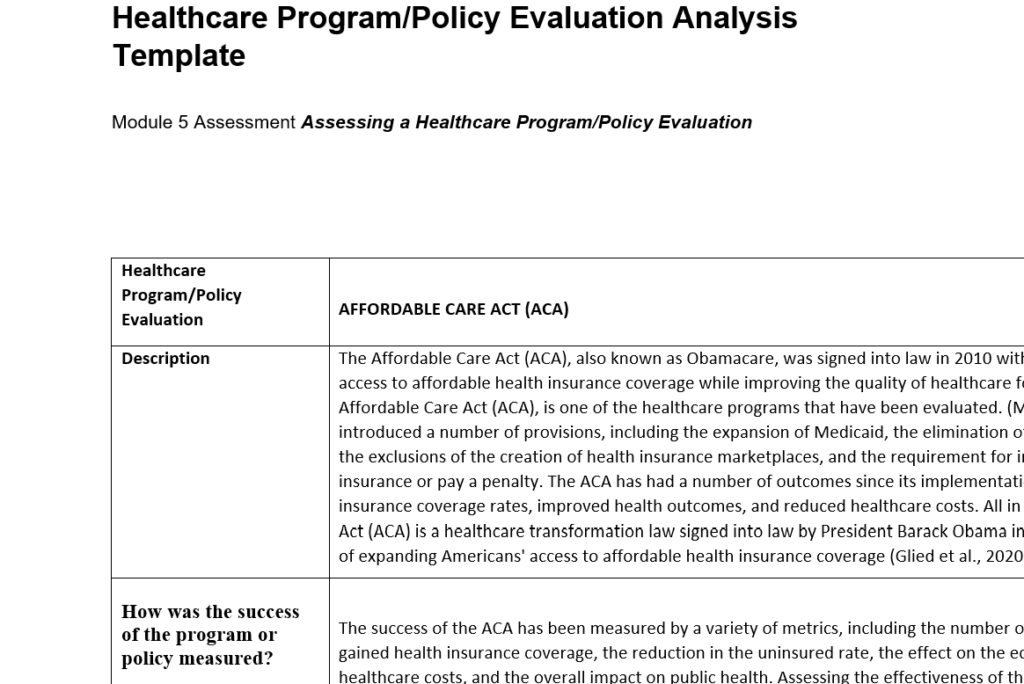
| Healthcare Program/Policy Evaluation | AFFORDABLE CARE ACT (ACA) |
| Description | The Affordable Care Act (ACA), also known as Obamacare, was signed into law in 2010 with the aim of increasing access to affordable health insurance coverage while improving the quality of healthcare for Americans. The Affordable Care Act (ACA), is one of the healthcare programs that have been evaluated. (Milstead, 2019). The law introduced a number of provisions, including the……….. |
Click below to access the full sample solution (PDF)

