NURS-6050N Week 9: Discussion The Role of the RN/APRN in Policy Evaluation


Course
NURS-6050N POLICY & ADVOCACY FOR POP HEALTH

Question Overview

Main Focus of the Question:
This discussion asks nursing students to reflect on the role of professional nurses in policy evaluation and how nurses can help assess whether healthcare programs or policies are effective.

What the Question Requires:

TaskWhat It Means
Select a Policy or ProgramChoose a real healthcare policy or program (hospital, community, state, or national level).
Describe the Evaluation TopicBriefly explain what policy/program is being evaluated.
Explain Evaluation CriteriaIdentify how effectiveness is measured.
Discuss Social DeterminantsExplain how factors like income, education, or environment affect the issue.
Respond to ColleaguesSuggest improvements or recommendations to others.

How to Approach This Discussion

Step 1: Choosing an Evaluation Topic

Select a healthcare policy or program that is easy to explain and relevant to nursing practice. The topic should have clear goals and measurable outcomes.

Good Topic Ideas (Popular & Easy to Work With):

Community ProgramsHospital Policies
Vaccination programsInfection control policies
Maternal health programsFall prevention programs
Nutrition programsHand hygiene compliance
Mental health outreachPain management protocols
Diabetes education programsPatient safety policies

Recommended Choice:
A Hospital-Acquired Infection (HAI) Prevention Program would be an excellent choice, especially since hospital infections have already been a focus area in previous work. This keeps learning consistent and stronger.


Step 2: Writing the Evaluation Description
How to Describe the Program

The description should clearly explain what the program is, what it aims to do, and why it is important. Focus on explaining the purpose of the program and how it supports patient safety and healthcare quality.

Approach Paragraph

Start by introducing the selected healthcare policy or program and explain its purpose in improving patient outcomes. The description should highlight how the program operates and the population it serves. Include the reason the program was selected, especially if it relates to patient safety or quality of care. Emphasize how the program supports nurses in delivering safe and effective healthcare services.


Step 3: Identifying Evaluation Criteria
What Are Evaluation Criteria?

Evaluation criteria are the measures used to determine if the program works.

Key Evaluation Measures

If listing more than three, use columns like this:

Effectiveness MeasuresQuality Indicators
Reduction in infection ratesPatient satisfaction levels
Compliance ratesStaff adherence to guidelines
Patient recovery outcomesLength of hospital stay
Readmission ratesCost-effectiveness
Approach Paragraph

Explain how the effectiveness of the selected healthcare program is measured using specific indicators. These indicators should reflect improvements in patient safety, quality of care, and healthcare outcomes. Describe how monitoring these measures helps healthcare providers determine whether the program is successful or requires improvement. The explanation should connect the evaluation process to patient safety and healthcare quality improvement.


Step 4: Discussing Social Determinants of Health
What Are Social Determinants?

Social determinants are factors that affect health outcomes outside direct medical care.

Common Social Determinants
Economic FactorsEnvironmental Factors
Income levelHousing conditions
EmploymentAccess to clean water
Insurance accessCommunity safety
Food securityTransportation access
Education FactorsSocial Factors
Health literacyCultural beliefs
Education levelFamily support
Access to informationSocial networks
Approach Paragraph

Discuss how social determinants influence the effectiveness of the selected healthcare program. Explain how factors such as income level, education, access to healthcare, and living conditions can impact patient participation and health outcomes. Emphasize that understanding these determinants allows healthcare professionals to design policies that are more inclusive and effective for diverse populations.


Step 5: Responding to Colleagues
What Is Required

Respond to two classmates by suggesting improvements or additional ideas.

Suggested Response Strategies
  • Suggest new evaluation methods
  • Recommend additional data collection
  • Propose patient education improvements
  • Identify policy improvement opportunities
Approach Paragraph

When responding to colleagues, focus on identifying possible improvements to their proposed programs or policies. Offer suggestions that strengthen evaluation methods or enhance patient outcomes. Responses should be constructive and supportive while encouraging innovation and critical thinking in policy evaluation.


Sample solution

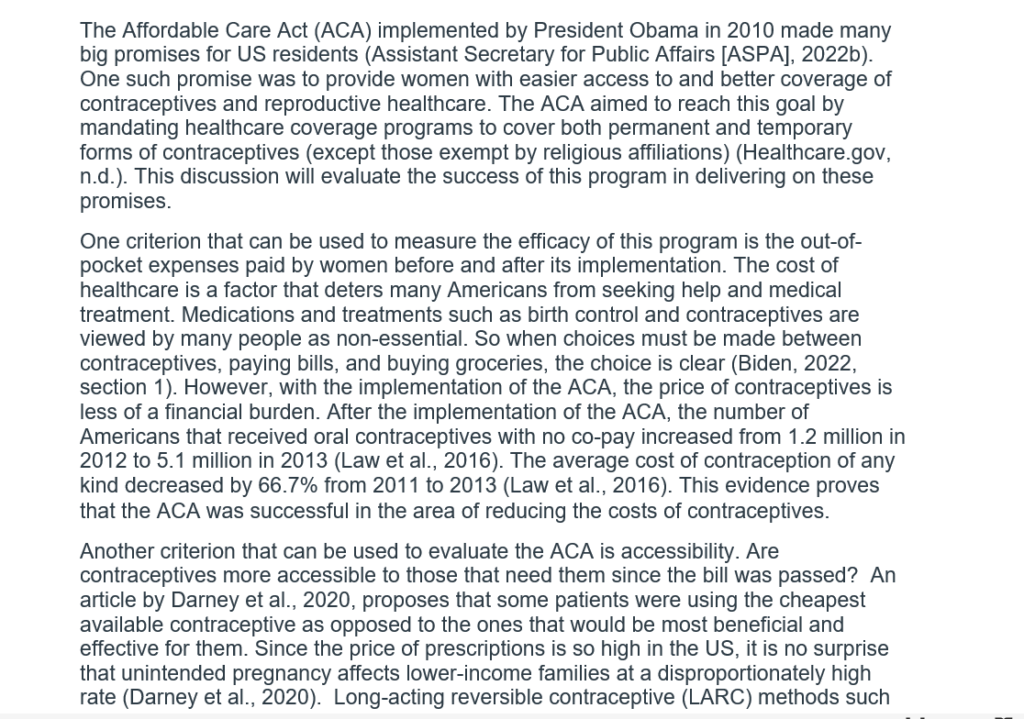
The Affordable Care Act (ACA) implemented by President Obama in 2010 made many big promises for US residents (Assistant Secretary for Public Affairs [ASPA], 2022b). One such promise was to provide women with easier access to and better coverage of contraceptives and reproductive healthcare. The ACA aimed to reach this goal by mandating healthcare…..Click below to access the full sample solution (PDF)