Course
NURS-6050N POLICY & ADVOCACY FOR POP HEALTH
Understanding Cultural Beliefs and Global Health
Healthcare is influenced by cultural beliefs, traditions, religion, language, and social customs. Some cultures believe that discussing illness can cause it to occur, while others avoid eye contact or personal touch during care. These beliefs may seem unusual to healthcare workers trained in Western medicine, but they are meaningful within certain cultures. When healthcare providers fail to understand cultural differences, communication problems can occur, leading to misunderstandings and poor health outcomes.
Global health issues are affected by these cultural differences as well as economic conditions, education levels, and healthcare access. For this assignment, the focus is on selecting one global health issue from the World Health Organization (WHO) global health agenda and comparing how the United States and another country address that issue. This comparison helps identify strengths, weaknesses, and opportunities for improvement in healthcare policies across different regions.
Possible Global Health Issues to Select
| Infectious Diseases | Chronic Diseases |
|---|---|
| HIV/AIDS | Diabetes |
| Tuberculosis | Heart disease |
| Malaria | Cancer |
| COVID-19 | Hypertension |
| Hepatitis | Obesity |
| Maternal & Child Health | Public Health Issues |
|---|---|
| Maternal mortality | Mental health |
| Child malnutrition | Substance abuse |
| Infant mortality | Access to clean water |
| Prenatal care access | Vaccination coverage |
Good Topic Choices (Very Common):
- HIV/AIDS
- Maternal mortality
- Tuberculosis
- Mental health
- Vaccination programs
Questions to Address
Part 1: Global Health Comparison Matrix
- Consider the U.S. national/federal health policies related to the global health issue selected and compare them to the policies of another country.
- Explain the strengths and weaknesses of each policy.
- Explain how social determinants of health impact the global health issue selected, including specific examples.
- Analyze how each country addresses cost, quality, and access related to the selected global health issue.
- Explain how the selected health policy impacts the health of the global population.
- Explain how the selected health policy impacts the role of the nurse in each country.
- Explain how global health issues impact local healthcare organizations and policies in both countries.
Part 2: Plan for Social Change
- Explain how you would advocate for incorporating a global perspective into local nursing practice.
- Explain how incorporating a global perspective might impact local nursing practice.
- Explain how incorporating a global perspective contributes to social change, including specific examples.
How to Approach Each Question
Compare U.S. Policies With Another Country
How to Approach
Begin by identifying a healthcare policy in the United States that addresses the selected global health issue. Then select another country and research its policies related to the same issue. Focus on describing what each country is doing to manage the health problem. The comparison should highlight differences in healthcare systems, available resources, and policy strategies used to control or reduce the issue.
Explain the Strengths and Weaknesses of Each Policy
How to Approach
Discuss what each policy does well and where it faces challenges. Strengths may include effective disease control, strong healthcare infrastructure, or accessible services. Weaknesses may involve limited funding, poor accessibility, or cultural barriers. The explanation should show that no policy is perfect and that improvements are often necessary to meet population health needs.
Explain How Social Determinants Affect the Issue
How to Approach
Focus on factors such as income, education, environment, and healthcare access that influence health outcomes. Explain how these conditions make it easier or harder for people to receive treatment or prevention services. Provide specific examples showing how living conditions or economic challenges affect the spread or management of the selected health issue.
Analyze Cost, Quality, and Access
How to Approach
Describe how each country manages healthcare affordability, service quality, and availability of care. Consider whether healthcare services are affordable, whether facilities are properly equipped, and whether people can easily access treatment. This section should compare how both countries handle financial challenges and healthcare service delivery.
Explain Impact on Global Population Health
How to Approach
Discuss how the selected policy affects people beyond national borders. Some health policies reduce disease spread globally, improve vaccination rates, or strengthen public health systems. The explanation should highlight how global cooperation and effective policies contribute to improved worldwide health outcomes.
Explain Impact on the Role of Nurses
How to Approach
Describe how the selected policy influences nursing responsibilities in each country. Nurses may participate in patient education, disease prevention, data collection, or policy implementation. Focus on how healthcare policies shape nursing roles and responsibilities within healthcare systems.
Explain Impact on Local Healthcare Organizations
How to Approach
Discuss how global health issues influence hospitals, clinics, and healthcare systems locally. Consider how international health concerns require changes in local policies, training, or resource allocation. Provide examples showing how healthcare organizations respond to global challenges.
Part 2: Plan for Social Change
This section focuses on leadership thinking, not just comparison.
Advocate for Global Perspective in Local Practice
How to Approach
Explain how a nurse leader can promote awareness of global health issues within local healthcare settings. This may include educating staff, supporting culturally sensitive care, or promoting global health education. The focus should be on leadership actions that encourage understanding of global health challenges.
Impact of Global Perspective on Local Practice
How to Approach
Discuss how considering global health trends improves patient care at the local level. Healthcare workers who understand global issues are better prepared to respond to disease outbreaks, cultural differences, and healthcare inequalities. The explanation should connect global awareness to improved healthcare delivery.
Global Perspective and Social Change
How to Approach
Explain how integrating global health awareness contributes to long-term improvements in healthcare systems. Social change may include improving healthcare accessibility, promoting equality, and addressing cultural barriers in healthcare. Provide examples showing how nursing leadership can support meaningful change in communities.
Sample Solution
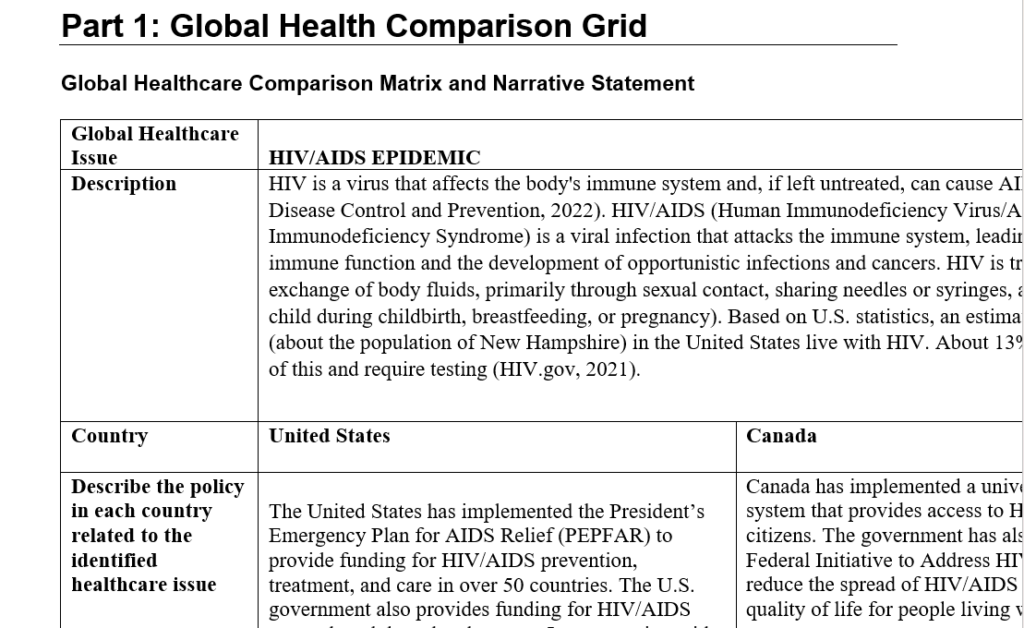
| Global Healthcare Issue | HIV/AIDS EPIDEMIC |
| Description | HIV is a virus that affects the body’s immune system and, if left untreated, can cause AIDS (Centers for Disease Control and Prevention, 2022). HIV/AIDS (Human Immunodeficiency Virus/Acquired Immunodeficiency Syndrome) is a viral infection that attacks the immune system, leading to the loss of immune function and the development of opportunistic infections and cancers. HIV is……… |
Click below to access the full sample solution (PDF)

