
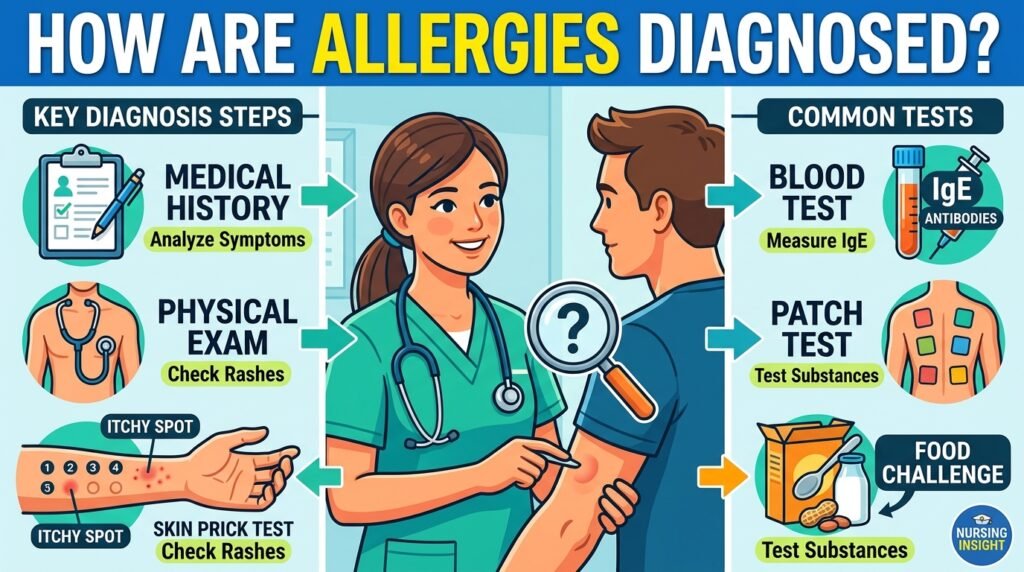
Allergies are diagnosed by identifying the substances that trigger a person’s immune response and assessing the symptoms that occur after exposure. Because allergic symptoms can resemble other conditions, healthcare professionals use a combination of medical history, physical examination, and allergy tests to reach a diagnosis.
How Are Allergies Diagnosed?
The diagnosis of an allergy usually begins with a detailed assessment of the patient’s symptoms and medical history. The healthcare professional may ask when symptoms started, how often they occur, what the person was exposed to, and whether symptoms improve after avoiding a particular substance.
The healthcare professional may also ask about family history, previous allergic reactions, medications, diet, occupation, and environmental exposures. A physical examination can then help identify signs such as rashes, hives, nasal inflammation, or breathing problems.
Common Allergy Tests
Several tests can be used to identify possible allergens. The test selected depends on the patient’s symptoms and suspected trigger.
Skin Prick Test
A skin prick test is one of the commonly used methods for identifying allergies. Small amounts of suspected allergens are placed on or introduced into the skin, usually on the forearm or back.
If the person is sensitized to an allergen, the tested area may develop a small raised, itchy reaction. The results are interpreted together with the patient’s symptoms and medical history rather than being used alone to diagnose an allergy.
Blood Test
A blood test can measure allergen-specific immunoglobulin E (IgE) antibodies in the blood. A sample is taken and tested for IgE antibodies associated with particular allergens.
Blood testing may be useful when skin testing is not suitable, such as when certain medications or skin conditions could interfere with skin-test results.
Patch Test
A patch test is mainly used to identify substances that cause contact dermatitis, a delayed allergic skin reaction.
Small amounts of suspected substances are applied to patches that are placed on the skin, usually the back. The skin is then examined at specific intervals for signs of a reaction.
Common substances tested may include:
- Fragrances
- Preservatives
- Metals
- Cosmetics
- Rubber chemicals
- Certain medications
Oral Food Challenge
An oral food challenge may be used when a healthcare professional needs to determine whether a person has a food allergy. Under medical supervision, the patient consumes gradually increasing amounts of a suspected food while being monitored for a reaction.
Because a significant allergic reaction can occur, this test should only be performed in an appropriate medical setting with trained healthcare professionals available.
Elimination Diet
An elimination diet may sometimes be used when a food allergy or intolerance is suspected. A particular food is temporarily removed from the diet while symptoms are monitored.
In some cases, the food may later be reintroduced under professional guidance. Elimination diets should be carefully planned to avoid unnecessary dietary restrictions or nutritional deficiencies.
What Happens During an Allergy Evaluation?
An allergy evaluation generally involves several steps:
- Medical history: The healthcare professional asks about symptoms, triggers, timing, and previous reactions.
- Physical examination: The patient is assessed for signs associated with allergic disease.
- Identification of possible allergens: Potential triggers are identified based on the patient’s history and symptoms.
- Allergy testing: Appropriate tests may be performed to investigate suspected allergens.
- Interpretation of results: Test results are considered together with the patient’s clinical history.
- Diagnosis and management: The healthcare professional determines the likely cause and recommends appropriate management.
Can Allergy Tests Confirm an Allergy?
Allergy tests can provide important evidence of sensitization to a particular substance, but a positive test does not always mean that the person will develop symptoms after exposure.
For this reason, healthcare professionals interpret test results alongside the patient’s symptoms, medical history, and exposure patterns. This helps reduce the risk of incorrectly identifying a substance as an allergy trigger.
When Should You See a Healthcare Professional?
A person should consider seeking medical evaluation when they experience repeated or unexplained symptoms such as:
- Recurrent hives or skin rashes
- Persistent sneezing or nasal congestion
- Repeated swelling
- Symptoms after eating certain foods
- Breathing problems associated with particular exposures
- Reactions after taking medications
- Recurrent symptoms after insect stings
A severe reaction involving difficulty breathing, throat swelling, fainting, or other signs of anaphylaxis requires emergency medical treatment rather than routine allergy testing.
Importance of Allergy Diagnosis in Nursing Practice
Nurses play an important role in collecting information about suspected allergies and documenting previous reactions. Accurate documentation can help reduce the risk of repeated exposure to known allergens and support safer patient care.
Nurses also educate patients about avoiding identified triggers, recognizing symptoms, using prescribed medications correctly, and seeking emergency care when severe allergic reactions occur.
Key Takeaways
- Allergy diagnosis begins with a medical history and physical examination.
- Common allergy tests include skin prick tests, blood tests, and patch tests.
- Oral food challenges may be used to investigate suspected food allergies under medical supervision.
- Test results should be interpreted together with symptoms and medical history.
- A positive allergy test does not always mean that a person will experience symptoms after exposure.
- Accurate diagnosis helps guide allergen avoidance and appropriate treatment.