
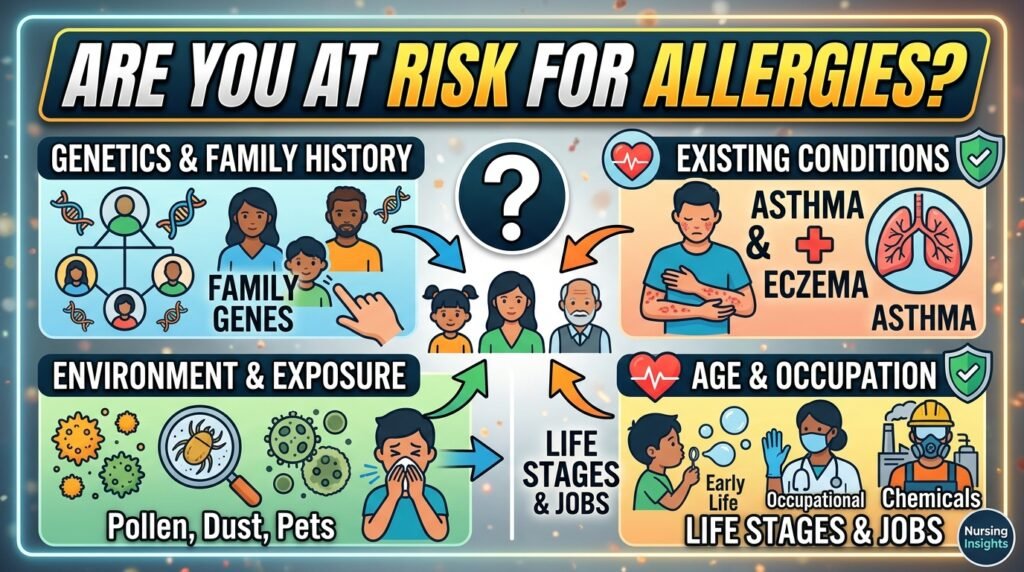
Allergies can develop in people of all ages, but certain factors can make a person more likely to develop an allergic condition. These risk factors may be related to genetics, age, environment, lifestyle, or other health conditions. Understanding what increases the risk of allergies can help with prevention, early recognition, and appropriate management.
What Are Risk Factors for Allergies?
Risk factors for allergies are characteristics, conditions, or environmental exposures that may increase a person’s likelihood of developing an allergic reaction. Having one or more risk factors does not mean that a person will definitely develop an allergy. Instead, allergies usually result from a combination of genetic and environmental factors.
Family History of Allergies
Genetics play an important role in the development of allergic diseases. People who have parents or close family members with allergies may have a higher likelihood of developing conditions such as allergic rhinitis, asthma, eczema, or food allergies.
A family history does not necessarily determine which specific allergy a person will develop. Instead, it may increase a person’s general tendency to develop allergic or immune-related conditions.
Age
Allergies can occur at any age, but some allergic conditions are more common during particular stages of life. Children may develop food allergies, eczema, or asthma, while some environmental allergies may become more noticeable as children grow older.
Allergies can also develop for the first time in adulthood, even in someone who did not experience allergies as a child.
Environmental Exposure
Regular exposure to allergens can increase the likelihood of experiencing allergic symptoms in susceptible individuals. Common environmental allergens include:
- Pollen
- Dust mites
- Mold
- Pet dander
- Cockroach particles
Living or working in environments where these allergens are present can contribute to repeated exposure and allergic symptoms.
Other Allergic Conditions
People who already have one allergic condition may be more likely to develop another. For example, a person with eczema may also develop asthma or allergic rhinitis.
This tendency for allergic conditions to occur together is sometimes referred to as the atopic tendency. It reflects an increased tendency of the immune system to produce allergic responses.
Asthma and Other Respiratory Conditions
Asthma is commonly associated with allergies, particularly when symptoms are triggered by substances such as pollen, dust mites, mold, or animal dander.
People with allergic asthma may experience coughing, wheezing, chest tightness, or difficulty breathing after exposure to specific allergens.
Occupational Exposure
Some occupations involve regular exposure to substances that can cause allergic reactions or occupational allergies. Healthcare workers, laboratory workers, agricultural workers, cleaners, and industrial workers may encounter substances such as latex, chemicals, dust, or biological materials.
Repeated workplace exposure may increase the risk of developing symptoms in susceptible individuals.
Smoking and Air Pollution
Exposure to cigarette smoke and air pollutants can irritate the respiratory system and may worsen symptoms in people with allergic respiratory conditions. Although these exposures do not cause every type of allergy, they can contribute to respiratory inflammation and make existing symptoms more difficult to control.
Skin Barrier Problems
A damaged or weakened skin barrier can increase the risk of certain allergic and inflammatory skin conditions. This is particularly relevant in people with eczema, where the skin may become dry, irritated, and more vulnerable to environmental substances.
Maintaining healthy skin can help protect the body from irritants and potential allergens.
Common Risk Factors for Allergies
Important risk factors include:
- Family history of allergies
- Existing allergic conditions
- Asthma or eczema
- Repeated exposure to allergens
- Occupational exposure
- Environmental pollution
- Irritated or damaged skin
- Certain stages of childhood or adulthood
Why Understanding Allergy Risk Factors Matters
Identifying risk factors can help individuals recognize potential triggers and take appropriate precautions. For healthcare professionals, understanding a patient’s allergy risk factors can support accurate assessment, patient education, and early recognition of allergic symptoms.
A detailed health history should include previous allergic reactions, known triggers, family history, medications, occupational exposures, and existing allergic conditions.
Key Takeaways
- Allergies can result from a combination of genetic and environmental factors.
- A family history of allergies can increase a person’s risk.
- People with one allergic condition may be more likely to develop another.
- Environmental and occupational exposure can contribute to allergic symptoms.
- Asthma, eczema, and other atopic conditions are commonly associated with allergies.
- Identifying risk factors can help with prevention, assessment, and allergy management.