
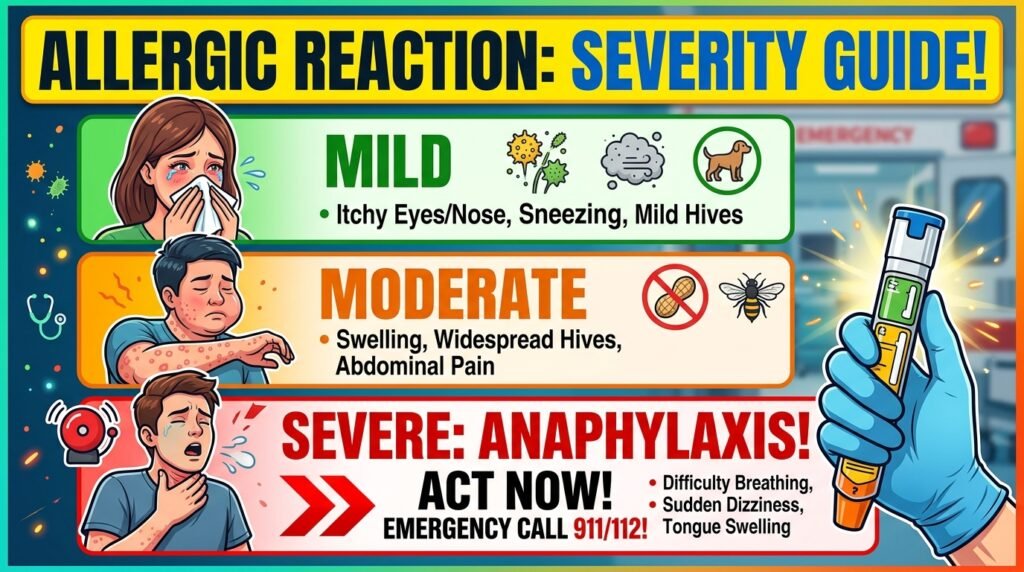
Allergic reactions can affect different parts of the body and may range from mild symptoms such as sneezing and itching to severe, life-threatening reactions such as anaphylaxis. Recognizing the symptoms early is important because the severity of an allergic reaction can change quickly. Understanding common signs and knowing when medical attention is needed can help with prompt and appropriate care.
What Are the Symptoms of an Allergic Reaction?
Allergic reaction symptoms occur when the immune system reacts to a substance that it considers harmful, even though the substance may normally be harmless. The symptoms depend on the allergen, the person’s sensitivity, and how the allergen enters the body.
Common allergic reaction symptoms include:
- Sneezing, runny nose, or nasal congestion
- Itchy, watery, or red eyes
- Skin itching or redness
- Hives or raised skin rashes
- Swelling of the lips, face, or eyelids
- Coughing or wheezing
- Stomach pain, nausea, vomiting, or diarrhea
Mild Allergic Reaction Symptoms
Mild allergic reactions usually affect one area or body system and may cause discomfort without immediately affecting breathing or circulation. For example, exposure to pollen may cause sneezing and itchy eyes, while contact with an allergen may cause localized itching or a skin rash.
Common mild symptoms include:
- Sneezing
- Mild nasal congestion
- Itchy or watery eyes
- Mild skin rash
- Localized itching
- Small areas of hives
- Mild stomach discomfort
Although mild symptoms are generally not life-threatening, they should still be monitored because allergic reactions can sometimes become more severe.
Moderate Allergic Reaction Symptoms
A moderate allergic reaction may involve several areas of the body or cause more noticeable swelling and discomfort. Symptoms can develop after exposure to foods, medications, insect venom, or other allergens.
Signs may include:
- Widespread hives
- Significant skin itching
- Swelling of the face or lips
- Persistent coughing
- Mild difficulty breathing
- Abdominal pain
- Vomiting or diarrhea
- Dizziness
Moderate symptoms require careful observation and may require medical assessment, particularly if symptoms are worsening or occurring in multiple body systems.
Severe Allergic Reaction Symptoms: Anaphylaxis
Anaphylaxis is a severe allergic reaction that can develop rapidly and become life-threatening. It can affect breathing, circulation, and multiple body systems at the same time.
Warning signs of anaphylaxis may include:
- Difficulty breathing or shortness of breath
- Wheezing or tightness in the chest
- Swelling of the tongue or throat
- Difficulty swallowing or speaking
- Sudden dizziness or fainting
- Rapid or weak pulse
- A sudden drop in blood pressure
- Severe widespread hives or flushing
- Repeated vomiting or severe abdominal symptoms
- Loss of consciousness
Anaphylaxis requires emergency medical treatment. Epinephrine is the first-line treatment for anaphylaxis, and emergency medical services should be contacted immediately.
When Should You Seek Medical Help?
Medical attention should be sought when allergic symptoms are severe, rapidly worsening, or involve breathing or circulation. Difficulty breathing, throat or tongue swelling, fainting, or signs of anaphylaxis require emergency treatment.
People who have previously experienced severe allergic reactions may also be advised by their healthcare provider to carry an epinephrine auto-injector and have an emergency action plan.
What Causes Allergic Reaction Symptoms?
Allergic symptoms develop after the immune system recognizes an allergen and triggers an inflammatory response. Common triggers include:
- Pollen and other environmental allergens
- Foods such as peanuts, tree nuts, milk, eggs, fish, and shellfish
- Insect venom
- Medications
- Animal dander
- Dust mites
- Mold
- Latex
The type and severity of symptoms can vary from one person to another, even after exposure to the same allergen.
Importance of Recognizing Allergic Reaction Symptoms in Nursing
Nurses play an important role in recognizing and monitoring allergic reactions. Early identification of changes in the patient’s skin, breathing, level of consciousness, and circulation can help determine whether a reaction is mild or progressing toward an emergency.
Nurses should also document the suspected allergen, symptoms, timing of the reaction, interventions provided, and the patient’s response to treatment. Patient education is important as well, particularly regarding allergen avoidance, prescribed medications, and what to do during a future allergic reaction.
Key Takeaways
- Allergic reactions can range from mild skin or nasal symptoms to life-threatening anaphylaxis.
- Common symptoms include itching, hives, sneezing, swelling, coughing, and gastrointestinal symptoms.
- Difficulty breathing, throat swelling, dizziness, fainting, or loss of consciousness are emergency warning signs.
- Anaphylaxis requires immediate treatment with epinephrine and emergency medical care.
- Identifying triggers and recognizing early symptoms can help reduce the risk of serious complications.