
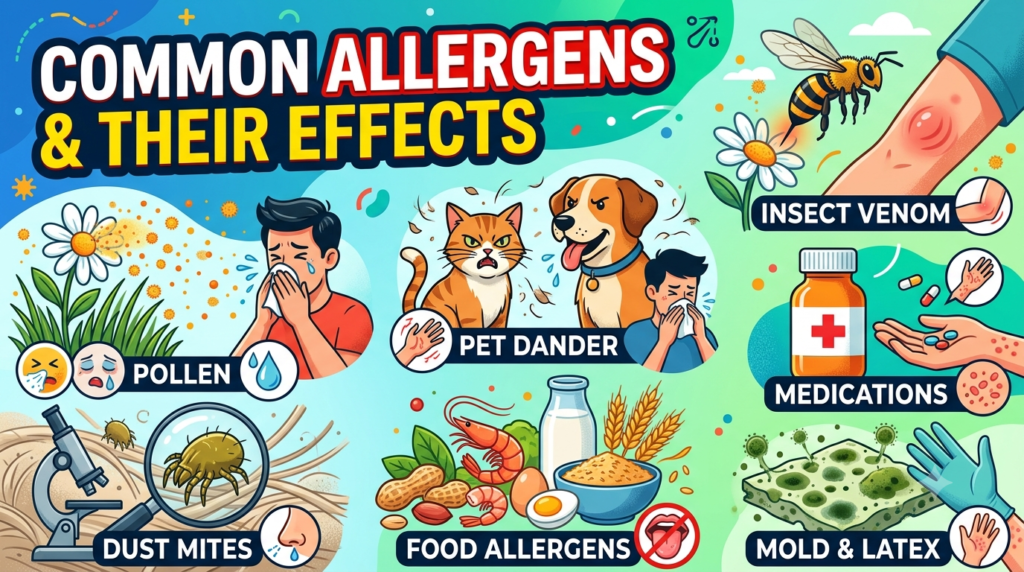
Allergens are substances that trigger an allergic reaction in people who are sensitive to them. Although these substances are usually harmless to most individuals, the immune system of an allergic person treats them as dangerous and responds by releasing inflammatory chemicals such as histamine. This immune response can affect the skin, respiratory system, digestive system, and, in severe cases, the cardiovascular system.
Understanding common allergens and their effects is important in nursing practice because identifying the trigger is a key step in preventing allergic reactions, making an accurate diagnosis, and providing appropriate patient education and treatment.
Common Allergens and Their Effects are:
Pollen
Pollen from trees, grasses, and weeds is one of the most common causes of seasonal allergies. When inhaled, it irritates the respiratory tract and triggers inflammation in the nose and eyes.
Common effects:
Sneezing
Runny or blocked nose
Itchy eyes and throat
Watery eyes
Coughing
Dust Mites
Dust mites are microscopic organisms that live in bedding, mattresses, pillows, carpets, and upholstered furniture. Their waste products are a major indoor allergen.
Common effects:
Nasal congestion
Frequent sneezing
Chronic cough
Wheezing
Worsening of asthma symptoms
Pet Dander
Pet dander consists of tiny skin flakes and proteins found in animal saliva and urine. Cats and dogs are common sources of this allergen.
Common effects:
Itchy or watery eyes
Sneezing
Runny nose
Skin itching
Asthma flare-ups
Food Allergens
Food allergies occur when the immune system reacts to proteins found in certain foods. Reactions can range from mild skin symptoms to severe anaphylaxis.
Common food allergens
- Peanuts
- Tree nuts
- Shellfish
- Fish
- Eggs
- Milk
- Soy
- Wheat
Common effects:
Hives or skin rash
Swelling of the lips, tongue, or throat
Abdominal pain
Nausea and vomiting
Diarrhea
Anaphylaxis in severe cases
Insect Venom
Stings from bees, wasps, hornets, and ants can cause localized or systemic allergic reactions.
Common effects:
Pain and swelling at the sting site
Redness and warmth
Hives
Difficulty breathing
Anaphylactic shock in severe reactions
Medications
Drug allergies occur when the immune system reacts to a medication. Antibiotics such as penicillin are among the most common causes.
Common effects:
Skin rash
Hives
Fever
Facial swelling
Wheezing
Severe allergic reactions
Mold
Mold spores are commonly found in damp environments such as bathrooms, basements, kitchens, and poorly ventilated buildings.
Common effects:
Sneezing
Nasal congestion
Itchy eyes
Coughing
Worsening of asthma symptoms
Latex
Latex is found in gloves, medical equipment, balloons, and other rubber products. Repeated exposure increases the risk of developing a latex allergy.
Common effects:
Contact dermatitis
Skin redness and itching
Hives
Respiratory symptoms
Anaphylaxis in severe cases
Why Allergen Identification Is Important
Identifying the specific allergen responsible for a patient’s symptoms helps healthcare providers develop an effective management plan. Accurate identification supports allergen avoidance, appropriate diagnostic testing, safe medication administration, patient education, and prevention of severe allergic reactions.
Importance in Nursing Practice
Nurses play a critical role in obtaining accurate allergy histories, recognizing early signs of allergic reactions, and monitoring patients for complications. Knowledge of common allergens helps nurses identify potential triggers in hospitals, clinics, schools, and home environments and provide education on reducing exposure and responding promptly to symptoms.
Note
Allergens are substances that trigger abnormal immune responses in sensitive individuals.
Common allergens include pollen, dust mites, pet dander, foods, insect venom, medications, mold, and latex.
Food allergies are among the most common causes of severe allergic reactions and anaphylaxis.
Different allergens can affect the respiratory system, skin, gastrointestinal tract, or multiple body systems.
Accurate allergen identification is essential for prevention, diagnosis, treatment, and patient education.