
Topic: Antidepressants
Tricyclic antidepressants (TCAs) are an older class of antidepressant medications used to treat major depressive disorder and several other conditions. Although newer antidepressants, such as selective serotonin reuptake inhibitors (SSRIs), are often prescribed first because they generally have a more favorable side-effect and safety profile, TCAs remain useful in selected clinical situations.
For psychiatric-mental health nurse practitioners (PMHNPs), understanding how TCAs work, their therapeutic uses, and their potential adverse effects is important for safe medication management. These medications can be effective, but they require careful consideration because of their anticholinergic effects, cardiovascular risks, drug interactions, and toxicity in overdose.
What Are Tricyclic Antidepressants?
Tricyclic antidepressants are medications that primarily affect the neurotransmitters serotonin and norepinephrine. They are called tricyclic because their chemical structures contain three connected rings.
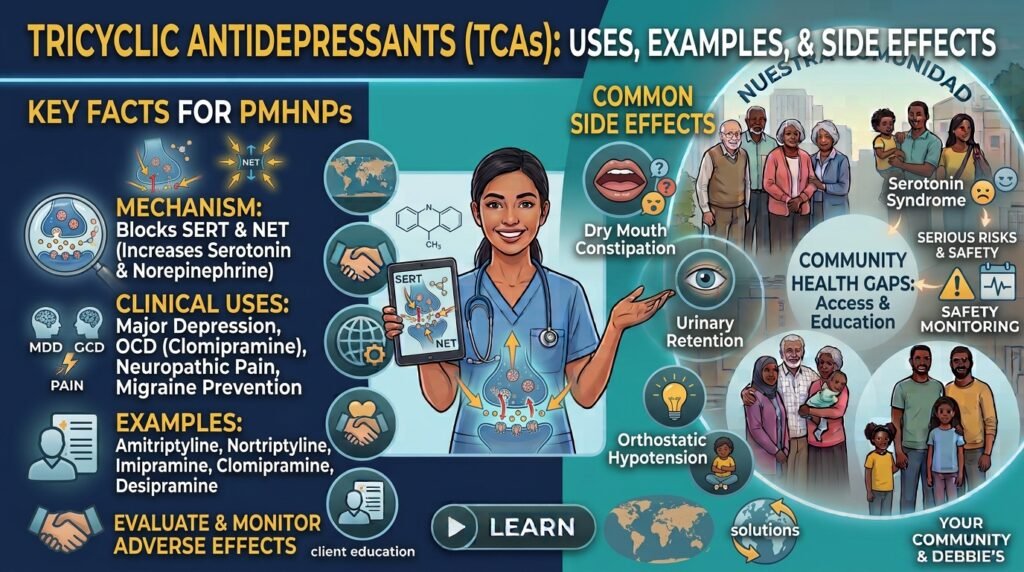
TCAs work mainly by inhibiting the reuptake of serotonin and norepinephrine into presynaptic nerve cells. This increases the availability of these neurotransmitters in the synaptic space, influencing communication between nerve cells.
However, TCAs also interact with several other receptors, including muscarinic acetylcholine, histamine H1, and alpha-1 adrenergic receptors. These additional actions contribute to many of their therapeutic effects as well as their side effects.
How Do Tricyclic Antidepressants Work?
TCAs influence neurotransmitter signaling by blocking serotonin and norepinephrine transporters. This reduces the reabsorption of these neurotransmitters into the presynaptic neuron.
Their main pharmacological actions include:
- Serotonin reuptake inhibition: Increases serotonin availability in the synaptic space, influencing mood and emotional regulation.
- Norepinephrine reuptake inhibition: Increases norepinephrine availability, affecting attention, alertness, and other nervous system functions.
- Muscarinic receptor blockade: Contributes to anticholinergic effects such as dry mouth, constipation, and blurred vision.
- Histamine H1 receptor blockade: Can cause sedation and weight gain.
- Alpha-1 adrenergic receptor blockade: Can contribute to dizziness and orthostatic hypotension, particularly when standing up.
The extent of these effects varies among individual TCAs. Their antidepressant benefits generally develop over several weeks rather than immediately after starting treatment.
Common Tricyclic Antidepressants and Their Uses
Several medications belong to the TCA class. Although they share similar pharmacological properties, their clinical uses and side-effect profiles differ.
1. Amitriptyline
Amitriptyline is commonly used to treat depression and is also prescribed for certain pain conditions.
Its additional clinical uses may include:
- Neuropathic pain.
- Migraine prevention.
- Certain chronic pain conditions.
- Sleep-related difficulties when sedation is a relevant consideration.
Amitriptyline has relatively strong antihistaminic and anticholinergic effects, which can contribute to sedation, dry mouth, constipation, and weight gain.
2. Nortriptyline
Nortriptyline is used to treat major depressive disorder. It is also sometimes prescribed for neuropathic pain.
Compared with amitriptyline, nortriptyline generally produces fewer sedating and anticholinergic effects, although these adverse effects can still occur.
3. Imipramine
Imipramine is primarily used to treat depression. It has also been used for certain cases of childhood nocturnal enuresis (bedwetting), although this use requires careful assessment because of its potential cardiovascular and other adverse effects.
4. Clomipramine
Clomipramine is particularly important in the treatment of obsessive-compulsive disorder (OCD). It is also used for depression in selected circumstances.
It has a strong effect on serotonin reuptake and can be effective in reducing obsessive thoughts and compulsive behaviors.
5. Desipramine
Desipramine is primarily used to treat depression. It has a stronger effect on norepinephrine reuptake than on serotonin reuptake.
It generally produces fewer sedating and anticholinergic effects than some other TCAs, although it still carries important cardiovascular and overdose risks.
Clinical Uses of Tricyclic Antidepressants
Although TCAs are no longer the usual first-line treatment for depression, they remain relevant in psychiatric and general healthcare practice.
Common clinical uses include:
- Major depressive disorder: TCAs may be considered when other antidepressants have not produced adequate improvement or when a particular patient’s clinical history supports their use.
- Obsessive-compulsive disorder: Clomipramine is an established medication option for OCD.
- Neuropathic pain: Amitriptyline and nortriptyline may be used to manage certain nerve-related pain conditions.
- Migraine prevention: Amitriptyline is sometimes prescribed to reduce migraine frequency.
- Other selected conditions: Some TCAs have additional uses depending on the medication and clinical circumstances.
The choice of medication depends on the patient’s symptoms, medical history, other medications, previous treatment response, and potential safety concerns.
Common Side Effects of TCAs
Tricyclic antidepressants can produce several adverse effects because they interact with multiple receptor systems beyond serotonin and norepinephrine transporters.
1. Anticholinergic Effects
Anticholinergic effects occur when TCAs block muscarinic acetylcholine receptors.
Common symptoms include:
- Dry mouth.
- Constipation.
- Blurred vision.
- Urinary retention.
- Difficulty with urination.
- Increased heart rate.
These effects can be particularly problematic for older adults and people with certain pre-existing medical conditions.
2. Sedation and Drowsiness
Some TCAs block histamine H1 receptors, which can cause drowsiness and sedation. Patients may experience reduced alertness, particularly when beginning treatment or after a dose increase.
3. Weight Gain
Weight gain may occur during TCA treatment. Changes in appetite and histamine receptor activity can contribute to this effect.
4. Orthostatic Hypotension
TCAs can block alpha-1 adrenergic receptors, reducing the body’s ability to maintain blood pressure when changing positions.
Patients may experience dizziness or lightheadedness when standing, increasing the risk of falls.
5. Cardiovascular Effects
TCAs can affect cardiac electrical conduction. Potential complications include:
- Increased heart rate.
- Changes in cardiac conduction intervals.
- Abnormal heart rhythms.
- Reduced blood pressure.
These risks are especially important in people with existing cardiovascular disease and in cases of overdose.
Serious Risks and Safety Concerns
One of the most important safety concerns associated with TCAs is their potential toxicity in overdose.
An overdose can cause severe complications, including:
- Cardiac arrhythmias.
- Seizures.
- Severe hypotension.
- Altered consciousness.
- Coma.
- Death.
TCAs can affect cardiac sodium channels, potentially causing dangerous conduction abnormalities. Suspected overdose is a medical emergency requiring immediate assessment and treatment.
Because of this risk, clinicians must consider a patient’s safety, overdose risk, and access to medication when selecting a TCA. This is particularly important when treating individuals with depression who may be at risk of self-harm.
Nursing Considerations When Administering TCAs
Nurses and PMHNPs have important responsibilities when patients receive tricyclic antidepressants. Monitoring should focus on treatment response, adverse effects, medication safety, and patient education.
Assessment Before Treatment
Before treatment begins, clinicians should review:
- The patient’s mental health history and current symptoms.
- Previous antidepressant use and treatment response.
- Cardiovascular history and relevant risk factors.
- Current medications and potential drug interactions.
- History of seizures, urinary retention, or other relevant medical conditions.
- Suicide risk and potential risk of medication overdose.
An electrocardiogram (ECG) may be appropriate before treatment, particularly for patients with cardiovascular risk factors, older adults, or those receiving medications that may affect cardiac conduction.
Monitoring During Treatment
Ongoing monitoring helps identify adverse effects and determine whether the medication is effective.
Important areas include:
- Mood and symptom improvement: Assess changes in depressive symptoms, functioning, and overall mental health.
- Blood pressure and heart rate: Monitor for orthostatic hypotension, dizziness, and abnormal heart rate.
- Anticholinergic effects: Ask about dry mouth, constipation, blurred vision, and urinary difficulties.
- Sedation: Evaluate daytime drowsiness and its effect on daily activities.
- Cardiac safety: Monitor for symptoms such as palpitations, fainting, or chest discomfort and arrange further assessment when indicated.
- Suicide risk: Continue assessing changes in suicidal thoughts and overall safety, particularly during treatment initiation and medication changes.
Patient Education
Patients should understand how to take their medication safely and recognize potential adverse effects.
Important teaching points include:
- Take the medication according to the prescribed schedule.
- Do not stop treatment suddenly without consulting the prescribing clinician.
- Avoid alcohol and other substances that may increase sedation unless their use has been reviewed by a clinician.
- Rise slowly from sitting or lying positions to reduce dizziness.
- Report persistent constipation, urinary difficulties, fainting, or unusual heart symptoms.
- Keep medication secured and never share it with another person.
- Seek emergency medical attention if an overdose is suspected.
Tricyclic Antidepressants Compared With SSRIs and SNRIs
TCAs, SSRIs, and SNRIs all influence neurotransmitter signaling, but they differ in their mechanisms, tolerability, and safety considerations.
| Feature | TCAs | SSRIs | SNRIs |
|---|---|---|---|
| Main action | Inhibit serotonin and norepinephrine reuptake | Primarily inhibit serotonin reuptake | Inhibit serotonin and norepinephrine reuptake |
| Common examples | Amitriptyline, imipramine, nortriptyline | Sertraline, fluoxetine, escitalopram | Venlafaxine, duloxetine |
| Common side effects | Dry mouth, constipation, sedation, dizziness | Nausea, sexual dysfunction, sleep changes | Nausea, sweating, increased blood pressure with some medications |
| Overdose safety | Potentially serious and life-threatening | Generally safer than TCAs, though overdose can still be dangerous | Generally safer than TCAs, though overdose can still be dangerous |
| Typical prescribing role | Often considered in selected cases | Common first-line option | Common first-line option for appropriate conditions |
The main distinction is that TCAs affect several receptor systems, which contributes to their broader side-effect profile and greater toxicity in overdose. SSRIs and SNRIs are often preferred as initial treatments because of their generally more favorable tolerability and safety profiles.
Key Takeaways
- Tricyclic antidepressants are an older class of medications used to treat depression and selected other conditions.
- They primarily work by inhibiting serotonin and norepinephrine reuptake.
- Common examples include amitriptyline, nortriptyline, imipramine, clomipramine, and desipramine.
- Clomipramine is particularly useful in the treatment of obsessive-compulsive disorder.
- Common adverse effects include dry mouth, constipation, blurred vision, sedation, weight gain, and orthostatic hypotension.
- TCAs can cause serious cardiac complications and are potentially life-threatening in overdose.
- Nursing care involves assessing treatment response, monitoring adverse effects, reviewing medication interactions, and educating patients about safe medication use.