
Topic: Antidepressants
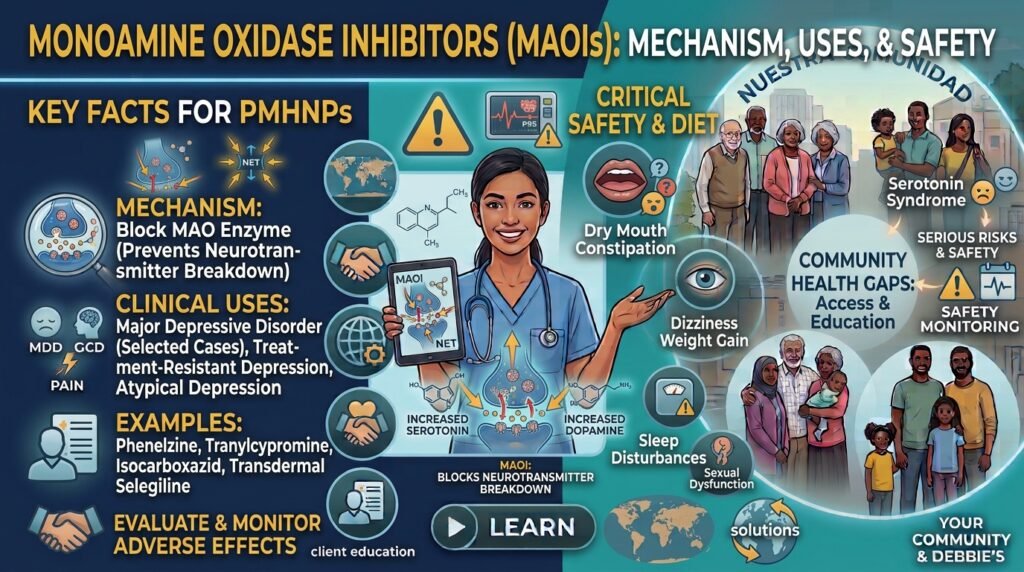
Monoamine oxidase inhibitors (MAOIs) are a class of antidepressant medications used to treat certain mood disorders, particularly major depressive disorder in selected patients. They are among the earliest antidepressants developed and remain important in psychiatric pharmacology because of their distinct mechanism of action and potential effectiveness in difficult-to-treat depression.
Although newer antidepressants, such as SSRIs and SNRIs, are generally prescribed more frequently, MAOIs may be considered when other treatments have not produced adequate improvement. Their use requires careful monitoring because they can interact with several medications and certain foods, potentially causing serious complications.
For psychiatric-mental health nurse practitioners (PMHNPs), understanding how MAOIs work, their clinical uses, dietary restrictions, and medication interactions is essential for safe treatment management.
What Are Monoamine Oxidase Inhibitors (MAOIs)?
Monoamine oxidase inhibitors are antidepressants that work by blocking the activity of monoamine oxidase enzymes. These enzymes normally break down neurotransmitters such as serotonin, norepinephrine, and dopamine.
There are two main forms of monoamine oxidase enzymes:
- Monoamine oxidase A (MAO-A): Breaks down serotonin, norepinephrine, and other monoamines.
- Monoamine oxidase B (MAO-B): Primarily breaks down phenylethylamine and contributes to dopamine metabolism.
By inhibiting these enzymes, MAOIs reduce the breakdown of certain neurotransmitters. This increases their availability and influences communication between nerve cells.
Unlike SSRIs, which primarily affect serotonin reuptake, MAOIs influence the breakdown of multiple neurotransmitters.
How Do MAOIs Work?
Under normal conditions, monoamine oxidase enzymes help regulate neurotransmitter levels by breaking down excess monoamines within nerve cells.
MAOIs inhibit this enzymatic activity, allowing neurotransmitters to remain available for longer.
Their main pharmacological effects include:
- Increased serotonin availability: MAO-A inhibition reduces serotonin breakdown, influencing mood and emotional regulation.
- Increased norepinephrine availability: Reduced norepinephrine metabolism affects alertness, attention, and other nervous system functions.
- Increased dopamine availability: Reduced dopamine breakdown can influence motivation, reward processing, and other neurological functions.
The effects depend on the particular MAOI and whether it inhibits MAO-A, MAO-B, or both.
Some traditional MAOIs irreversibly inhibit both MAO-A and MAO-B. This means the enzyme remains inactive until the body produces new enzyme molecules. Consequently, their effects can continue even after the medication has been discontinued.
Antidepressant benefits generally take several weeks to develop, although the enzyme inhibition itself occurs earlier.
Common MAOI Medications and Their Uses
Several medications belong to the MAOI class. They differ in their selectivity, duration of action, and approved clinical uses.
1. Phenelzine
Phenelzine is an irreversible, nonselective MAOI used to treat major depressive disorder, particularly in selected patients who have not responded adequately to other antidepressants.
It inhibits both MAO-A and MAO-B, increasing the availability of serotonin, norepinephrine, and dopamine.
Phenelzine may be considered for certain cases of atypical depression, although its use requires careful attention to dietary restrictions and medication interactions.
2. Tranylcypromine
Tranylcypromine is another irreversible, nonselective MAOI used to treat major depressive disorder.
It inhibits both MAO-A and MAO-B and can be considered when other antidepressant treatments have been unsuccessful.
Patients taking tranylcypromine must follow dietary precautions and avoid interacting medications because of the risk of severe blood pressure elevation and serotonin toxicity.
3. Isocarboxazid
Isocarboxazid is an irreversible, nonselective MAOI prescribed for major depressive disorder in selected circumstances.
Like phenelzine and tranylcypromine, it increases the availability of monoamine neurotransmitters by reducing their enzymatic breakdown.
It also requires careful management of food and medication interactions.
4. Selegiline Transdermal Patch
Selegiline is an MAOI available in a transdermal patch formulation for the treatment of major depressive disorder.
Unlike traditional oral MAOIs, its selectivity and dietary restrictions depend on the prescribed patch strength. At lower transdermal doses, it primarily inhibits MAO-B, while higher doses inhibit both MAO-A and MAO-B.
Dietary tyramine restrictions are required at higher patch strengths according to prescribing guidance.
Clinical Uses of MAOIs
MAOIs are not usually the first treatment choice for depression because of their dietary requirements, medication interactions, and potential adverse effects. However, they remain useful in selected clinical situations.
Their clinical uses include:
- Major depressive disorder: Certain MAOIs are prescribed when other antidepressants have not provided sufficient improvement.
- Treatment-resistant depression: They may be considered for patients who have not responded adequately to several other treatment approaches.
- Atypical depression: Phenelzine has been used in treating certain patients with atypical depressive symptoms.
- Other selected psychiatric conditions: Their use depends on the specific medication and clinical circumstances.
The decision to prescribe an MAOI requires an assessment of the patient’s medical history, previous treatment response, current medications, dietary habits, and ability to follow safety precautions.
Dietary Restrictions When Taking MAOIs
One of the most important considerations when using traditional MAOIs is dietary tyramine.
Tyramine is a naturally occurring compound found in certain foods. Under normal conditions, monoamine oxidase enzymes in the digestive system help break down tyramine before it enters the bloodstream.
When MAO-A is inhibited, tyramine may accumulate and enter circulation in higher amounts. This can cause the release of large amounts of norepinephrine, potentially leading to a sudden and dangerous increase in blood pressure known as a hypertensive crisis.
Foods High in Tyramine
Patients taking traditional MAOIs should avoid or carefully restrict foods with high tyramine content according to their medication-specific dietary guidance.
Examples include:
- Aged cheeses: Certain aged varieties, such as blue cheese, cheddar, and parmesan.
- Cured and fermented meats: Certain salami, pepperoni, and other aged or fermented meat products.
- Fermented foods: Some fermented soy products, including certain types of soy sauce and fermented bean products.
- Certain alcoholic beverages: Particularly tap beers and some unpasteurized or improperly stored alcoholic products.
- Spoiled or improperly stored foods: Foods that have undergone improper storage or spoilage may contain increased tyramine levels.
Tyramine content can vary depending on food preparation, fermentation, storage, and processing. Patients should follow the specific dietary guidance provided for their medication rather than relying on a general food list alone.
Why Is Tyramine Dangerous With MAOIs?
When a person consumes large amounts of tyramine while taking a traditional MAOI, the body may be unable to break it down effectively.
Excess tyramine can trigger the release of norepinephrine, causing a rapid rise in blood pressure.
A hypertensive crisis may present with:
- Severe headache.
- Palpitations.
- Chest pain.
- Sweating.
- Nausea or vomiting.
- Neck stiffness.
- Markedly elevated blood pressure.
Severe cases can lead to complications such as stroke, heart attack, or other organ damage.
A suspected hypertensive crisis requires immediate emergency medical attention.
Medication Interactions With MAOIs
In addition to dietary restrictions, MAOIs have important interactions with prescription medications, over-the-counter products, and certain supplements.
Combining an MAOI with another medication that increases serotonin or norepinephrine activity can cause serious complications.
1. Serotonergic Medications
Combining MAOIs with serotonergic medications can cause serotonin syndrome, a potentially life-threatening condition resulting from excessive serotonin activity.
Medications that may interact include:
- SSRIs, such as fluoxetine and sertraline.
- SNRIs, such as venlafaxine and duloxetine.
- Certain tricyclic antidepressants.
- Some opioid medications, including tramadol.
- Certain migraine medications.
These combinations are generally contraindicated or require strict specialist-directed management, depending on the specific agents involved.
2. Sympathomimetic Medications
Certain medications that increase sympathetic nervous system activity can cause dangerous blood pressure elevations when combined with MAOIs.
Examples include some decongestants containing pseudoephedrine or phenylephrine and certain stimulant medications.
Patients should consult their healthcare provider or pharmacist before using over-the-counter cold, allergy, or weight-management products.
3. Other Interacting Substances
Some herbal products and supplements may also interact with MAOIs. St. John’s wort, for example, can increase the risk of serotonin-related adverse effects when combined with certain antidepressants.
Patients should disclose all prescription medications, over-the-counter products, supplements, and herbal preparations they use.
Washout Periods When Switching Antidepressants
Switching between MAOIs and other antidepressants requires careful planning because their effects may continue after discontinuation.
A washout period is the time allowed between stopping one medication and starting another to reduce the risk of harmful interactions.
For many traditional MAOIs, a minimum washout period of 14 days is generally required before starting certain interacting antidepressants. However, the exact interval depends on the medications involved.
Fluoxetine is an important exception because it has a long elimination half-life and an active metabolite. A longer washout period, commonly at least five weeks after discontinuation, is generally required before starting an MAOI.
The appropriate interval must be confirmed using the specific medications’ prescribing information and clinical guidance. Patients should never attempt to switch antidepressants or adjust washout periods without professional supervision.
Common Side Effects of MAOIs
MAOIs can cause several adverse effects. Their severity varies depending on the medication, dosage, and individual patient factors.
Common side effects include:
1. Orthostatic Hypotension
Some patients experience a drop in blood pressure when standing from a sitting or lying position.
This may cause dizziness, lightheadedness, or fainting and can increase the risk of falls.
2. Weight Gain
Weight gain may occur during treatment with certain MAOIs. Changes in appetite and metabolism may contribute to this effect.
3. Sleep Disturbances
MAOIs can cause insomnia or other changes in sleep patterns. Some patients may also experience daytime drowsiness.
4. Sexual Dysfunction
Some individuals experience reduced sexual desire or difficulty with sexual functioning while taking MAOIs.
5. Gastrointestinal Effects
Nausea, constipation, and other gastrointestinal symptoms may occur during treatment.
6. Headache and Dizziness
Headaches and dizziness are possible adverse effects. However, a sudden severe headache in someone taking an MAOI may indicate a hypertensive crisis and requires emergency assessment.
Nursing Considerations When Administering MAOIs
Safe MAOI treatment requires careful assessment, patient education, and ongoing monitoring. Nurses and PMHNPs play an important role in identifying potential interactions and helping patients understand the precautions associated with these medications.
Assessment Before Treatment
Before initiating an MAOI, clinicians should assess:
- The patient’s mental health history and current depressive symptoms.
- Previous antidepressant treatments and responses.
- Current prescription medications and over-the-counter products.
- Use of herbal supplements and recreational substances.
- Cardiovascular history and blood pressure.
- Dietary habits and ability to follow tyramine restrictions.
- Suicide risk and other relevant safety concerns.
A complete medication review is especially important because certain combinations can cause severe adverse reactions.
Monitoring During Treatment
Ongoing monitoring helps identify treatment response and potential complications.
Important areas include:
- Blood pressure: Monitor for orthostatic hypotension and unexpected elevations in blood pressure.
- Mood and mental health: Assess depressive symptoms, functioning, and changes in suicidal thoughts.
- Medication interactions: Review new prescriptions and nonprescription products before use.
- Dietary adherence: Reinforce medication-specific tyramine restrictions.
- Adverse effects: Assess sleep changes, dizziness, weight changes, and gastrointestinal symptoms.
- Signs of serotonin syndrome: Watch for agitation, confusion, sweating, tremor, muscle rigidity, and hyperreflexia when an interacting serotonergic exposure is suspected.
Patient Education
Patient education is essential because many MAOI-related complications can be prevented through appropriate precautions.
Patients should be advised to:
- Take the medication exactly as prescribed.
- Follow the dietary restrictions associated with their specific MAOI.
- Avoid starting new prescription or over-the-counter medications without consulting a healthcare professional.
- Inform other healthcare providers and pharmacists that they are taking an MAOI.
- Avoid stopping treatment or switching antidepressants without clinical guidance.
- Recognize symptoms of a hypertensive crisis and seek emergency care if they occur.
- Seek immediate medical assessment if symptoms suggest serotonin syndrome.
- Keep a current list of their medications and supplements.
MAOIs Compared With Other Antidepressants
MAOIs, TCAs, SSRIs, and SNRIs all influence neurotransmitter activity, but their mechanisms and safety considerations differ.
| Feature | MAOIs | TCAs | SSRIs | SNRIs |
|---|---|---|---|---|
| Main action | Inhibit monoamine oxidase enzymes | Inhibit serotonin and norepinephrine reuptake | Primarily inhibit serotonin reuptake | Inhibit serotonin and norepinephrine reuptake |
| Common examples | Phenelzine, tranylcypromine, isocarboxazid | Amitriptyline, imipramine, nortriptyline | Sertraline, fluoxetine, escitalopram | Venlafaxine, duloxetine |
| Major safety concern | Dietary and medication interactions | Cardiac toxicity and overdose risk | Serotonin-related adverse effects and discontinuation symptoms | Blood pressure changes and discontinuation symptoms |
| Dietary restrictions | Required for many traditional MAOIs | Not routinely required | Not routinely required | Not routinely required |
| Typical prescribing role | Selected cases, including treatment-resistant depression | Selected cases and other specific indications | Common first-line option | Common first-line option for appropriate conditions |
MAOIs require more extensive dietary and medication precautions than most newer antidepressants. However, they remain valuable treatment options for selected patients when other medications have not been effective.
Key Takeaways
- Monoamine oxidase inhibitors are antidepressants that reduce the breakdown of serotonin, norepinephrine, and dopamine.
- Common examples include phenelzine, tranylcypromine, isocarboxazid, and transdermal selegiline.
- MAOIs may be used for major depressive disorder, particularly in selected cases of treatment-resistant depression.
- Traditional MAOIs require dietary precautions because tyramine-rich foods can trigger a hypertensive crisis.
- Combining MAOIs with certain serotonergic medications can cause serotonin syndrome.
- Washout periods are essential when switching between MAOIs and interacting antidepressants.
- Nursing responsibilities include medication reconciliation, blood pressure monitoring, dietary education, and assessment for serious adverse reactions.