
Topic: Antidepressants
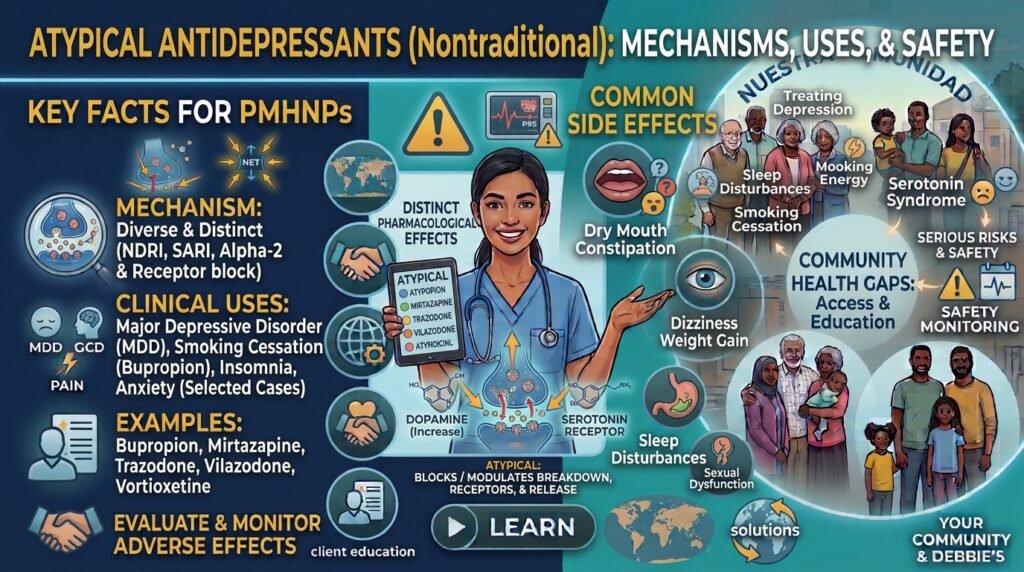
Atypical antidepressants are a group of medications used to treat depression and certain other mental health conditions. Unlike selective serotonin reuptake inhibitors (SSRIs), serotonin-norepinephrine reuptake inhibitors (SNRIs), and tricyclic antidepressants (TCAs), they do not all share one primary mechanism of action.
Instead, atypical antidepressants affect different neurotransmitter systems through several pharmacological mechanisms. Some influence dopamine and norepinephrine, while others modify serotonin activity through specific receptor pathways.
For psychiatric-mental health nurse practitioners (PMHNPs), understanding these medications is important because their different mechanisms, therapeutic benefits, and adverse effects can help guide individualized treatment decisions.
What Are Atypical Antidepressants?
Atypical antidepressants are medications used to treat depressive disorders that do not fit neatly into the traditional antidepressant classes.
They are sometimes called nontraditional antidepressants because they have different mechanisms of action from medications such as SSRIs and TCAs.
Depending on the medication, atypical antidepressants may:
- Increase dopamine and norepinephrine activity.
- Influence serotonin receptors.
- Modify the release of certain neurotransmitters.
- Affect multiple serotonin receptor pathways.
- Improve depressive symptoms through mechanisms that differ from conventional serotonin reuptake inhibition.
Some atypical antidepressants are also prescribed for other conditions, including anxiety disorders, smoking cessation, and insomnia, depending on the medication and clinical circumstances.
Types of Atypical Antidepressants
Several medications belong to this group. Each has a distinct mechanism of action, therapeutic use, and side-effect profile.
1. Bupropion
Bupropion is an antidepressant classified as a norepinephrine-dopamine reuptake inhibitor (NDRI).
It works by inhibiting the reuptake of dopamine and norepinephrine, increasing their availability in the synaptic space. Unlike most traditional antidepressants, it does not primarily act on serotonin reuptake.
Clinical uses include:
- Major depressive disorder.
- Seasonal affective disorder.
- Smoking cessation, using specific formulations and prescribing guidance.
Bupropion may be considered for patients who experience certain SSRI-related adverse effects, particularly sexual dysfunction. It is also less likely than many other antidepressants to cause weight gain.
Common side effects include:
- Dry mouth.
- Insomnia.
- Headache.
- Nausea.
- Increased sweating.
- Anxiety or agitation.
An important safety consideration is its potential to lower the seizure threshold. The risk increases with higher doses and in individuals with certain pre-existing conditions, including seizure disorders and eating disorders such as bulimia nervosa and anorexia nervosa. It is generally contraindicated in these eating disorders.
2. Mirtazapine
Mirtazapine is an antidepressant that works mainly by blocking central alpha-2 adrenergic receptors and certain serotonin receptors.
Blocking alpha-2 receptors increases the release of norepinephrine and serotonin. It also blocks specific serotonin receptors, including 5-HT2 and 5-HT3, which contributes to its distinctive pharmacological effects.
Clinical uses include:
- Major depressive disorder.
- Depression accompanied by sleep difficulties.
- Depression associated with reduced appetite, where its effects may be clinically relevant.
Mirtazapine is known for its sedating effects, particularly at lower doses, although individual responses vary.
Common side effects include:
- Drowsiness.
- Increased appetite.
- Weight gain.
- Dry mouth.
- Dizziness.
- Constipation.
Because of its potential to increase appetite and cause sedation, clinicians should consider a patient’s weight, metabolic health, sleep patterns, and daily functioning when assessing treatment suitability.
3. Trazodone
Trazodone is classified as a serotonin antagonist and reuptake inhibitor (SARI).
It blocks certain serotonin receptors, particularly 5-HT2A receptors, while also inhibiting serotonin reuptake. Its antihistaminic and alpha-1 adrenergic blocking effects contribute to sedation and other adverse effects.
Clinical uses include:
- Major depressive disorder.
- Depression accompanied by sleep disturbances.
- Insomnia, when prescribed off-label at lower doses.
Although trazodone is frequently prescribed at low doses for insomnia, it is an antidepressant medication. Its use for sleep does not mean it is primarily classified as a sleeping medication.
Common side effects include:
- Drowsiness.
- Dizziness.
- Dry mouth.
- Nausea.
- Orthostatic hypotension.
A rare but serious adverse effect is priapism, a prolonged and painful erection that requires immediate medical attention.
4. Vilazodone
Vilazodone is an antidepressant with two main pharmacological actions. It inhibits serotonin reuptake and acts as a partial agonist at serotonin 5-HT1A receptors.
This combination influences serotonin signaling through more than one mechanism.
Clinical use:
- Major depressive disorder.
Common side effects include:
- Diarrhea.
- Nausea.
- Vomiting.
- Insomnia.
- Dizziness.
Vilazodone should be taken with food because food significantly affects its absorption. Patients should follow the prescribed instructions to maintain consistent medication exposure.
5. Vortioxetine
Vortioxetine is an antidepressant that influences serotonin activity through multiple mechanisms.
It inhibits the serotonin transporter and interacts with several serotonin receptor subtypes. These actions influence serotonin signaling and other downstream neurotransmitter pathways.
Clinical use:
- Major depressive disorder.
Common side effects include:
- Nausea.
- Constipation.
- Vomiting.
- Dizziness.
- Sexual dysfunction.
Nausea is one of the most frequently reported adverse effects, particularly during the early stages of treatment.
How Do Atypical Antidepressants Work?
Unlike SSRIs and SNRIs, atypical antidepressants do not all work through the same neurotransmitter pathway.
Their mechanisms depend on the specific medication.
| Medication | Main mechanism |
|---|---|
| Bupropion | Inhibits dopamine and norepinephrine reuptake |
| Mirtazapine | Blocks central alpha-2 adrenergic receptors and certain serotonin receptors |
| Trazodone | Blocks certain serotonin receptors and inhibits serotonin reuptake |
| Vilazodone | Inhibits serotonin reuptake and partially activates 5-HT1A receptors |
| Vortioxetine | Inhibits serotonin reuptake and modulates several serotonin receptor subtypes |
These different mechanisms help explain why atypical antidepressants can produce different therapeutic effects and adverse reactions.
Clinical Uses of Atypical Antidepressants
Atypical antidepressants are used in several clinical situations depending on the patient’s symptoms, medical history, and treatment goals.
Major Depressive Disorder
Several atypical antidepressants, including bupropion, mirtazapine, trazodone, vilazodone, and vortioxetine, are used to treat major depressive disorder.
They may be prescribed as initial treatment options or considered when a patient has not responded adequately to another antidepressant.
Depression With Sleep Difficulties
Mirtazapine and trazodone may be considered when depression occurs alongside sleep disturbances because both can produce sedating effects.
However, their suitability depends on the patient’s overall clinical presentation and potential adverse effects.
Depression With Sexual Dysfunction
Bupropion may be considered for patients who experience sexual dysfunction with certain serotonergic antidepressants. It may also be used as an alternative or as an adjunct in selected treatment plans.
Smoking Cessation
Bupropion is also used to support smoking cessation. It helps reduce nicotine cravings and withdrawal symptoms through its effects on dopamine and norepinephrine pathways.
Common Side Effects of Atypical Antidepressants
Atypical antidepressants have different side-effect profiles because they act on different neurotransmitter systems and receptors.
Some common adverse effects include:
- Sleep disturbances: Bupropion and vilazodone may cause insomnia, while mirtazapine and trazodone can cause sedation.
- Weight changes: Mirtazapine is associated with increased appetite and weight gain, while bupropion is generally less likely to cause weight gain.
- Gastrointestinal symptoms: Nausea, diarrhea, constipation, and vomiting may occur depending on the medication.
- Dizziness: Some medications can cause dizziness, particularly when starting treatment or changing doses.
- Sexual dysfunction: This can occur with several atypical antidepressants, although the likelihood differs among medications.
Serious Risks and Safety Considerations
Although atypical antidepressants are generally well tolerated by many patients, certain medications carry specific safety risks.
1. Seizure Risk With Bupropion
Bupropion can lower the seizure threshold. The risk is dose-related and may increase in individuals with seizure disorders, eating disorders, or other relevant risk factors.
Clinicians should assess these factors before prescribing and follow the recommended dosing guidelines.
2. Priapism With Trazodone
Trazodone has been associated with priapism, a prolonged erection that may occur without sexual stimulation.
This condition requires urgent medical attention because delayed treatment can cause permanent tissue damage and erectile dysfunction.
3. Serotonin Syndrome
Vilazodone, vortioxetine, and trazodone influence serotonin activity. Combining serotonergic medications can increase the risk of serotonin syndrome.
Symptoms may include:
- Agitation or confusion.
- Excessive sweating.
- Tremor.
- Diarrhea.
- Increased reflexes.
- Muscle rigidity.
- Elevated body temperature.
Severe symptoms require emergency medical assessment.
4. Suicidal Thoughts and Behavioral Changes
As with other antidepressants, atypical antidepressants carry a warning about increased suicidal thoughts and behaviors in children, adolescents, and young adults, particularly during the early stages of treatment and after dosage changes.
Patients should be monitored for worsening depression, unusual behavioral changes, agitation, and emerging suicidal thoughts.
Nursing Considerations When Administering Atypical Antidepressants
Nurses and PMHNPs play an important role in evaluating treatment effectiveness, identifying adverse effects, and educating patients about safe medication use.
Assessment Before Treatment
Before starting an atypical antidepressant, clinicians should review:
- Current depressive symptoms and mental health history.
- Previous antidepressant treatment and response.
- Current medications and possible drug interactions.
- History of seizures or eating disorders when considering bupropion.
- Sleep patterns, appetite, and weight changes.
- Cardiovascular history and blood pressure where relevant.
- Suicide risk and other patient safety concerns.
Monitoring During Treatment
Ongoing monitoring should focus on the medication’s specific risks and therapeutic effects.
Important areas include:
- Mood improvement: Assess changes in depressive symptoms, daily functioning, and emotional well-being.
- Sleep patterns: Monitor insomnia, daytime drowsiness, and changes in sleep quality.
- Weight and appetite: Pay particular attention to changes in patients taking mirtazapine.
- Seizure symptoms: Assess relevant risk factors in patients receiving bupropion.
- Blood pressure: Monitor for dizziness and orthostatic hypotension, particularly with trazodone.
- Serotonin syndrome: Watch for symptoms when patients take multiple serotonergic medications.
- Suicide risk: Assess for worsening depression or emerging suicidal thoughts, particularly during treatment initiation and medication changes.
Patient Education
Patients should receive clear information about how to take their medication and recognize potential adverse effects.
Important teaching points include:
- Take medication according to the prescribed schedule.
- Do not stop treatment suddenly without consulting the prescribing clinician.
- Avoid combining antidepressants with other medications or supplements without professional review.
- Report persistent or severe side effects.
- Seek urgent medical attention for symptoms of serotonin syndrome or priapism.
- Follow specific instructions, such as taking vilazodone with food.
- Attend follow-up appointments to evaluate treatment response and safety.
Atypical Antidepressants Compared With Other Antidepressants
Atypical antidepressants differ from traditional antidepressants in their mechanisms and clinical effects.
| Feature | Atypical antidepressants | SSRIs | SNRIs |
|---|---|---|---|
| Main action | Varies by medication | Primarily inhibit serotonin reuptake | Inhibit serotonin and norepinephrine reuptake |
| Common examples | Bupropion, mirtazapine, trazodone, vilazodone, vortioxetine | Sertraline, fluoxetine, escitalopram | Venlafaxine, duloxetine |
| Main neurotransmitter effects | May affect dopamine, norepinephrine, and serotonin through different pathways | Primarily serotonin | Serotonin and norepinephrine |
| Common side effects | Depend on the medication; may include sedation, insomnia, weight changes, and nausea | Nausea, sexual dysfunction, and sleep changes | Nausea, sweating, and possible blood pressure changes |
| Clinical considerations | Selected according to individual symptoms and medication-specific risks | Common first-line treatment option | Common first-line treatment option for appropriate conditions |
Atypical antidepressants provide additional treatment options for patients with different symptoms and medication tolerability needs. Their selection should be based on individual clinical assessment rather than assuming that one medication is suitable for every patient.
Key Takeaways
- Atypical antidepressants are a diverse group of medications with different mechanisms of action.
- Common examples include bupropion, mirtazapine, trazodone, vilazodone, and vortioxetine.
- Bupropion primarily affects dopamine and norepinephrine, while other medications in this group influence serotonin through different mechanisms.
- Mirtazapine may cause sedation, increased appetite, and weight gain.
- Bupropion carries a dose-related seizure risk, while trazodone has a rare but serious association with priapism.
- Some atypical antidepressants can contribute to serotonin syndrome, particularly when combined with other serotonergic medications.
- Nursing care involves assessing treatment response, monitoring medication-specific adverse effects, reviewing interactions, and educating patients about safe use.