
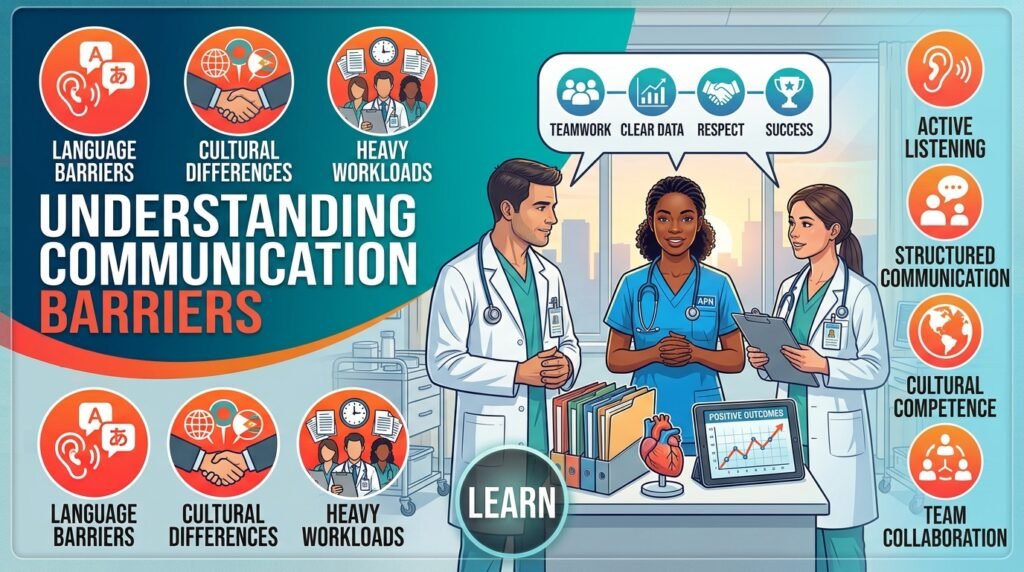
Effective communication is essential for delivering safe, coordinated, and patient-centered healthcare. Healthcare professionals rely on accurate information exchange when assessing patients, discussing treatment options, administering medications, and coordinating care. However, various barriers can interfere with communication between healthcare professionals, patients, and their families. Understanding these barriers is important for preventing misunderstandings, reducing healthcare errors, and improving patient outcomes.
What Are Barriers to Effective Communication in Healthcare?
Barriers to effective communication are factors that interfere with the accurate exchange, understanding, or interpretation of information between individuals. In healthcare settings, these barriers may arise from language differences, cultural beliefs, emotional conditions, environmental distractions, professional relationships, or limitations in communication systems.
When communication is ineffective, important patient information may be misunderstood, delayed, or omitted. This can affect clinical decision-making, treatment coordination, patient safety, and continuity of care.
Common Barriers to Effective Communication in Healthcare
Language Differences
Language barriers occur when patients and healthcare professionals do not share a common language or have difficulty understanding one another. Patients may struggle to explain their symptoms, understand diagnoses, or follow treatment instructions.
Professional interpreters and translated patient education materials can help reduce misunderstandings and improve communication.
Cultural Differences
Cultural beliefs and values can influence how people communicate, understand illness, and make healthcare decisions. Differences in beliefs about treatment, gender roles, family involvement, and traditional healthcare practices may create communication difficulties.
Healthcare professionals should demonstrate cultural awareness, avoid assumptions, and respect individual beliefs and preferences.
Heavy Workloads and Limited Time
High patient numbers, staff shortages, and demanding clinical responsibilities can reduce the time available for meaningful communication. Healthcare professionals may provide rushed explanations, overlook important details, or fail to address patient concerns.
Adequate staffing, effective workload management, and structured communication practices can help address these challenges.
Poor Listening Skills
Communication becomes ineffective when individuals interrupt others, fail to pay attention, or make assumptions before understanding the complete message. Poor listening can cause healthcare professionals to miss important symptoms or misunderstand patient concerns.
Active listening and asking appropriate follow-up questions help ensure that information is understood correctly.
Environmental Distractions
Noise, interruptions, overcrowding, and lack of privacy can interfere with communication in healthcare facilities. Busy wards and emergency departments may make it difficult for patients and professionals to exchange sensitive or complex information.
Providing appropriate communication spaces and reducing unnecessary interruptions can improve information exchange.
Emotional and Psychological Barriers
Fear, anxiety, stress, pain, and emotional distress can affect a person’s ability to communicate or understand information. Patients receiving difficult diagnoses may struggle to process medical explanations, while healthcare professionals working under pressure may experience difficulties communicating effectively.
Empathy, reassurance, appropriate timing, and supportive communication can help address these barriers.
Hierarchical Relationships Among Healthcare Professionals
Differences in professional authority and status can discourage some healthcare workers from expressing concerns or questioning clinical decisions. Junior nurses or other team members may hesitate to communicate important observations to senior professionals.
Healthcare organizations should promote respectful teamwork and encourage all professionals to raise patient safety concerns without fear of intimidation.
Incomplete or Inaccurate Documentation
Poor documentation can result in missing, unclear, or outdated patient information. This may affect communication during shift handovers, referrals, treatment planning, and transitions between healthcare facilities.
Accurate, timely, and organized documentation supports continuity of care and reduces the risk of misunderstandings.
Technological Barriers
Healthcare professionals increasingly depend on electronic health records, digital communication platforms, and telehealth systems. However, technical failures, limited digital skills, poor system integration, and restricted access to patient records can interfere with information sharing.
Appropriate staff training, reliable technology, and secure information systems can improve digital communication.
Effects of Poor Communication in Healthcare
Communication barriers can have serious consequences for patients, healthcare professionals, and healthcare organizations.
- Medical errors: Misunderstood instructions or incomplete information can contribute to medication and treatment errors.
- Delayed treatment: Failure to communicate urgent findings may delay appropriate medical intervention.
- Poor patient outcomes: Inaccurate information exchange can affect diagnosis, treatment decisions, and recovery.
- Reduced patient satisfaction: Patients may feel ignored, confused, or excluded from decisions about their care.
- Poor teamwork: Miscommunication can create disagreements and weaken professional relationships.
- Disrupted continuity of care: Missing information during handovers or referrals can result in gaps in treatment.
Strategies for Overcoming Communication Barriers
Healthcare professionals can improve communication by identifying common barriers and adopting approaches that support accurate information exchange.
Use clear and simple language: Avoid unnecessary medical terminology when communicating with patients and explain unfamiliar terms when needed.
Encourage active listening: Allow patients and colleagues to express their concerns and ask questions before responding.
Use professional interpreters: Provide appropriate language support when patients have difficulty communicating in the language used by healthcare professionals.
Promote cultural awareness: Respect patients’ beliefs, values, and preferences when discussing healthcare decisions.
Apply structured communication tools: Use methods such as SBAR to organize clinical information during handovers and professional discussions.
Improve documentation: Record patient assessments, interventions, and changes in condition accurately and promptly.
Encourage open teamwork: Create an environment where healthcare professionals can raise concerns, ask questions, and share clinical observations respectfully.
Provide communication training: Regular training and professional development can strengthen listening, conflict management, and patient communication skills.
Role of Advanced Practice Nurses in Addressing Communication Barriers
Advanced practice nurses play an important role in identifying and reducing communication barriers within healthcare environments. They communicate complex clinical information, coordinate multidisciplinary care, educate patients, and advocate for individuals whose concerns may not be adequately understood.
They also support effective teamwork by encouraging respectful discussions, clarifying clinical instructions, promoting accurate documentation, and addressing communication problems that may affect patient safety.
Through these responsibilities, advanced practice nurses help establish an environment where patients and healthcare professionals can exchange information openly and effectively.
Note!
- Communication barriers interfere with the accurate exchange and understanding of healthcare information.
- Common barriers include language differences, cultural beliefs, heavy workloads, emotional distress, and environmental distractions.
- Poor communication can contribute to medical errors, delayed treatment, and disrupted continuity of care.
- Active listening, clear language, professional interpreters, and accurate documentation can improve communication.
- Advanced practice nurses help overcome communication barriers through patient advocacy, education, coordination, and professional collaboration.
- Effective communication is essential for safe, coordinated, and patient-centered healthcare.