
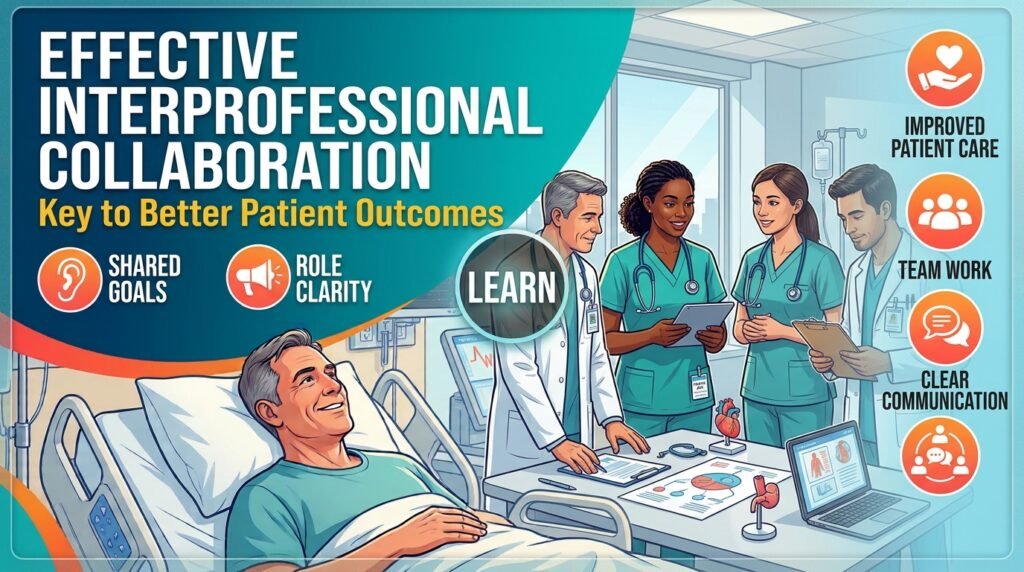
Healthcare delivery involves different professionals working together to assess patient needs, make clinical decisions, provide treatment, and promote positive health outcomes. Interprofessional collaboration is essential because patients often require care from multiple healthcare disciplines. When healthcare professionals share knowledge, communicate effectively, and coordinate their responsibilities, they can provide safer, more comprehensive, and patient-centered care.
What Is Interprofessional Collaboration in Healthcare?
Interprofessional collaboration refers to the process through which healthcare professionals from different disciplines work together with patients, families, and communities to deliver coordinated healthcare services. It involves sharing expertise, communicating clinical information, making joint decisions, and working toward common patient care goals.
Healthcare professionals involved may include:
- Physicians
- Advanced practice nurses
- Registered nurses
- Pharmacists
- Physiotherapists
- Occupational therapists
- Dietitians
- Social workers
- Laboratory professionals
Each professional contributes specialized knowledge and skills to address different aspects of a patient’s health needs.
Importance of Interprofessional Collaboration in Healthcare
Interprofessional collaboration supports effective healthcare delivery in several ways:
- Improves patient outcomes: Combining professional knowledge and expertise helps develop appropriate treatment plans.
- Enhances patient safety: Sharing accurate information helps reduce medication errors, misunderstandings, and gaps in care.
- Promotes coordinated care: Healthcare professionals can organize their activities and ensure that patients receive appropriate services.
- Supports comprehensive treatment: Different professionals address physical, psychological, nutritional, and social aspects of patient health.
- Improves clinical decision-making: Discussions among professionals provide different perspectives that support informed decisions.
- Reduces duplication of services: Coordinated responsibilities help prevent unnecessary tests, procedures, and repeated assessments.
- Strengthens professional relationships: Working together encourages mutual respect, trust, and understanding among healthcare workers.
- Promotes patient satisfaction: Patients benefit when healthcare professionals provide consistent information and coordinated services.
Principles of Effective Interprofessional Collaboration
Successful collaboration depends on several important principles.
Shared goals: Healthcare professionals should work toward common objectives based on the patient’s needs and treatment goals.
Mutual respect: Each professional should recognize and value the knowledge, responsibilities, and contributions of other healthcare team members.
Clear communication: Accurate and timely information sharing helps prevent misunderstandings and supports coordinated care.
Shared decision-making: Healthcare professionals should contribute their expertise when developing patient care plans, while considering the patient’s preferences.
Role clarity: Team members should understand their individual responsibilities and the responsibilities of other professionals.
Accountability: Each professional should take responsibility for their assigned duties and communicate when additional support is required.
Roles of Advanced Practice Nurses in Interprofessional Collaboration
Advanced practice nurses play an important role in coordinating healthcare services and promoting cooperation among different professionals. Their advanced clinical knowledge and communication abilities enable them to contribute to complex patient care decisions.
Their responsibilities include:
- Coordinating patient care: Working with different healthcare professionals to ensure that patient needs are addressed.
- Providing clinical expertise: Sharing specialized nursing knowledge during patient assessments and treatment discussions.
- Facilitating communication: Ensuring that relevant patient information is communicated accurately among team members.
- Advocating for patients: Representing patient needs, preferences, and concerns during healthcare discussions.
- Supporting healthcare teams: Providing guidance, mentoring, and professional support where appropriate.
- Promoting continuity of care: Coordinating referrals, follow-up appointments, and transitions between healthcare settings.
Examples of Interprofessional Collaboration in Healthcare
Interprofessional collaboration occurs in different healthcare environments and clinical situations.
Management of chronic diseases: A patient with diabetes may receive coordinated care from an advanced practice nurse, physician, dietitian, pharmacist, and other relevant professionals. The team works together to monitor blood glucose levels, review medications, provide nutritional guidance, and prevent complications.
Postoperative patient care: After surgery, nurses, surgeons, anesthetists, and physiotherapists may collaborate to monitor recovery, manage pain, prevent complications, and support rehabilitation.
Mental health care: Patients experiencing mental health conditions may receive support from psychiatric nurses, psychiatrists, psychologists, and social workers. Collaboration helps address medical, emotional, and social needs.
Maternal and child healthcare: Midwives, obstetricians, pediatricians, nurses, and nutrition professionals may work together to support maternal health, safe delivery, and newborn care.
Challenges of Interprofessional Collaboration
Although collaboration offers many benefits, healthcare teams may experience challenges that affect their ability to work effectively.
- Poor communication between healthcare professionals
- Unclear roles and responsibilities
- Differences in professional opinions
- Hierarchical relationships within healthcare settings
- Heavy workloads and limited staffing
- Inadequate time for team discussions
- Differences in professional training and approaches to patient care
- Limited access to shared patient information
These challenges can lead to misunderstandings, delays in treatment, and gaps in patient care.
Strategies for Improving Interprofessional Collaboration
Healthcare organizations and professionals can strengthen collaboration through practical approaches that encourage communication and teamwork.
- Establish clear roles and responsibilities for each team member.
- Conduct regular multidisciplinary meetings to discuss patient progress.
- Use structured communication tools during patient handovers.
- Encourage mutual respect and equal opportunities for professional contributions.
- Provide interprofessional education and teamwork training.
- Use shared healthcare records to improve access to relevant patient information.
- Involve patients and families in care planning and decision-making.
- Develop clear procedures for resolving disagreements and addressing concerns.
Note!
- Interprofessional collaboration involves healthcare professionals from different disciplines working together to provide coordinated patient care.
- It improves patient safety, clinical decision-making, and continuity of care.
- Effective collaboration requires clear communication, mutual respect, shared goals, and role clarity.
- Advanced practice nurses contribute through clinical expertise, care coordination, communication, and patient advocacy.
- Poor communication, professional disagreements, and unclear responsibilities can interfere with teamwork.
- Regular team discussions, structured communication, and interprofessional education can strengthen collaboration.