
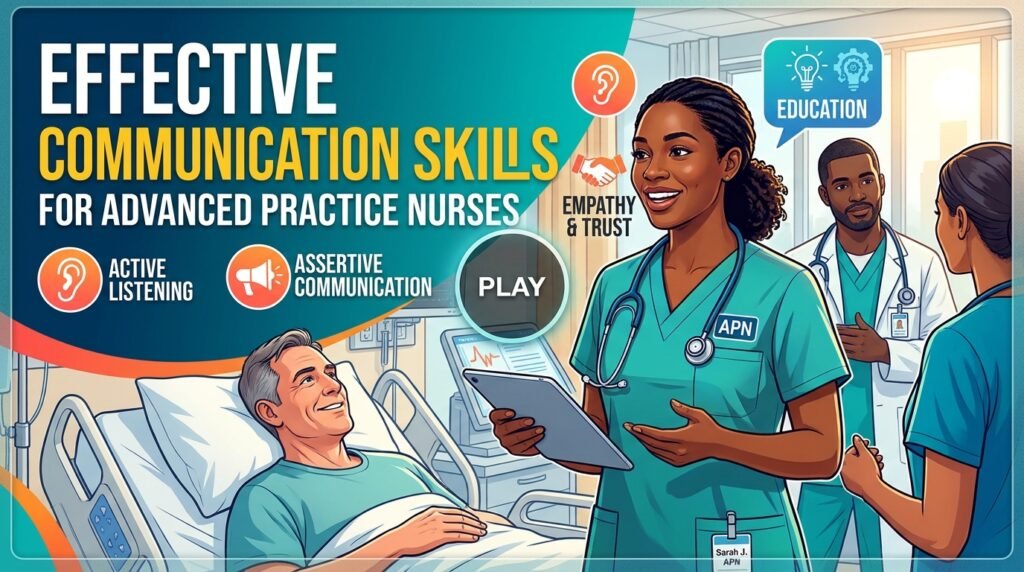
Effective communication is a fundamental skill for advanced practice nurses because it influences patient relationships, clinical decisions, teamwork, and the quality of healthcare delivery. Advanced practice nurses frequently handle complex patient needs, explain medical information, coordinate treatment, and collaborate with professionals from different healthcare disciplines. Developing strong communication skills helps them perform these responsibilities effectively while promoting safe, respectful, and patient-centered care.
What Are Communication Skills in Advanced Nursing Practice?
Communication skills refer to the abilities healthcare professionals use to exchange information, understand others, and establish meaningful professional relationships. For advanced practice nurses, these skills involve listening to patients, asking relevant questions, explaining clinical information, discussing treatment options, and sharing important patient details with other healthcare professionals.
Effective communication requires adapting the message to the audience and situation. For example, a nurse may use medical terminology when discussing a patient’s condition with a physician but explain the same information in simpler language when educating the patient.
Essential Communication Skills for Advanced Practice Nurses
Advanced practice nurses require several communication skills to support effective patient care and professional collaboration.
Active Listening
Active listening involves giving full attention to the person speaking, understanding their message, and responding appropriately. It allows nurses to identify patient concerns, recognize important symptoms, and understand individual healthcare needs.
Empathy and Compassion
Empathy involves understanding and acknowledging another person’s feelings and experiences. Advanced practice nurses demonstrate empathy by listening without judgment, recognizing emotional distress, and responding with compassion. This helps establish trust and encourages patients to communicate openly.
Clear and Effective Verbal Communication
Nurses must communicate clinical information accurately and in a way that others can understand. This includes explaining diagnoses, discussing treatment options, providing instructions, and communicating patient updates to healthcare teams.
Nonverbal Communication
Nonverbal communication involves using facial expressions, gestures, posture, eye contact, and body language to convey information. Appropriate nonverbal behavior can demonstrate attentiveness, reassurance, and respect during patient interactions.
Critical Questioning
Asking appropriate questions helps nurses obtain accurate patient information and clarify uncertainties. Open-ended questions encourage patients to describe their symptoms and experiences, while focused questions help gather specific clinical details.
Patient Education and Information Sharing
Advanced practice nurses must explain health conditions, medications, treatment procedures, and self-care practices in understandable language. They should also confirm that patients understand the information rather than assuming that instructions have been understood.
Conflict Management
Differences in opinions may arise between patients, families, and healthcare professionals. Advanced practice nurses need to communicate respectfully, listen to different perspectives, and work toward solutions that support patient needs and safety.
Assertive Communication
Assertive communication involves expressing information, concerns, and professional opinions confidently while respecting others. It enables nurses to raise patient safety concerns, clarify clinical instructions, and advocate for appropriate patient care.
Communication Skills When Interacting With Patients and Families
Advanced practice nurses communicate with patients and families throughout the healthcare process. They obtain health histories, explain clinical findings, discuss available treatments, and provide guidance on managing health conditions.
Effective patient communication involves:
- Using simple language when explaining medical information
- Allowing patients to express their concerns without interruption
- Respecting cultural beliefs and personal preferences
- Maintaining privacy and confidentiality
- Encouraging questions about treatment and care
- Involving family members in discussions when appropriate and with the patient’s consent
These practices help patients feel respected, informed, and involved in decisions concerning their health.
Communication Skills for Healthcare Team Collaboration
Advanced practice nurses work with physicians, registered nurses, pharmacists, therapists, and other healthcare professionals. Effective communication ensures that relevant patient information is shared and that different professionals understand their responsibilities.
Important practices include providing accurate patient handovers, documenting clinical findings, communicating changes in patient conditions promptly, participating in multidisciplinary discussions, and clarifying treatment instructions.
These skills support continuity of care and reduce the risk of misunderstandings that may affect patient safety.
Barriers to Effective Communication
Several factors can interfere with communication in advanced nursing practice, including:
- Language differences between patients and healthcare professionals
- Cultural beliefs that influence communication
- Heavy workloads and limited time
- Noise and interruptions in healthcare environments
- Emotional distress among patients and families
- Poor documentation or incomplete patient information
- Professional disagreements within healthcare teams
Advanced practice nurses can address these challenges by using clear language, confirming understanding, respecting cultural differences, and encouraging open communication.
Ways to Improve Communication Skills in Advanced Nursing Practice
Communication skills can be strengthened through continuous professional development and practical experience. Advanced practice nurses can improve their communication by participating in communication training, seeking feedback from colleagues, practicing active listening, and reflecting on patient interactions.
Other useful approaches include using structured communication tools, improving cultural awareness, maintaining professional boundaries, and learning how to communicate effectively during stressful clinical situations.
Key Takeaways
- Communication skills help advanced practice nurses provide safe and patient-centered care.
- Active listening, empathy, and clear verbal communication support effective patient interactions.
- Assertive communication helps nurses advocate for patients and address safety concerns.
- Patient education requires clear explanations and confirmation of understanding.
- Effective communication strengthens collaboration among healthcare professionals.
- Continuous practice and professional development help improve communication abilities.