
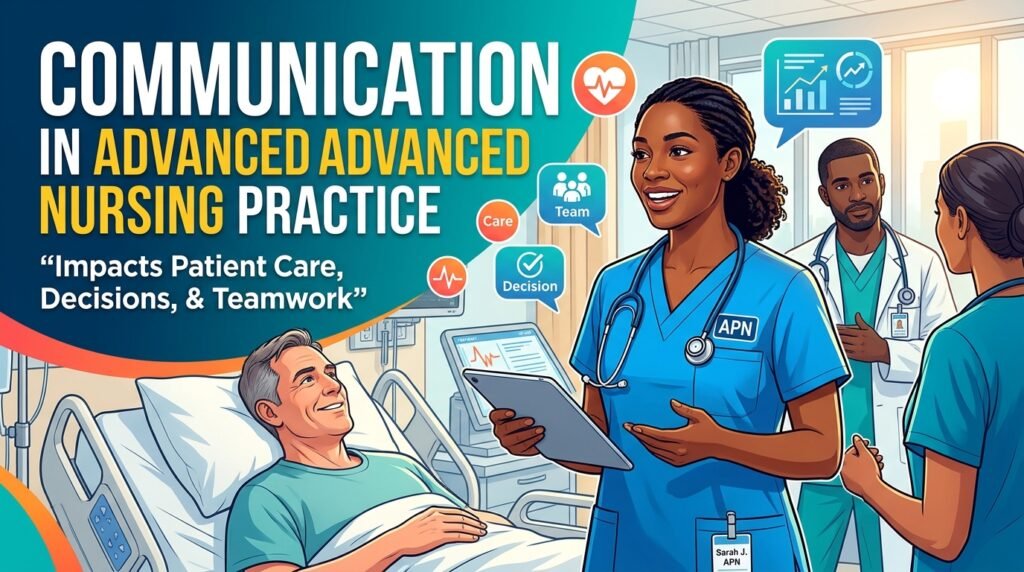
Communication is an essential part of advanced nursing practice because it influences patient care, clinical decision-making, teamwork, and healthcare outcomes. Advanced practice nurses (APNs) interact with patients, families, physicians, nurses, and other healthcare professionals to assess health needs, coordinate treatment, and promote quality care. Effective communication helps ensure that relevant information is shared accurately, patient concerns are understood, and healthcare decisions are made collaboratively.
What Is Communication in Advanced Nursing Practice?
Communication in advanced nursing practice refers to the exchange of information, knowledge, and ideas between advanced practice nurses and other individuals involved in patient care. It involves verbal, nonverbal, written, and electronic methods of sharing information to support clinical activities and professional relationships.
Advanced practice nurses use communication to explain diagnoses, discuss treatment options, educate patients, coordinate care, and communicate clinical findings to other healthcare professionals. It also involves listening actively, responding appropriately to patient concerns, and adapting communication to different individuals and healthcare situations.
Importance of Communication in Advanced Nursing Practice
Effective communication supports several important aspects of advanced nursing practice:
- Improves Patient Outcomes: Clear communication helps patients understand their health conditions, follow treatment recommendations, and participate in their care.
- Promotes Patient Safety: Accurate information sharing reduces misunderstandings, medication errors, and mistakes during patient handovers.
- Supports Clinical Decision-Making: Sharing assessment findings and clinical information helps healthcare professionals make informed decisions.
- Strengthens Therapeutic Relationships: Respectful communication builds trust between patients and healthcare providers.
- Encourages Patient Participation: Patients are more likely to express concerns and participate in treatment decisions when they feel heard and understood.
- Improves Continuity of Care: Effective communication ensures that important patient information is transferred between healthcare professionals and care settings.
- Promotes Teamwork: Sharing information and professional opinions supports coordinated care among different healthcare disciplines.
Types of Communication Used in Advanced Nursing Practice
Advanced practice nurses use different communication methods depending on the situation, the information being shared, and the individuals involved.
Verbal Communication
Verbal communication involves sharing information through spoken words. Advanced practice nurses use it when conducting patient assessments, explaining diagnoses, discussing treatment options, and consulting other healthcare professionals.
Clear language, appropriate tone, and well-organized explanations help ensure that information is understood correctly.
Nonverbal Communication
Nonverbal communication involves conveying information without spoken words. It includes facial expressions, eye contact, posture, gestures, and body language.
For example, maintaining appropriate eye contact and using an attentive posture can help patients feel respected and encouraged to discuss their health concerns.
Written Communication
Written communication involves documenting and sharing patient information through clinical records, reports, referral letters, treatment plans, and other healthcare documents.
Accurate documentation is important because it provides a record of patient assessments, interventions, clinical decisions, and responses to treatment.
Electronic Communication
Electronic communication involves using digital technologies to exchange healthcare information. Examples include electronic health records, secure messaging systems, telehealth platforms, and electronic referrals.
These tools can improve access to patient information and support communication between healthcare professionals, particularly when care is provided across different locations.
Communication Between Advanced Practice Nurses and Patients
Patient communication is a major responsibility of advanced practice nurses. It involves understanding the patient’s health concerns, explaining clinical information, discussing treatment options, and supporting informed healthcare decisions.
Advanced practice nurses should use language that patients can understand rather than relying heavily on medical terminology. They should also consider the patient’s cultural background, health literacy, emotional state, and personal preferences.
Active listening is particularly important because it allows nurses to understand patient concerns, identify relevant information, and respond appropriately. Patients should also be given opportunities to ask questions and express their preferences.
Communication Within Healthcare Teams
Advanced practice nurses work with different healthcare professionals to provide coordinated patient care. Effective communication within these teams ensures that clinical information, treatment decisions, and patient needs are shared accurately.
For example, an advanced practice nurse managing a patient with a chronic condition may communicate with physicians, pharmacists, dietitians, and other nurses to coordinate treatment and monitor progress.
Healthcare team communication may involve:
- Sharing patient assessment findings.
- Discussing treatment plans and clinical decisions.
- Providing patient updates during handovers.
- Coordinating referrals and follow-up care.
- Reporting changes in a patient’s condition.
- Discussing patient safety concerns.
Challenges Affecting Communication in Advanced Nursing Practice
Despite its importance, communication can be affected by several challenges within healthcare settings.
Common challenges include:
- Language differences between patients and healthcare professionals.
- Cultural differences and varying health beliefs.
- Heavy workloads and limited time for patient interaction.
- Hierarchical relationships within healthcare teams.
- Incomplete or inaccurate patient documentation.
- Poor listening and misunderstandings.
- Limited access to communication technologies.
- Differences in professional opinions and clinical priorities.
These challenges can affect patient understanding, teamwork, and the quality of care. Healthcare professionals should address them through clear communication procedures, appropriate training, active listening, and respectful professional relationships.
Strategies for Effective Communication in Advanced Nursing Practice
Advanced practice nurses can strengthen communication by applying practical strategies during patient interactions and professional collaboration.
- Practice Active Listening: Give patients and colleagues attention without unnecessary interruptions.
- Use Clear Language: Explain medical information in simple terms that match the listener’s level of understanding.
- Encourage Questions: Allow patients and healthcare professionals to seek clarification when information is unclear.
- Provide Accurate Documentation: Record relevant patient information clearly and promptly.
- Use Structured Communication Tools: Apply approaches such as SBAR (Situation, Background, Assessment, Recommendation) when sharing important clinical information.
- Respect Cultural Differences: Consider individual beliefs, values, and communication preferences.
- Provide Feedback: Confirm that information has been understood and clarify misunderstandings.
- Maintain Confidentiality: Share patient information only through appropriate channels and with authorized individuals.
Role of Advanced Practice Nurses in Promoting Effective Communication
Advanced practice nurses have an important role in establishing effective communication practices within healthcare settings. They serve as patient advocates, clinical decision-makers, educators, and members of multidisciplinary teams.
Through these responsibilities, they help patients understand their health conditions, support communication between healthcare professionals, address misunderstandings, and promote coordinated care. They also encourage professional dialogue and contribute to a healthcare environment where patient concerns and clinical information can be communicated openly and respectfully.
Note!
- Communication is essential for effective advanced nursing practice and quality patient care.
- Advanced practice nurses use verbal, nonverbal, written, and electronic communication.
- Effective communication improves patient safety, clinical decision-making, and continuity of care.
- Active listening and clear explanations help establish trust with patients.
- Communication within healthcare teams supports coordinated and collaborative treatment.
- Structured communication tools such as SBAR help improve the accuracy of clinical information sharing.