
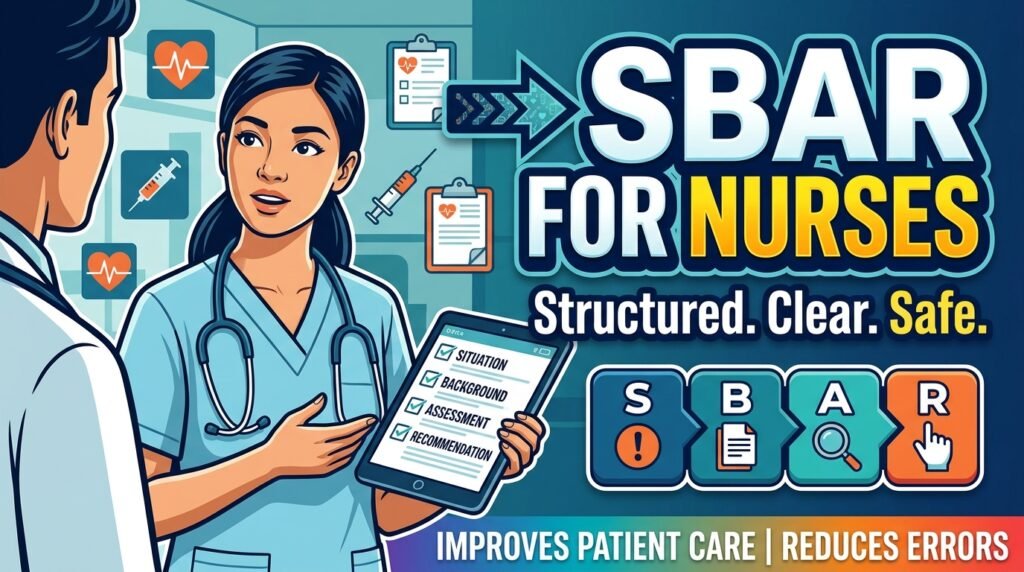
Effective communication is essential in nursing, particularly when sharing patient information, reporting changes in health conditions, and coordinating treatment. Healthcare professionals need a consistent way to communicate important clinical information accurately and efficiently. SBAR is a structured communication tool that helps nurses organize information and deliver clear, concise messages to other healthcare professionals. It supports patient safety, improves teamwork, and promotes continuity of care.
What Is SBAR Communication in Nursing?
SBAR stands for Situation, Background, Assessment, and Recommendation. It is a structured communication framework used by healthcare professionals to exchange important patient information in an organized manner.
The tool provides a consistent format for communicating clinical concerns, especially during patient handovers, emergency situations, referrals, and discussions about changes in a patient’s condition.
SBAR helps nurses focus on the most relevant information instead of providing lengthy or disorganized explanations. It is commonly used when communicating with physicians, advanced practice nurses, and other members of the healthcare team.
The Four Steps of SBAR Communication
SBAR consists of four essential components, each serving a specific purpose during clinical communication.
1. Situation
The situation describes the immediate reason for the communication. The nurse briefly explains who they are, identifies the patient, and states the current concern.
Important information may include:
- Patient’s name and identification details
- Current location or ward
- Immediate clinical problem
- Reason for contacting the healthcare professional
Example:
“My name is Nurse Jane from the medical ward. I am calling about Mr. David, a patient admitted with pneumonia. He is experiencing increased difficulty breathing, and his oxygen saturation has dropped to 88%.”
2. Background
The background provides relevant information about the patient’s medical history and current treatment. It helps the receiving healthcare professional understand the circumstances surrounding the problem.
Information may include:
- Primary diagnosis
- Relevant medical history
- Current medications and treatments
- Recent procedures or interventions
- Allergies
- Previous clinical findings
Example:
“Mr. David was admitted two days ago with pneumonia. He is receiving prescribed antibiotics and supplemental oxygen. His oxygen saturation was previously 95% while receiving oxygen.”
3. Assessment
The assessment involves communicating the nurse’s clinical observations and findings. It explains what the nurse has noticed and why the situation may require attention.
Information may include:
- Vital signs
- Physical assessment findings
- Changes in the patient’s condition
- Relevant laboratory results
- The nurse’s clinical concerns
Example:
“His respiratory rate is 30 breaths per minute, his heart rate is 115 beats per minute, and he appears increasingly breathless. I am concerned that his respiratory condition is deteriorating.”
4. Recommendation
The recommendation communicates what action or assistance is needed. The nurse clearly states the concern and suggests the next appropriate step.
This may involve requesting an immediate assessment, additional investigations, treatment review, or urgent intervention.
Example:
“I would like you to assess the patient immediately. Could we arrange an urgent review of his respiratory condition and determine whether additional treatment or respiratory support is required?”
Complete Example of SBAR Communication in Nursing
Consider a situation in which a nurse identifies a sudden deterioration in a patient’s condition.
| SBAR Component | Information Communicated |
|---|---|
| Situation | Patient is experiencing increased difficulty breathing, with oxygen saturation at 88%. |
| Background | Patient was admitted with pneumonia and is receiving antibiotics and supplemental oxygen. |
| Assessment | Respiratory rate is 30 breaths per minute, heart rate is 115 beats per minute, and the patient appears breathless. |
| Recommendation | Request immediate medical assessment and review of the patient’s respiratory support. |
This example demonstrates how SBAR organizes clinical information and helps healthcare professionals understand the urgency of a patient’s condition.
Importance of SBAR Communication in Nursing
SBAR offers several benefits in healthcare environments:
- Improves patient safety: Helps reduce misunderstandings when communicating important clinical information.
- Promotes clear communication: Provides a consistent structure for organizing patient information.
- Supports clinical decision-making: Helps healthcare professionals receive relevant details needed to assess patient conditions.
- Enhances teamwork: Encourages effective communication between nurses, physicians, and other healthcare professionals.
- Improves patient handovers: Helps ensure important information is communicated when responsibility for patient care changes.
- Saves time: Allows healthcare professionals to communicate clinical concerns without unnecessary information.
- Supports early intervention: Helps nurses communicate changes in patient conditions promptly.
When Is SBAR Used in Healthcare?
SBAR can be applied in different clinical situations where accurate communication is necessary.
Patient handovers: Nurses use SBAR when transferring responsibility for patient care between shifts or departments.
Emergency situations: It helps communicate urgent patient concerns and request immediate medical assistance.
Clinical referrals: Nurses can use SBAR when referring patients to specialists or other healthcare departments.
Reporting patient deterioration: It provides a structured approach for communicating changes in vital signs, symptoms, or general health conditions.
Communication during treatment: Healthcare professionals can use SBAR when discussing treatment changes, medication concerns, and patient progress.
Challenges in Using SBAR Communication
Although SBAR improves communication, its effectiveness may be affected by several challenges.
- Incomplete patient information
- Poor clinical assessment skills
- Limited understanding of the SBAR framework
- Heavy workloads and time constraints
- Reluctance to communicate concerns to senior professionals
- Failure to provide clear recommendations
- Inadequate training and inconsistent use
Healthcare organizations can address these challenges through regular staff training, clinical simulations, clear communication guidelines, and consistent use of SBAR during appropriate clinical interactions.
Role of Advanced Practice Nurses in SBAR Communication
Advanced practice nurses use SBAR to communicate complex clinical information, coordinate patient care, and support informed clinical decisions. Their advanced assessment skills enable them to identify significant changes in patient conditions and communicate these findings to other healthcare professionals.
They may also train and mentor nursing staff in structured communication, promote consistent handover practices, and encourage team members to report patient safety concerns promptly.
Note!
- SBAR stands for Situation, Background, Assessment, and Recommendation.
- It is a structured tool for communicating important clinical information.
- Each component helps healthcare professionals organize and understand patient-related concerns.
- SBAR is commonly used during handovers, referrals, emergencies, and reports of patient deterioration.
- It improves communication, teamwork, and patient safety.
- Advanced practice nurses use SBAR to support clinical coordination and effective healthcare collaboration.