
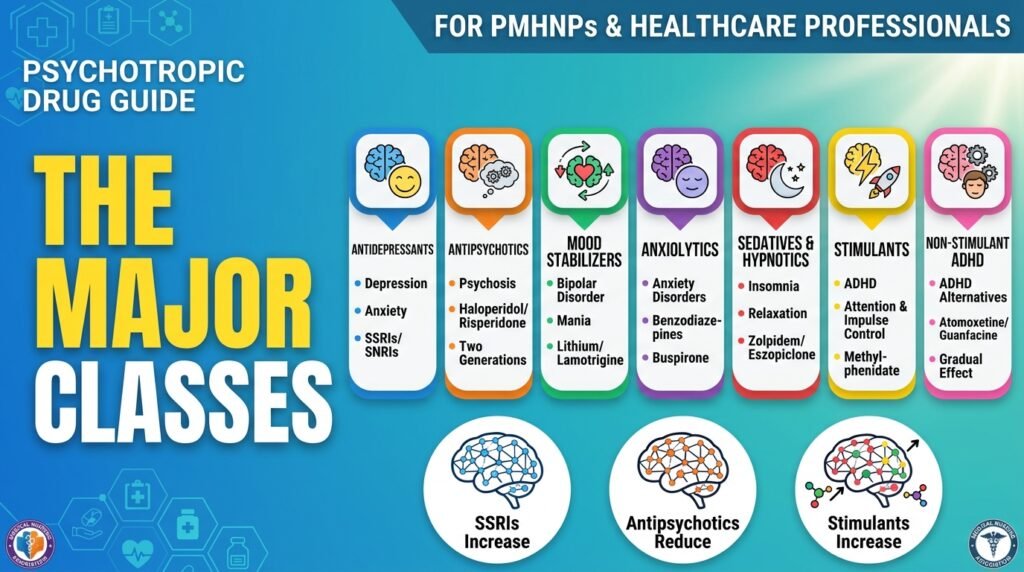
Psychiatric medications play an important role in managing mental health conditions such as depression, anxiety disorders, bipolar disorder, schizophrenia, and attention-deficit/hyperactivity disorder (ADHD). These medications are commonly called psychotropic drugs because they affect brain activity, mood, thoughts, emotions, behavior, or perception.
Psychotropic medications are classified into different groups based on their primary therapeutic uses, mechanisms of action, and effects on the central nervous system. Understanding these classifications helps psychiatric-mental health nurse practitioners (PMHNPs) recognize how different medications work, identify potential adverse effects, and support safe medication management.
What Are Psychotropic Drugs?
Psychotropic drugs are medications that influence mental processes and behavior by affecting chemical signaling in the brain and central nervous system. They may alter the activity of neurotransmitters such as serotonin, dopamine, norepinephrine, gamma-aminobutyric acid (GABA), and glutamate.
These medications are prescribed to manage symptoms associated with various psychiatric conditions. Depending on the medication, they may improve mood, reduce anxiety, stabilize emotional changes, decrease psychotic symptoms, or improve attention and impulse control.
Psychotropic medications do not all work in the same way. Some increase the availability of certain neurotransmitters, while others block or modify receptor activity.
How Are Psychiatric Medications Classified?
Psychiatric medications are generally classified according to the mental health symptoms or conditions they are primarily used to treat. The major categories include:
- Antidepressants
- Antipsychotics
- Mood stabilizers
- Anxiolytics
- Sedatives and hypnotics
- Stimulants
- Non-stimulant ADHD medications
Some medications have overlapping uses. For example, certain antidepressants may also be prescribed for anxiety disorders, while some antipsychotics are used as additional treatments for depression or bipolar disorder.
1. Antidepressants
Antidepressants are medications primarily used to treat depressive disorders. They are also prescribed for several anxiety disorders, obsessive-compulsive disorder (OCD), post-traumatic stress disorder (PTSD), and other conditions.
Most antidepressants influence neurotransmitters involved in mood regulation, particularly serotonin and norepinephrine.
Major types of antidepressants include:
- Selective serotonin reuptake inhibitors (SSRIs): These medications increase serotonin availability by reducing its reuptake into nerve cells. Examples include fluoxetine, sertraline, escitalopram, and paroxetine.
- Serotonin-norepinephrine reuptake inhibitors (SNRIs): These medications reduce the reuptake of serotonin and norepinephrine. Examples include venlafaxine, duloxetine, and desvenlafaxine.
- Tricyclic antidepressants (TCAs): These older antidepressants affect serotonin and norepinephrine reuptake but may also influence other receptors, contributing to their side-effect profiles. Examples include amitriptyline, nortriptyline, and imipramine.
- Monoamine oxidase inhibitors (MAOIs): These medications inhibit monoamine oxidase enzymes responsible for breaking down certain neurotransmitters. Examples include phenelzine and tranylcypromine.
- Atypical antidepressants: This group includes medications with different mechanisms of action, such as bupropion, mirtazapine, and trazodone.
Clinical consideration: Antidepressants commonly require several weeks for their full therapeutic effects to become apparent. PMHNPs monitor treatment response, adverse effects, adherence, and changes in symptoms, including suicidal thoughts when clinically relevant.
2. Antipsychotics
Antipsychotics are medications primarily used to manage psychotic symptoms, including hallucinations, delusions, and disorganized thinking. They are commonly prescribed for schizophrenia and may also be used in bipolar disorder and other conditions.
Many antipsychotics influence dopamine signaling, particularly through dopamine D2 receptors. However, their mechanisms differ, and some also affect serotonin and other neurotransmitter systems.
Antipsychotics are divided into two major generations.
First-generation antipsychotics (typical antipsychotics)
These medications primarily block dopamine D2 receptors. Examples include:
- Haloperidol
- Chlorpromazine
- Fluphenazine
- Perphenazine
They can be effective in reducing psychotic symptoms but are associated with a higher risk of extrapyramidal symptoms, including muscle stiffness, tremors, restlessness, and involuntary movements.
Second-generation antipsychotics (atypical antipsychotics)
These medications generally affect both dopamine and serotonin receptors, although their mechanisms vary. Examples include:
- Risperidone
- Olanzapine
- Quetiapine
- Aripiprazole
- Clozapine
- Lurasidone
Second-generation medications are also associated with important adverse effects. These may include weight gain, changes in blood glucose and lipid levels, sedation, and movement-related symptoms. Clozapine requires particular attention because of the risk of severe neutropenia and the need for absolute neutrophil count monitoring.
Clinical consideration: Monitoring may include weight, blood pressure, glucose, lipid levels, movement symptoms, and other medication-specific safety measures.
3. Mood Stabilizers
Mood stabilizers are medications used to reduce extreme mood changes, particularly in bipolar disorder. They help manage manic or depressive episodes and, depending on the medication, may reduce the likelihood of future episodes.
Common mood stabilizers include:
- Lithium: Used to treat acute mania and for long-term mood stabilization. It requires monitoring of serum lithium levels, kidney function, and thyroid function.
- Valproate (valproic acid or divalproex): Commonly used to manage manic episodes. Monitoring may include liver function, blood counts, and serum levels when indicated. It also carries important reproductive safety considerations.
- Lamotrigine: Used primarily for maintenance treatment of bipolar disorder, particularly in preventing depressive episodes. It requires gradual dose increases because of the risk of serious skin reactions.
- Carbamazepine: An anticonvulsant that may be used to treat manic or mixed episodes. It has potential drug interactions and requires appropriate safety monitoring.
Although these medications are grouped together as mood stabilizers, they are not interchangeable. Their effectiveness, indications, adverse effects, and monitoring requirements differ.
4. Anxiolytics
Anxiolytics are medications used to reduce anxiety symptoms. They may be prescribed for generalized anxiety disorder, panic disorder, and other anxiety-related conditions.
Common types include:
- Benzodiazepines: These medications enhance the effects of GABA, an inhibitory neurotransmitter that reduces neuronal activity. Examples include lorazepam, diazepam, clonazepam, and alprazolam.
- Buspirone: A non-benzodiazepine medication that acts primarily on serotonin 5-HT1A receptors. It is commonly used for generalized anxiety disorder and does not produce the same pattern of dependence as benzodiazepines.
- Hydroxyzine: An antihistamine that can be used for short-term relief of anxiety symptoms. Its sedating effects are related to histamine receptor blockade.
Benzodiazepines can provide relatively rapid anxiety relief, but their use requires careful consideration because of the risks of tolerance, dependence, sedation, and withdrawal. They may also cause dangerous respiratory depression when combined with opioids or other central nervous system depressants.
Clinical consideration: PMHNPs assess the severity and duration of anxiety symptoms, evaluate medication risks, and consider appropriate long-term treatment options.
5. Sedatives and Hypnotics
Sedatives and hypnotics are medications used to reduce central nervous system activity and promote relaxation or sleep. They may be prescribed for certain sleep disorders, particularly when insomnia significantly affects daily functioning.
Examples include:
- Zolpidem: A medication that acts on GABA-A receptor complexes and is used for insomnia.
- Eszopiclone: A non-benzodiazepine hypnotic used to support sleep.
- Temazepam: A benzodiazepine prescribed for short-term management of insomnia.
- Ramelteon: A medication that acts on melatonin receptors to help regulate the sleep-wake cycle.
These medications have different mechanisms and safety profiles. Some may cause next-day drowsiness, impaired coordination, memory problems, or unusual sleep-related behaviors. Certain sedatives also carry risks of dependence and withdrawal.
Clinical consideration: Medication selection should take into account the underlying cause of sleep difficulties, other medications, substance use, and the potential for daytime impairment.
6. Stimulants
Stimulants are medications that increase activity in certain central nervous system pathways. They are commonly used to treat ADHD by improving attention, concentration, and impulse control.
Most stimulant medications influence dopamine and norepinephrine signaling.
Examples include:
- Methylphenidate
- Dexmethylphenidate
- Amphetamine
- Lisdexamfetamine
Stimulants can improve attention and reduce hyperactive or impulsive behaviors in individuals with ADHD. However, they may cause reduced appetite, insomnia, increased heart rate, elevated blood pressure, and other adverse effects.
They also require careful assessment because of their potential for misuse and dependence.
Clinical consideration: PMHNPs monitor symptom improvement, appetite, sleep, cardiovascular indicators, and possible misuse or diversion.
7. Non-Stimulant ADHD Medications
Non-stimulant ADHD medications are alternatives for individuals who cannot tolerate stimulants, have certain contraindications, or may benefit from a different treatment approach.
Examples include:
- Atomoxetine: A selective norepinephrine reuptake inhibitor that improves attention and impulse control.
- Guanfacine: An alpha-2A adrenergic receptor agonist that can help manage ADHD symptoms, particularly hyperactivity and impulsivity.
- Clonidine: An alpha-2 adrenergic agonist that may be used to manage ADHD symptoms, particularly hyperactivity and impulsivity.
Unlike many stimulant medications, these drugs do not produce the same immediate stimulant effects. Their therapeutic benefits may develop gradually.
Clinical consideration: Monitoring may include changes in attention, behavior, blood pressure, heart rate, and medication tolerability.
Comparison of the Major Classes of Psychotropic Drugs
The following overview summarizes the main categories of psychiatric medications and their common therapeutic uses.
| Medication class | Primary therapeutic use | Examples |
|---|---|---|
| Antidepressants | Depression and selected anxiety disorders | Sertraline, fluoxetine, venlafaxine |
| Antipsychotics | Psychosis and selected mood disorders | Risperidone, haloperidol, quetiapine |
| Mood stabilizers | Bipolar disorder and mood episode prevention | Lithium, lamotrigine, valproate |
| Anxiolytics | Anxiety symptom management | Buspirone, lorazepam, hydroxyzine |
| Sedatives and hypnotics | Sleep-related conditions | Zolpidem, eszopiclone, ramelteon |
| Stimulants | ADHD | Methylphenidate, lisdexamfetamine |
| Non-stimulant ADHD medications | ADHD | Atomoxetine, guanfacine, clonidine |
Why Is It Important to Understand Psychiatric Medication Classifications?
Understanding psychotropic drug classifications helps nursing professionals recognize the purpose of different medications and the considerations involved in their use.
This knowledge supports several areas of psychiatric practice:
- Medication selection: Understanding medication classes helps clinicians consider appropriate treatment options based on a patient’s symptoms, diagnosis, history, and clinical needs.
- Recognizing adverse effects: Different medication groups have characteristic risks. Recognizing these differences supports early identification and appropriate intervention.
- Monitoring treatment response: Clinicians can assess whether a medication is improving the symptoms it is intended to manage.
- Identifying drug interactions: Some psychotropic medications interact with other prescriptions, over-the-counter drugs, and substances, potentially increasing adverse effects.
- Supporting patient education: Nurses can explain medication purposes, expected effects, possible adverse reactions, and the importance of following the prescribed treatment plan.
The Role of PMHNPs in Psychotropic Medication Management
Psychiatric-mental health nurse practitioners play an important role in evaluating, prescribing, and monitoring psychiatric medications within their legal scope of practice.
Their responsibilities may include:
- Conducting psychiatric assessments: Evaluating symptoms, medical history, psychiatric history, current medications, and relevant risk factors.
- Selecting appropriate medications: Considering the patient’s diagnosis, treatment goals, previous medication responses, potential interactions, and individual preferences.
- Monitoring therapeutic outcomes: Assessing whether the medication is producing the expected improvement in symptoms and daily functioning.
- Evaluating adverse effects: Identifying medication-related complications and determining whether further assessment or treatment adjustments are needed.
- Educating patients: Explaining how medications work, how to take them as prescribed, and when to seek medical attention.
- Promoting treatment adherence: Addressing concerns about side effects, stigma, medication expectations, and other barriers to consistent treatment.
Psychotropic medication management also requires ongoing communication with patients and collaboration with other healthcare professionals when appropriate.