
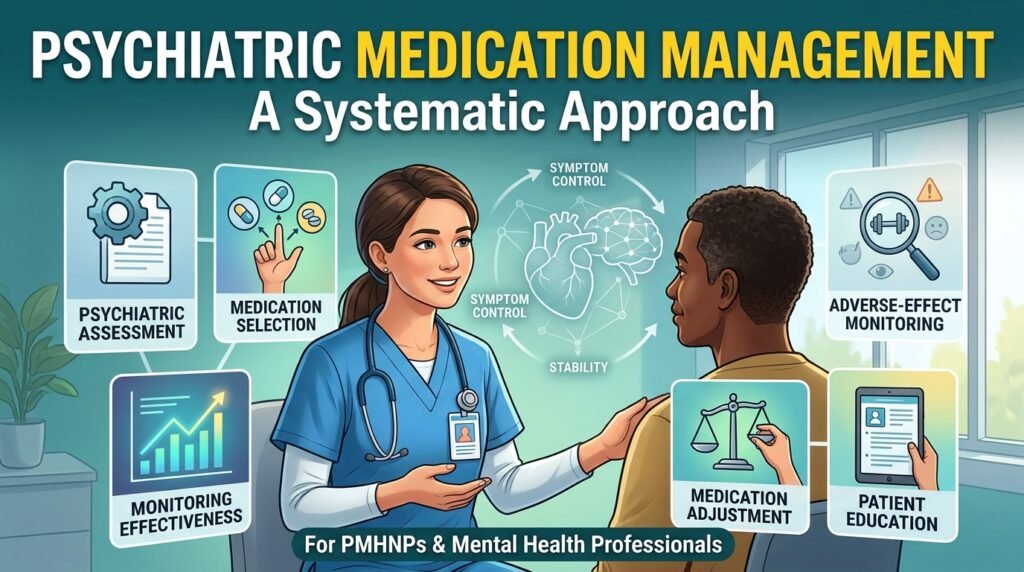
Medication management is an essential part of psychiatric mental health care. It involves assessing a patient’s medication needs, selecting appropriate treatments, monitoring their effects, and making adjustments when necessary to improve mental health outcomes. It is particularly important for individuals living with conditions such as depression, anxiety disorders, bipolar disorder, schizophrenia, and attention-deficit/hyperactivity disorder (ADHD).
Psychiatric medications can help reduce symptoms, improve daily functioning, and support long-term mental health stability. However, their effectiveness depends on appropriate medication selection, consistent monitoring, patient education, and ongoing evaluation.
For psychiatric-mental health nurse practitioners (PMHNPs), medication management involves more than prescribing medications. It requires understanding how psychiatric drugs work, recognizing potential adverse effects, evaluating treatment response, and involving patients in decisions about their care.
What Is Medication Management in Psychiatric Mental Health Practice?
Medication management in psychiatric mental health practice is the systematic process of evaluating, prescribing, monitoring, and adjusting psychiatric medications to achieve desired therapeutic outcomes while minimizing potential risks.
It involves determining whether a medication is appropriate for a patient’s condition, evaluating how well it works, and identifying any adverse effects or complications that may develop during treatment.
For example, a patient diagnosed with major depressive disorder may be prescribed an antidepressant. During follow-up appointments, the PMHNP evaluates changes in mood, sleep, appetite, concentration, and daily functioning. If the medication is ineffective or causes significant adverse effects, the treatment approach may need to be reassessed.
Medication management is an ongoing process because a patient’s symptoms, health status, medication needs, and treatment response can change over time.
Key Components of Psychiatric Medication Management
Effective medication management involves several interconnected activities. Each component helps ensure that treatment remains appropriate, safe, and responsive to the patient’s needs.
1. Psychiatric Assessment and Medication History
Before initiating or changing psychiatric medication, the healthcare provider conducts a comprehensive assessment to understand the patient’s mental health needs and medical background.
This assessment may include:
- Current psychiatric symptoms and their severity.
- Previous psychiatric diagnoses and treatments.
- Current medications, including prescription drugs, over-the-counter products, and supplements.
- Previous medication responses and adverse reactions.
- Medical conditions that may influence medication selection.
- Substance use history.
- Family psychiatric and medical history.
- Suicide risk and other relevant safety concerns.
A detailed medication history is particularly important because some psychiatric medications can interact with other substances or worsen certain medical conditions.
2. Medication Selection and Prescribing
Medication selection involves identifying a suitable treatment based on the patient’s diagnosis, symptoms, medical history, previous treatment experiences, and individual preferences.
Different psychiatric conditions may require different medication approaches. For example:
- Depression: Antidepressants such as selective serotonin reuptake inhibitors (SSRIs) may be considered.
- Schizophrenia: Antipsychotic medications may be prescribed to manage hallucinations, delusions, and other psychotic symptoms.
- Bipolar disorder: Mood stabilizers or selected antipsychotics may be used to manage manic and depressive episodes.
- Anxiety disorders: Treatment may involve SSRIs, serotonin-norepinephrine reuptake inhibitors (SNRIs), buspirone, or other appropriate medications.
- ADHD: Stimulant or non-stimulant medications may be considered to improve attention and impulse control.
Medication selection should also account for potential drug interactions, contraindications, adverse effects, and the patient’s ability to follow the treatment plan.
3. Monitoring Medication Effectiveness
After a medication is prescribed, the healthcare provider evaluates whether it is producing the expected therapeutic benefits.
Monitoring involves assessing changes in the symptoms the medication is intended to treat. For instance, a patient receiving antidepressant treatment may be evaluated for improvements in mood, motivation, sleep, appetite, and concentration.
The timing of improvement varies depending on the medication. Some psychiatric medications produce noticeable effects relatively quickly, while others may require several weeks for their full therapeutic benefits to develop.
Regular follow-up appointments help determine whether the treatment is working or whether further evaluation is necessary.
4. Monitoring Adverse Effects and Medication Safety
Psychiatric medications can produce adverse effects that range from mild discomfort to serious medical complications. Monitoring helps identify these problems early and supports appropriate clinical intervention.
Examples include:
- Antidepressants: Nausea, sleep disturbances, sexual dysfunction, and, in some cases, increased agitation.
- Antipsychotics: Weight gain, metabolic changes, sedation, and movement-related disorders.
- Mood stabilizers: Medication-specific risks, such as lithium toxicity, liver complications associated with valproate, or serious skin reactions associated with lamotrigine.
- Benzodiazepines: Sedation, impaired coordination, tolerance, dependence, and withdrawal symptoms.
- Stimulants: Reduced appetite, insomnia, increased heart rate, and elevated blood pressure.
Monitoring requirements depend on the specific medication. For example, lithium treatment requires monitoring of serum lithium levels and kidney and thyroid function. Some antipsychotics require monitoring of weight, blood glucose, and lipid levels.
5. Medication Adjustment and Treatment Evaluation
Not every psychiatric medication produces the desired results immediately. Some patients may experience limited improvement, persistent symptoms, or adverse effects that interfere with treatment.
When this happens, the healthcare provider reassesses the treatment plan.
Depending on the clinical situation, adjustments may involve:
- Changing the medication dosage.
- Switching to a different medication.
- Considering an alternative medication class.
- Adding another medication when clinically appropriate.
- Addressing medication interactions or adherence difficulties.
- Reassessing the diagnosis or other factors contributing to persistent symptoms.
Medication changes should be based on clinical evaluation rather than patients independently stopping or modifying their prescribed treatment.
6. Patient Education and Medication Adherence
Patient education is an important part of psychiatric medication management. Patients need to understand why a medication has been prescribed, how to take it, what benefits to expect, and which adverse effects require medical attention.
Education may cover:
- The purpose and expected benefits of the medication.
- Correct dosage and administration instructions.
- Possible adverse effects.
- Potential interactions with other medications or substances.
- The importance of attending follow-up appointments.
- What to do when a dose is missed, according to medication-specific guidance.
- The risks of abruptly discontinuing certain psychiatric medications.
Medication adherence can be affected by several factors, including adverse effects, financial difficulties, stigma, forgetfulness, and concerns about long-term medication use. Addressing these barriers helps patients participate more effectively in their treatment.
What Factors Influence Psychiatric Medication Management?
Medication management must consider individual differences because patients do not always respond to the same medication in the same way.
Several factors can influence medication effectiveness, safety, and treatment decisions.
1. Age: Children, adolescents, adults, and older adults may have different medication needs. Age-related differences in metabolism, physical health, and sensitivity to adverse effects can influence treatment decisions.
2. Medical history: Conditions affecting the liver, kidneys, cardiovascular system, or other organs may influence medication selection and monitoring requirements.
3. Drug interactions: Combining psychiatric medications with other prescriptions, supplements, or substances can alter medication effects or increase the risk of adverse reactions.
4. Genetics: Genetic differences can influence how individuals metabolize certain medications. Pharmacogenomic testing may provide useful information in selected situations, although it does not replace clinical assessment.
5. Previous treatment response: A patient’s history of medication effectiveness, adverse reactions, and treatment adherence can help guide future decisions.
6. Patient preferences: Individual preferences, treatment goals, concerns, and willingness to take medication should be considered when developing a treatment plan.
Medication Management vs. Medication Monitoring
Medication management and medication monitoring are closely related, but they do not mean exactly the same thing.
Medication management refers to the broader process of assessing medication needs, selecting treatments, prescribing, monitoring outcomes, and adjusting treatment when necessary.
Medication monitoring is one component of that process. It focuses on evaluating medication effectiveness, identifying adverse effects, and checking relevant clinical indicators.
For example, checking a patient’s blood glucose while they are taking an antipsychotic is medication monitoring. Evaluating those results alongside symptom improvement and deciding whether the treatment should continue or change forms part of medication management.
The Role of PMHNPs in Psychiatric Medication Management
Psychiatric-mental health nurse practitioners play a central role in medication management. Within their legal scope of practice, they assess psychiatric conditions, prescribe appropriate medications, evaluate treatment outcomes, and coordinate ongoing care.
Their responsibilities include:
- Performing comprehensive assessments: Evaluating psychiatric symptoms, medical history, medication use, and relevant safety risks.
- Developing medication treatment plans: Selecting appropriate medications based on clinical needs and individual patient factors.
- Prescribing and adjusting medications: Initiating treatment, modifying dosages, or considering alternative medications when clinically indicated.
- Evaluating therapeutic outcomes: Determining whether medications are improving symptoms and supporting daily functioning.
- Identifying adverse reactions: Recognizing medication-related complications and arranging appropriate interventions.
- Providing patient education: Helping patients understand their medications and make informed decisions about treatment.
- Coordinating care: Working with therapists, physicians, pharmacists, and other healthcare professionals when necessary.
PMHNPs also recognize that medication is only one part of psychiatric treatment. Depending on the patient’s needs, effective care may include psychotherapy, behavioral interventions, lifestyle support, and coordination with other healthcare services.
Why Is Medication Management Important in Psychiatric Mental Health Care?
Proper medication management supports safe and effective treatment while addressing the changing needs of individuals living with mental health conditions.
Its importance can be understood through several benefits:
- Improves symptom control: Appropriate medication selection and follow-up can reduce symptoms associated with psychiatric disorders.
- Promotes medication safety: Regular assessment helps identify adverse effects, drug interactions, and other complications.
- Supports treatment adherence: Patient education and ongoing communication can address concerns that interfere with consistent medication use.
- Encourages individualized care: Treatment decisions can be adjusted according to the patient’s medical history, preferences, and response.
- Reduces treatment complications: Appropriate monitoring helps identify potential problems before they become more serious.
- Supports long-term mental health stability: Continued evaluation helps maintain treatment effectiveness and respond to changes in symptoms.
Note!!
- Medication management in psychiatric mental health practice is the ongoing process of assessing, prescribing, monitoring, and adjusting psychiatric medications.
- Its main components include psychiatric assessment, medication selection, evaluation of treatment effectiveness, adverse-effect monitoring, and patient education.
- Medication management is individualized because patients may respond differently to the same psychiatric medication.
- Regular follow-up appointments help healthcare providers evaluate treatment outcomes and identify medication-related complications.
- PMHNPs play an important role in medication management through assessment, prescribing, monitoring, patient education, and care coordination.
- Psychiatric medication management is most effective when integrated with other appropriate mental health interventions.