
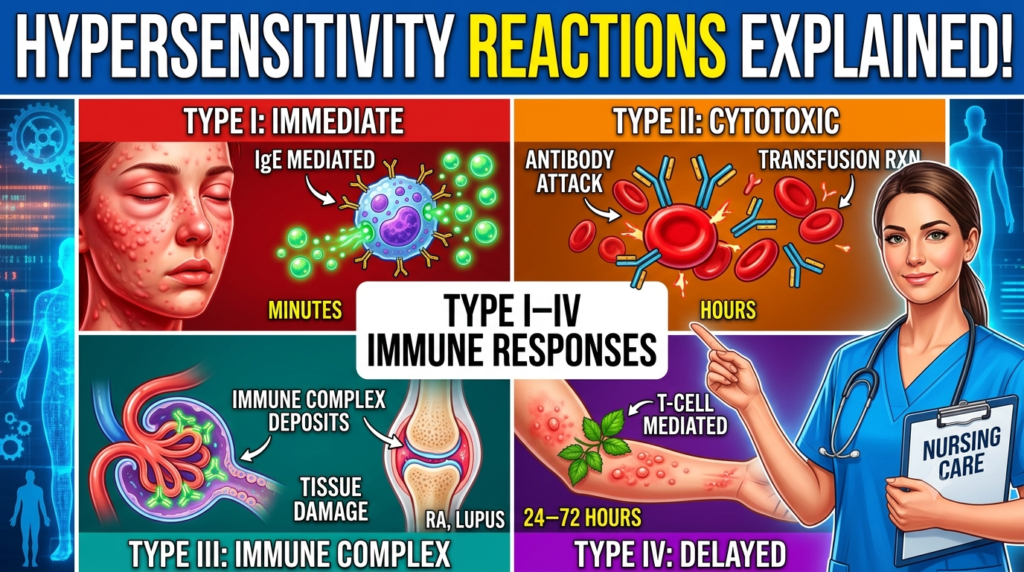
Topic: Pathophysiology
Hypersensitivity reactions are exaggerated or inappropriate immune responses that occur when the body’s immune system reacts to substances that are normally harmless or reacts excessively to certain antigens. Although the immune system is designed to protect the body from harmful pathogens, hypersensitivity reactions can damage healthy tissues and lead to a variety of allergic, autoimmune, and inflammatory diseases.
Hypersensitivity reactions are classified into four types (Type I–IV) based on the immune mechanisms involved. Each type differs in its cause, speed of onset, immune response, and clinical manifestations. Understanding these reactions helps nurses recognize immune-related disorders, provide appropriate care, and respond promptly to allergic emergencies.
What Are Hypersensitivity Reactions?
Hypersensitivity reactions are abnormal immune responses that cause tissue injury instead of protecting the body. They occur when the immune system overreacts to allergens, medications, infections, or the body’s own tissues. Depending on the type of hypersensitivity, the reaction may occur within minutes or may take several days to develop.
Types of Hypersensitivity Reactions
Type I: Immediate (IgE-Mediated) Hypersensitivity
Type I hypersensitivity is the most common allergic reaction. It occurs when the immune system produces immunoglobulin E (IgE) antibodies in response to an allergen. Upon re-exposure, mast cells and basophils release histamine and other inflammatory chemicals, causing symptoms within minutes.
Examples:
- Allergic rhinitis (hay fever)
- Asthma
- Food allergies
- Urticaria (hives)
- Anaphylaxis
Common Symptoms:
- Sneezing
- Itching
- Hives
- Swelling
- Wheezing
- Difficulty breathing
Type II: Antibody-Mediated (Cytotoxic) Hypersensitivity
Type II hypersensitivity occurs when IgG or IgM antibodies mistakenly attack healthy cells or tissues. This immune response leads to cell destruction through activation of the complement system or immune cells.
Examples:
- Autoimmune hemolytic anemia
- Hemolytic disease of the newborn
- Blood transfusion reactions
- Goodpasture syndrome
Common Symptoms:
- Anemia
- Fatigue
- Jaundice
- Organ-specific damage
Type III: Immune Complex-Mediated Hypersensitivity
Type III hypersensitivity develops when antigen-antibody complexes (immune complexes) form in the bloodstream and become deposited in tissues. These deposits trigger inflammation and tissue damage.
Examples:
- Systemic lupus erythematosus (SLE)
- Rheumatoid arthritis
- Serum sickness
- Post-streptococcal glomerulonephritis
Common Symptoms:
- Joint pain
- Skin rash
- Fever
- Kidney inflammation
- Swollen joints
Type IV: Delayed (Cell-Mediated) Hypersensitivity
Type IV hypersensitivity is caused by T lymphocytes (T cells) rather than antibodies. The reaction usually develops 24 to 72 hours after exposure to an antigen, making it a delayed immune response.
Examples:
- Contact dermatitis
- Tuberculin skin test (Mantoux test)
- Poison ivy reactions
- Some transplant rejection reactions
Common Symptoms:
- Redness
- Swelling
- Skin rash
- Blistering
- Localized inflammation
Comparison of the Four Types of Hypersensitivity
| Type | Immune Mechanism | Time of Reaction | Examples |
|---|---|---|---|
| Type I | IgE antibodies, mast cells, histamine | Minutes | Asthma, hay fever, food allergies, anaphylaxis |
| Type II | IgG or IgM antibodies attack cells | Hours to days | Blood transfusion reactions, autoimmune hemolytic anemia |
| Type III | Immune complex deposition | Several hours | SLE, rheumatoid arthritis, serum sickness |
| Type IV | T-cell-mediated immune response | 24–72 hours | Contact dermatitis, poison ivy, tuberculin skin test |
Importance in Nursing Practice
- Helps nurses recognize different immune-mediated disorders
- Supports accurate patient assessment and diagnosis
- Guides selection of appropriate treatment and nursing interventions
- Promotes early recognition of severe allergic reactions
- Improves patient education about allergens and trigger avoidance
- Enhances safe medication administration and monitoring
Note
- Hypersensitivity reactions are abnormal immune responses that can damage healthy tissues.
- There are four types of hypersensitivity reactions: Type I, Type II, Type III, and Type IV.
- Each type differs in its immune mechanism, onset, and clinical manifestations.
- Understanding hypersensitivity reactions enables nurses to identify immune disorders, provide effective care, and prevent complications.