
Topic: Pathophysiology
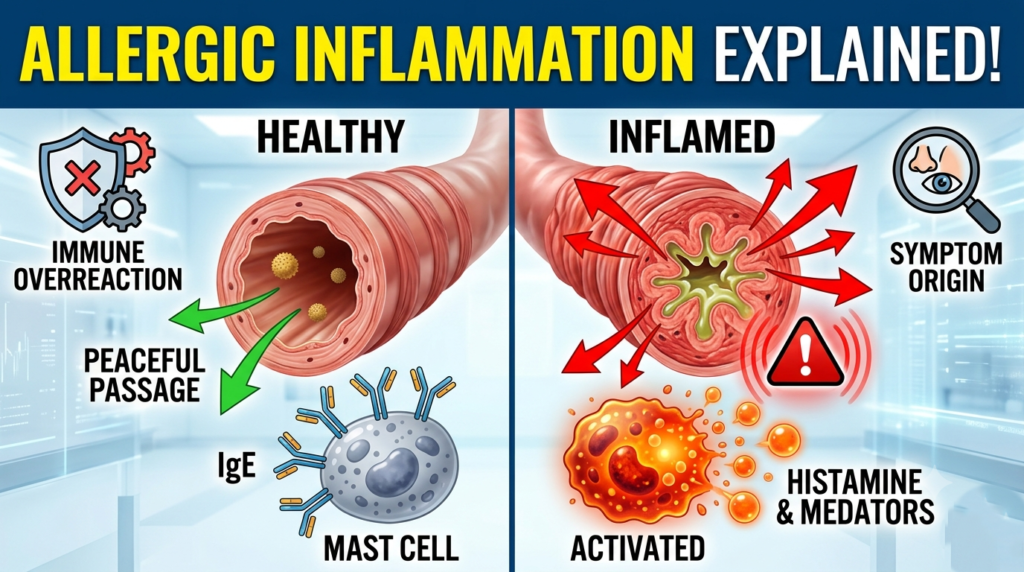
Inflammation is a key process in many allergic diseases and plays a central role in how the body responds to allergens. Allergic inflammation occurs when the immune system reacts excessively to harmless substances such as pollen, dust, food, or animal dander. Instead of protecting the body, this overreaction leads to tissue irritation, swelling, and the development of allergy symptoms.
Understanding inflammation in allergic diseases is important for nursing students and healthcare professionals because it explains why symptoms occur and how allergic conditions progress. It also supports accurate assessment, timely intervention, and effective patient education.
What Is Inflammation in Allergic Diseases?
Inflammation in allergic diseases is the immune system’s exaggerated response to an allergen. When a person is exposed to an allergen, immune cells such as mast cells and basophils release inflammatory chemicals, including histamine, leukotrienes, and prostaglandins. These substances cause blood vessels to widen, increase fluid leakage into tissues, and stimulate nerve endings, resulting in classic allergy symptoms.
Unlike protective inflammation that helps fight infection, allergic inflammation is inappropriate and can become chronic if exposure to allergens continues.
Mechanism of Allergic Inflammation
1. Allergen Exposure
The body is exposed to a harmless substance such as pollen, dust mites, or food proteins.
2. IgE Activation
The immune system produces immunoglobulin E (IgE) antibodies that attach to mast cells and basophils.
3. Re-Exposure
When the allergen enters the body again, it binds to IgE on these immune cells.
4. Release of Inflammatory Mediators
Mast cells and basophils release chemicals such as:
- Histamine
- Leukotrienes
- Prostaglandins
5. Development of Inflammation
These chemicals cause swelling, redness, itching, mucus production, and airway constriction.
Types of Allergic Inflammation
Acute Allergic Inflammation
- Occurs quickly after allergen exposure
- Symptoms appear within minutes to hours
- Example: hives, allergic rhinitis, anaphylaxis
Chronic Allergic Inflammation
- Develops with repeated or long-term exposure
- Leads to ongoing tissue damage and persistent symptoms
- Example: asthma, eczema, chronic sinusitis
Effects of Allergic Inflammation on the Body
- Blood vessels: Dilate and become more permeable, causing redness and swelling
- Airways: Narrow due to muscle contraction, leading to wheezing and difficulty breathing
- Skin: Becomes itchy, red, and develops rashes or hives
- Mucous membranes: Produce excess mucus, causing runny nose and congestion
- Tissues: May become damaged if inflammation is prolonged
Common Diseases Associated with Allergic Inflammation
- Allergic rhinitis (hay fever)
- Asthma
- Atopic dermatitis (eczema)
- Food allergies
- Drug allergies
- Anaphylaxis (severe systemic reaction)
Importance in Nursing Practice
- Helps nurses understand the cause of allergy symptoms
- Supports early identification of worsening allergic reactions
- Guides appropriate medication use (e.g., antihistamines, corticosteroids)
- Improves patient education on avoiding triggers
- Assists in managing chronic allergic conditions like asthma and eczema
- Promotes evidence-based and safe patient care
Note
- Inflammation is a major mechanism in allergic diseases.
- It is triggered by immune overreaction to harmless allergens.
- Histamine and other mediators cause swelling, redness, and itching.
- Allergic inflammation can be acute or chronic depending on exposure.
- Understanding this process helps nurses manage and educate patients effectively.