
Topic: Pathophysiology
IgE-mediated allergic reactions are the most common type of allergic response in the human body. They occur when the immune system overreacts to harmless substances such as pollen, dust mites, food, insect venom, or medications. These reactions are classified as Type I hypersensitivity reactions and are usually rapid in onset, ranging from mild symptoms like itching and sneezing to severe, life-threatening conditions such as anaphylaxis.
Understanding IgE-mediated allergic reactions is essential in nursing because these reactions are frequently encountered in clinical settings. Nurses must be able to recognize early signs, understand the underlying immune mechanisms, and provide timely interventions to prevent complications.
What Are IgE-Mediated Allergic Reactions?
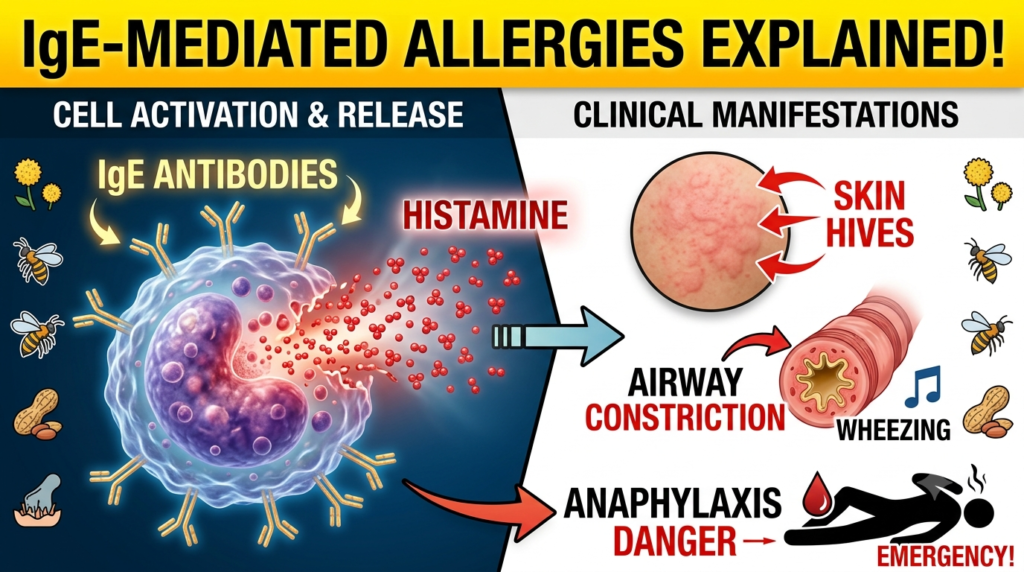
IgE-mediated allergic reactions occur when the immune system produces immunoglobulin E (IgE) antibodies in response to an allergen. These antibodies bind to mast cells and basophils, which are immune cells found in tissues and blood.
When the body is exposed to the same allergen again, the allergen binds to the IgE antibodies on these cells. This triggers the release of inflammatory chemicals, especially histamine, which causes the symptoms of an allergic reaction.
Steps in IgE-Mediated Allergic Reactions
1. First Exposure (Sensitization Phase)
The immune system mistakenly identifies a harmless substance as a threat and produces IgE antibodies specific to that allergen. These antibodies attach to mast cells and basophils.
2. Re-Exposure to the Allergen
When the same allergen enters the body again, it binds to the IgE antibodies already attached to mast cells and basophils.
3. Cell Activation
The binding triggers mast cells and basophils to become activated.
4. Release of Chemical Mediators
Activated cells release inflammatory chemicals such as:
- Histamine
- Leukotrienes
- Prostaglandins
5. Development of Symptoms
These chemicals cause inflammation, increased mucus production, and muscle contraction, leading to allergic symptoms.
Role of IgE in Allergic Reactions
Immunoglobulin E (IgE) is a type of antibody that plays a central role in allergic responses. While antibodies normally protect the body from infections, IgE mistakenly targets harmless substances in allergic individuals.
Functions of IgE in Allergies
- Binds to allergens and triggers immune response
- Attaches to mast cells and basophils
- Activates release of histamine and other chemicals
- Amplifies inflammatory reactions
Role of Histamine in IgE-Mediated Reactions
Histamine is the main chemical responsible for allergy symptoms.
Effects of Histamine
- Causes blood vessel dilation (redness and warmth)
- Increases blood vessel permeability (swelling)
- Stimulates mucus production (runny nose)
- Causes itching of skin, eyes, and throat
- Constricts airway muscles (wheezing and breathing difficulty)
Common Clinical Manifestations
IgE-mediated allergic reactions can vary in severity:
Mild to Moderate Symptoms
- Sneezing
- Runny or blocked nose
- Itchy eyes, nose, or throat
- Skin rash or hives
- Swelling of lips or face
Severe Symptoms (Anaphylaxis)
- Difficulty breathing
- Swelling of airway (throat tightness)
- Rapid drop in blood pressure
- Dizziness or fainting
- Loss of consciousness
Examples of IgE-Mediated Allergies
- Pollen (hay fever/allergic rhinitis)
- Peanuts and shellfish (food allergies)
- Bee or wasp stings
- Penicillin allergy
- Animal dander allergies
Importance in Nursing Practice
- Helps nurses recognize early signs of allergic reactions
- Supports rapid intervention in emergencies like anaphylaxis
- Improves patient assessment and history-taking
- Guides safe medication administration
- Enhances patient education on allergen avoidance
- Promotes evidence-based allergy management
Note
- IgE-mediated allergic reactions are Type I hypersensitivity reactions.
- They occur when the immune system overreacts to harmless substances.
- IgE antibodies bind to mast cells and basophils, triggering histamine release.
- Symptoms range from mild irritation to severe anaphylaxis.
- Early recognition and intervention are critical in nursing care.