
Topic: Pathophysiology
The immune system protects the body from harmful microorganisms such as bacteria, viruses, fungi, and parasites. It identifies and destroys these harmful invaders to maintain health and prevent disease. However, in some individuals, the immune system mistakenly identifies harmless substances, known as allergens, as dangerous. This abnormal response leads to an allergic reaction.
Understanding how the immune system causes allergies is important for nursing students and healthcare professionals because it explains the biological processes behind allergic diseases. It also helps in recognizing allergic reactions early, providing appropriate treatment, and educating patients on preventing future allergic episodes.
How Does the Immune System Cause Allergies?
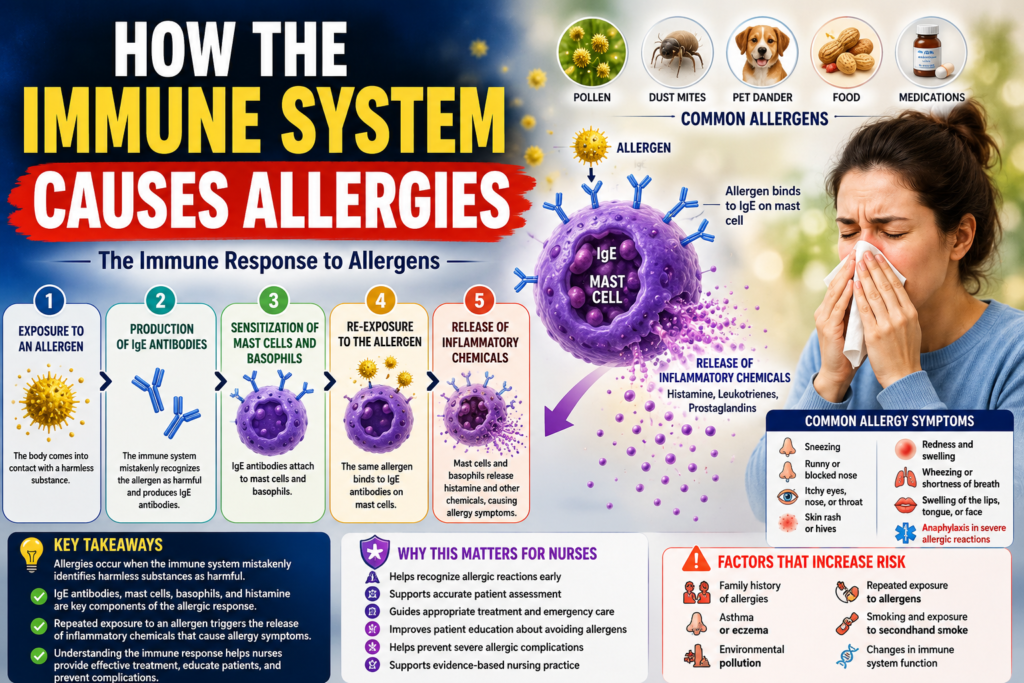
An allergic reaction begins when the immune system is exposed to an allergen, such as pollen, dust mites, pet dander, certain foods, insect venom, or medications. Instead of ignoring these harmless substances, the immune system treats them as threats and produces immunoglobulin E (IgE) antibodies.
These IgE antibodies attach to specialized immune cells called mast cells and basophils. During future exposure to the same allergen, the allergen binds to the IgE antibodies on these cells, triggering the release of chemicals such as histamine, leukotrienes, and prostaglandins. These chemicals cause inflammation and produce the characteristic signs and symptoms of an allergic reaction.
Steps in the Immune Response to Allergens
1. Exposure to an Allergen
The body comes into contact with a harmless substance such as pollen, food, medication, or animal dander.
2. Production of IgE Antibodies
The immune system mistakenly recognizes the allergen as harmful and produces IgE antibodies specific to that allergen.
3. Sensitization of Mast Cells and Basophils
The IgE antibodies attach to mast cells and basophils, preparing the immune system to respond if the allergen is encountered again.
4. Re-Exposure to the Allergen
When the same allergen enters the body again, it binds to the IgE antibodies attached to mast cells and basophils.
5. Release of Inflammatory Chemicals
Mast cells and basophils release histamine and other inflammatory mediators, causing inflammation and allergy symptoms.
Role of Histamine in Allergic Reactions
Histamine is one of the primary chemicals released during an allergic reaction. It produces many of the common allergy symptoms by affecting blood vessels, smooth muscles, and mucus-producing glands.
Effects of Histamine
- Causes blood vessels to widen (vasodilation)
- Increases the permeability of blood vessels, leading to swelling
- Stimulates mucus production in the nose and airways
- Causes itching of the skin, eyes, and nose
- Triggers contraction of airway smooth muscles, leading to wheezing or difficulty breathing
Common Symptoms Caused by the Immune Response
- Sneezing
- Runny or blocked nose
- Itchy eyes, nose, or throat
- Skin rash or hives
- Redness and swelling
- Wheezing or shortness of breath
- Swelling of the lips, tongue, or face
- Anaphylaxis in severe allergic reactions
Factors That Increase the Risk of Allergies
- Family history of allergic diseases
- Repeated exposure to allergens
- Asthma or eczema
- Environmental pollution
- Smoking and exposure to secondhand smoke
- Changes in immune system function
Importance of Understanding the Immune Response in Allergies
- Helps nurses recognize allergic reactions early
- Supports accurate patient assessment
- Guides appropriate treatment and emergency care
- Improves patient education about avoiding allergens
- Helps prevent severe allergic complications
- Supports evidence-based nursing practice
Note
- Allergies occur when the immune system mistakenly identifies harmless substances as harmful.
- IgE antibodies, mast cells, basophils, and histamine are key components of the allergic response.
- Repeated exposure to an allergen triggers the release of inflammatory chemicals that cause allergy symptoms.
- Understanding the immune response helps nurses provide effective treatment, educate patients, and prevent complications.