
Topic: Pathophysiology
Allergic reactions occur when the immune system overreacts to substances that are normally harmless, such as pollen, dust mites, animal dander, certain foods, insect stings, or medications. These substances, known as allergens, trigger an immune response that leads to the release of inflammatory chemicals. Although allergies are intended to protect the body from harmful agents, this exaggerated response can produce symptoms ranging from mild irritation to life-threatening anaphylaxis.
Understanding the pathophysiology of allergic reactions helps nurses and other healthcare professionals recognize the underlying mechanisms of allergies, identify clinical manifestations, and provide timely and appropriate care. It also supports patient education on avoiding allergens and managing allergic conditions effectively.
What Is the Pathophysiology of Allergic Reactions?
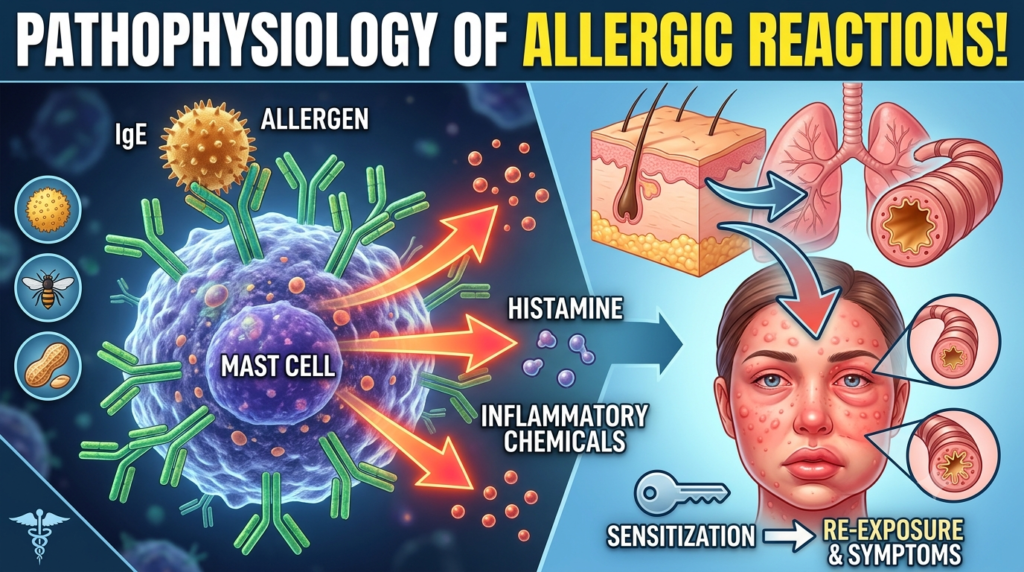
The pathophysiology of allergic reactions involves an abnormal immune response to an allergen. When a susceptible person is exposed to an allergen for the first time, the immune system identifies it as harmful and produces immunoglobulin E (IgE) antibodies. These antibodies attach to the surface of mast cells and basophils, preparing the body for future exposure to the same allergen.
During subsequent exposure, the allergen binds to the IgE antibodies attached to mast cells and basophils. This triggers the release of inflammatory chemicals, including histamine, leukotrienes, and prostaglandins. These chemicals cause blood vessels to dilate, increase vascular permeability, stimulate mucus production, and contract smooth muscles, resulting in the typical signs and symptoms of an allergic reaction.
Stages of an Allergic Reaction
1. Allergen Exposure
The body comes into contact with an allergen such as pollen, food, medication, or insect venom.
2. Sensitization
The immune system produces IgE antibodies specific to the allergen. These antibodies bind to mast cells and basophils without causing symptoms during the first exposure.
3. Re-Exposure
When the same allergen enters the body again, it binds to the IgE antibodies on mast cells and basophils.
4. Release of Inflammatory Mediators
Mast cells and basophils release histamine and other inflammatory chemicals into surrounding tissues.
5. Development of Clinical Manifestations
The released chemicals produce symptoms such as itching, swelling, redness, sneezing, wheezing, hives, and, in severe cases, anaphylaxis.
Common Clinical Manifestations of Allergic Reactions
- Sneezing and nasal congestion
- Runny nose
- Itchy eyes, nose, or throat
- Skin rash or hives (urticaria)
- Redness and swelling of the skin
- Wheezing and shortness of breath
- Swelling of the lips, tongue, or face
- Nausea, vomiting, or abdominal pain (food allergies)
- Anaphylaxis in severe allergic reactions
Factors That Influence Allergic Reactions
- Family history of allergies
- Repeated exposure to allergens
- Environmental factors such as pollution
- Asthma or other allergic conditions
- Age and immune system function
Importance of Understanding the Pathophysiology of Allergic Reactions
- Helps nurses recognize allergic reactions early
- Supports accurate patient assessment
- Guides appropriate emergency and routine treatment
- Improves patient education on allergen avoidance
- Helps prevent severe complications such as anaphylaxis
- Promotes safe and evidence-based nursing care
Note
- Allergic reactions occur when the immune system overreacts to harmless substances called allergens.
- IgE antibodies, mast cells, basophils, and histamine play key roles in the allergic response.
- Allergic reactions develop through stages that include allergen exposure, sensitization, re-exposure, and the release of inflammatory mediators.
- Understanding the pathophysiology of allergic reactions helps nurses provide timely treatment, educate patients, and prevent complications.