
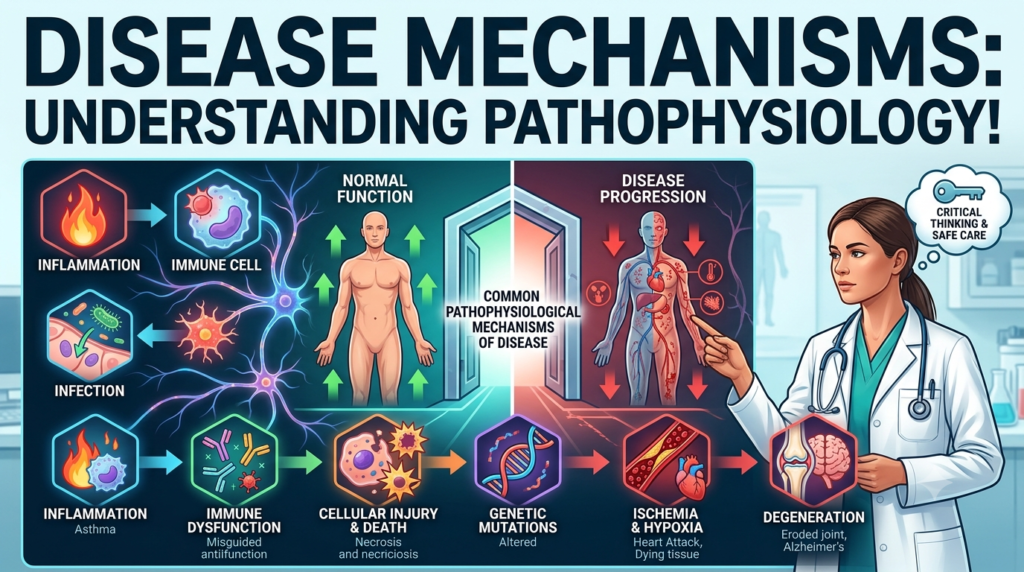
Topic: Pathophysiology
Diseases develop through a series of biological changes that disrupt the body’s normal structure and function. These changes, known as pathophysiological mechanisms, explain how diseases begin, progress, and produce signs and symptoms. Understanding these mechanisms helps nurses and other healthcare professionals recognize disease processes, identify complications early, and provide appropriate patient care.
Although diseases vary in their causes and effects, many share common pathophysiological mechanisms. These mechanisms involve changes at the cellular, tissue, organ, or system level and form the foundation for understanding how different diseases affect the human body.
What Are Pathophysiological Mechanisms?
Pathophysiological mechanisms are the biological processes that occur when normal body functions are disrupted by disease, injury, infection, or genetic abnormalities. These mechanisms explain how a disease develops, how it affects body systems, and why patients experience specific clinical manifestations. Understanding these processes enables healthcare professionals to identify the underlying cause of illness and develop effective treatment plans.
Common Pathophysiological Mechanisms of Disease
1. Inflammation
Inflammation is the body’s natural response to injury, infection, or harmful substances. It helps eliminate the cause of damage and promotes healing. However, prolonged or excessive inflammation can damage healthy tissues and contribute to chronic diseases.
Examples:
- Arthritis
- Asthma
- Inflammatory bowel disease
2. Infection
Infections occur when microorganisms such as bacteria, viruses, fungi, or parasites invade the body and multiply. The immune system responds by activating defense mechanisms to eliminate the invading organisms.
Examples:
- Pneumonia
- Tuberculosis
- COVID-19
3. Immune Dysfunction
Immune dysfunction occurs when the immune system does not function properly. It may become overactive, underactive, or mistakenly attack healthy body tissues.
Examples:
- Allergies
- Rheumatoid arthritis
- HIV/AIDS
4. Cellular Injury
Cellular injury occurs when cells are damaged by factors such as lack of oxygen, toxins, infections, or physical trauma. Depending on the severity of the injury, cells may recover or die.
Examples:
- Heart attack
- Stroke
- Liver damage
5. Cell Death
Cell death occurs when damaged cells can no longer function. It may occur through apoptosis (programmed cell death) or necrosis (uncontrolled cell death caused by injury or disease).
Examples:
- Tissue damage after severe burns
- Brain damage following a stroke
6. Genetic Mutations
Genetic mutations are permanent changes in DNA that may alter normal cell function. Some mutations are inherited, while others develop during a person’s lifetime.
Examples:
- Cystic fibrosis
- Sickle cell disease
- Certain types of cancer
7. Ischemia and Hypoxia
Ischemia occurs when blood flow to tissues is reduced, while hypoxia refers to insufficient oxygen reaching body tissues. Both conditions can lead to tissue damage if not treated promptly.
Examples:
- Coronary artery disease
- Stroke
- Peripheral artery disease
8. Degeneration
Degeneration is the gradual deterioration of cells, tissues, or organs over time. It commonly occurs due to aging, chronic disease, or long-term injury.
Examples:
- Osteoarthritis
- Alzheimer’s disease
- Parkinson’s disease
Importance of Understanding Pathophysiological Mechanisms
- Helps explain how diseases develop and progress
- Improves patient assessment and diagnosis
- Supports evidence-based nursing practice
- Guides appropriate treatment and nursing interventions
- Helps predict disease complications
- Strengthens clinical reasoning and critical thinking
- Improves patient education and communication
Note
- Pathophysiological mechanisms are the biological processes that cause disease development and progression.
- Common mechanisms include inflammation, infection, immune dysfunction, cellular injury, cell death, genetic mutations, ischemia, hypoxia, and degeneration.
- Understanding these mechanisms helps nurses recognize disease patterns, provide effective care, and improve patient outcomes.
- Knowledge of pathophysiological mechanisms is essential for safe, evidence-based nursing practice.