
Topic: Pathophysiology
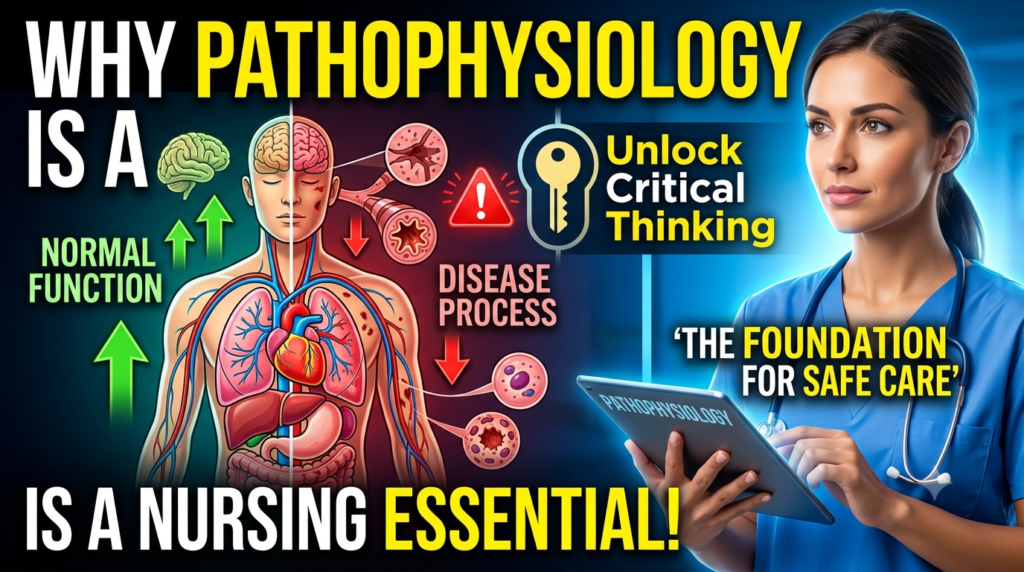
Pathophysiology is a fundamental component of nursing practice because it helps nurses understand the biological processes that occur when the body is affected by disease or injury. Rather than focusing only on symptoms, nurses use pathophysiological knowledge to understand why diseases develop, how they progress, and how they affect different body systems. This understanding enables nurses to provide safe, effective, and evidence-based care.
As healthcare continues to evolve, nurses are expected to make informed clinical decisions, recognize changes in patient conditions, and contribute to improved health outcomes. A strong understanding of pathophysiology supports these responsibilities by strengthening critical thinking, enhancing clinical judgment, and improving the overall quality of patient care.
Why Is Pathophysiology Important in Nursing Practice?
- Improves Patient Assessment
Helps nurses recognize abnormal signs and symptoms by understanding the underlying disease process. - Enhances Clinical Decision-Making
Supports informed decisions when planning, implementing, and evaluating patient care. - Guides Nursing Interventions
Enables nurses to select appropriate interventions based on how a disease affects the body. - Promotes Evidence-Based Practice
Encourages the use of scientific knowledge and current evidence to improve patient outcomes. - Supports Early Detection of Complications
Helps nurses identify warning signs of disease progression and respond promptly to prevent serious complications. - Improves Patient Education
Enables nurses to explain diseases, treatments, medications, and lifestyle changes in a way that patients can understand. - Strengthens Critical Thinking
Encourages nurses to analyze patient information, identify priorities, and solve clinical problems effectively. - Improves Medication Safety
Helps nurses understand how diseases influence medication selection, dosage, effectiveness, and potential side effects. - Enhances Communication with the Healthcare Team
Provides a scientific basis for discussing patient conditions and collaborating with other healthcare professionals. - Supports Individualized Patient Care
Helps nurses develop care plans that address each patient’s unique health condition and needs.
Applications of Pathophysiology in Nursing Practice
Pathophysiology is applied in every stage of the nursing process, including assessment, diagnosis, planning, implementation, and evaluation. Nurses use their understanding of disease mechanisms to interpret laboratory results, monitor patient progress, recognize complications, and evaluate the effectiveness of treatments. This knowledge also supports accurate documentation and effective communication with other healthcare professionals.
In addition, pathophysiology plays an important role in specialized nursing fields such as critical care, emergency nursing, pediatrics, oncology, and mental health. Regardless of the healthcare setting, understanding disease processes enables nurses to provide safe, patient-centered, and evidence-based care.
Note
- Pathophysiology helps nurses understand how diseases affect normal body function.
- It improves patient assessment, clinical reasoning, and decision-making.
- Knowledge of pathophysiology supports evidence-based nursing interventions and patient education.
- Understanding disease mechanisms enables nurses to detect complications early and improve patient outcomes.
- Pathophysiology is an essential foundation for safe, effective, and high-quality nursing practice.