
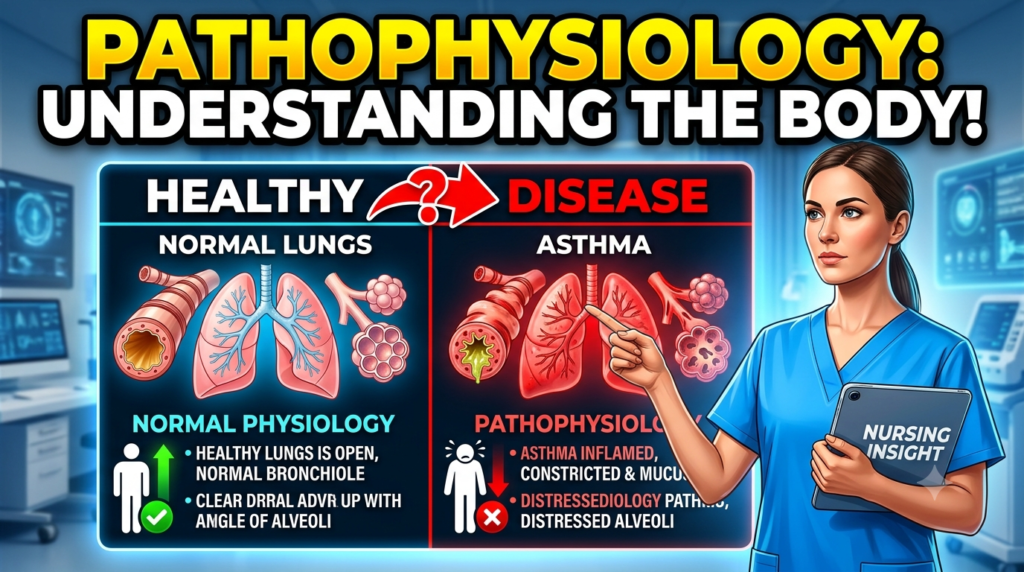
Pathophysiology is the study of how diseases and disorders affect the normal functioning of the human body. It explains the biological and physiological changes that occur when cells, tissues, organs, or body systems are damaged by disease, injury, or infection. Understanding pathophysiology helps nursing students and healthcare professionals recognize disease processes, interpret clinical manifestations, and provide safe, evidence-based patient care.
This section covers the fundamental concepts of pathophysiology, including disease mechanisms, immune responses, inflammation, hypersensitivity reactions, and the pathophysiology of common medical conditions. The notes are designed to simplify complex concepts, strengthen clinical reasoning, and support both academic learning and nursing practice.
Topics Covered
- What Is Pathophysiology? Meaning, Examples, and Importance
- Importance of Pathophysiology in Nursing Practice
- Common Pathophysiological Mechanisms of Disease
- Pathophysiology of Allergic Reactions
- How the Immune System Causes Allergies
- IgE-Mediated Allergic Reactions
- Inflammation in Allergic Diseases
- Types of Hypersensitivity Reactions (Type I–IV)
Note
- Explains how diseases develop and affect normal body function.
- Strengthens clinical reasoning and critical thinking.
- Supports accurate patient assessment and diagnosis.
- Guides evidence-based nursing interventions.
- Helps nurses recognize disease progression and potential complications.
- Improves the delivery of safe, effective, and patient-centered c