
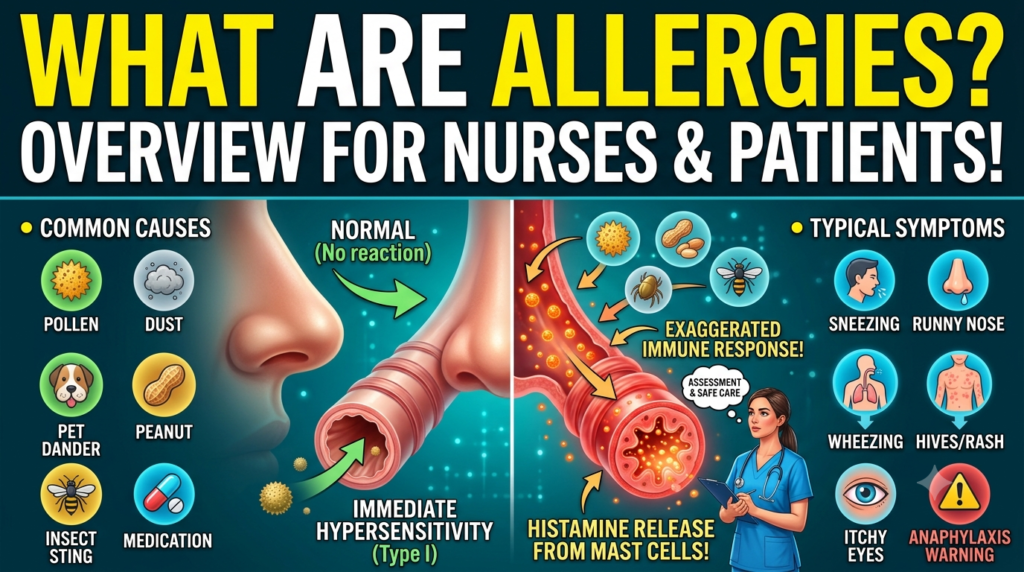
Allergies are among the most common immune system disorders worldwide. They occur when the body’s immune system reacts excessively to substances that are normally harmless, such as pollen, dust, animal dander, certain foods, insect stings, or medications. These substances are called allergens. While the immune system is designed to protect the body from harmful pathogens, an allergic reaction occurs when it mistakenly identifies a harmless substance as a threat and triggers an inflammatory response.
Understanding allergies is important for nursing students and healthcare professionals because allergic diseases can range from mild conditions, such as seasonal allergies, to severe emergencies, such as anaphylaxis. Early recognition, accurate assessment, and appropriate management are essential for preventing complications and improving patient outcomes.
What Are Allergies?
An allergy is an exaggerated immune response to a harmless substance. In allergic individuals, exposure to an allergen stimulates the production of immunoglobulin E (IgE) antibodies. These antibodies attach to mast cells and basophils. When the person is exposed to the same allergen again, these cells release inflammatory chemicals, including histamine, which cause the symptoms of an allergic reaction.
Allergies can affect different parts of the body, including the skin, respiratory tract, gastrointestinal tract, and cardiovascular system. The severity of symptoms varies from person to person and may depend on the type of allergen, the amount of exposure, and the individual’s immune sensitivity.
Common Causes of Allergies
Pollen from trees, grasses, and weeds
Dust mites found in bedding, carpets, and furniture
Animal dander from cats, dogs, and other pets
Foods such as peanuts, shellfish, milk, eggs, and wheat
Insect stings from bees, wasps, and ants
Medications such as penicillin and certain antibiotics
Mold spores in damp environments
Latex products such as gloves and medical equipment
Common Symptoms of Allergies
Respiratory Symptoms
Sneezing
Runny or blocked nose
Itchy nose or throat
Coughing
Wheezing
Shortness of breath
Skin Symptoms
Itching
Redness
Hives (urticaria)
Eczema or skin rash
Swelling of the skin
Eye Symptoms
Itchy eyes
Redness
Tearing
Swollen eyelids
Gastrointestinal Symptoms
Nausea
Vomiting
Abdominal pain
Diarrhea
Severe Symptoms (Anaphylaxis)
Difficulty breathing
Swelling of the tongue or throat
Rapid drop in blood pressure
Dizziness or fainting
Loss of consciousness
How Are Allergies Treated?
Treatment aims to reduce symptoms, prevent reactions, and improve quality of life.
Allergen Avoidance
The most effective strategy is avoiding known allergens whenever possible.
Medications
Antihistamines to reduce itching, sneezing, and hives
Corticosteroids to decrease inflammation
Decongestants to relieve nasal congestion
Bronchodilators for allergy-related asthma symptoms
Immunotherapy
Allergy shots or sublingual tablets gradually expose the immune system to small amounts of the allergen to reduce sensitivity over time.
Emergency Treatment
Severe allergic reactions require immediate treatment with epinephrine (adrenaline) and emergency medical care.
Importance in Nursing Practice
Helps nurses recognize allergic reactions early
Supports accurate patient assessment and history-taking
Guides safe medication administration
Improves patient education on allergen avoidance
Promotes rapid intervention during anaphylaxis
Enhances evidence-based management of allergic diseases
Note
Allergies occur when the immune system overreacts to harmless substances called allergens.
Common allergens include pollen, dust mites, foods, medications, and insect stings.
Symptoms may affect the respiratory system, skin, eyes, gastrointestinal tract, or cardiovascular system.
Treatment includes allergen avoidance, medications, immunotherapy, and emergency management for severe reactions.
Understanding allergies is essential for safe nursing assessment, patient education, and emergency care.