What Are Antidepressants? Types, Uses, and How They Work

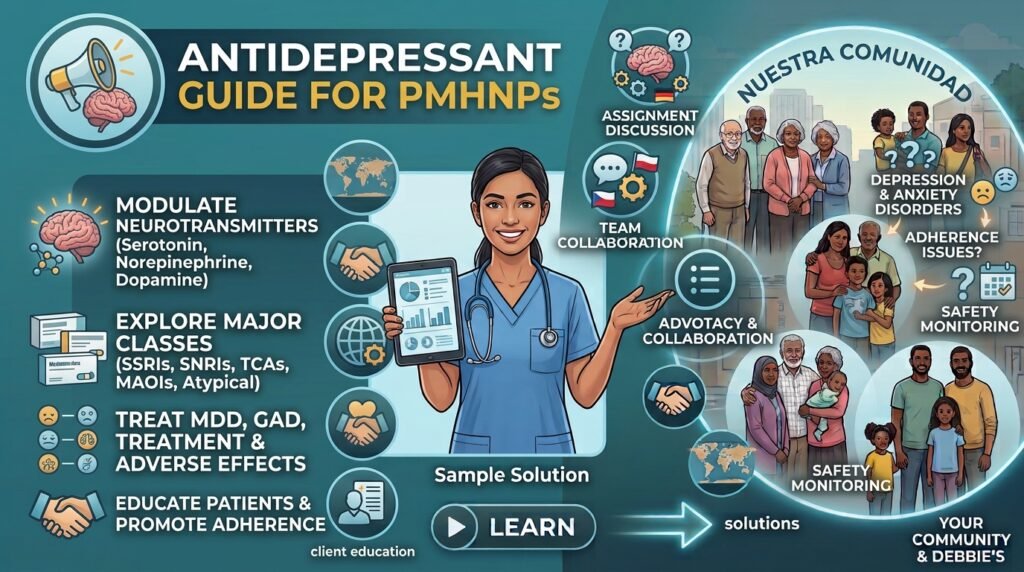
Topic: Antidepressants Antidepressants are medications commonly used in the treatment of depression and several other mental health conditions. They help manage symptoms such as persistent sadness, loss of interest, low energy, anxiety, and changes in sleep or appetite. These medications are an important part of psychiatric mental health practice because they can improve emotional well-being,

What Are Antidepressants? Types, Uses, and How They Work Read More »
Foundations of Psychopharmacology

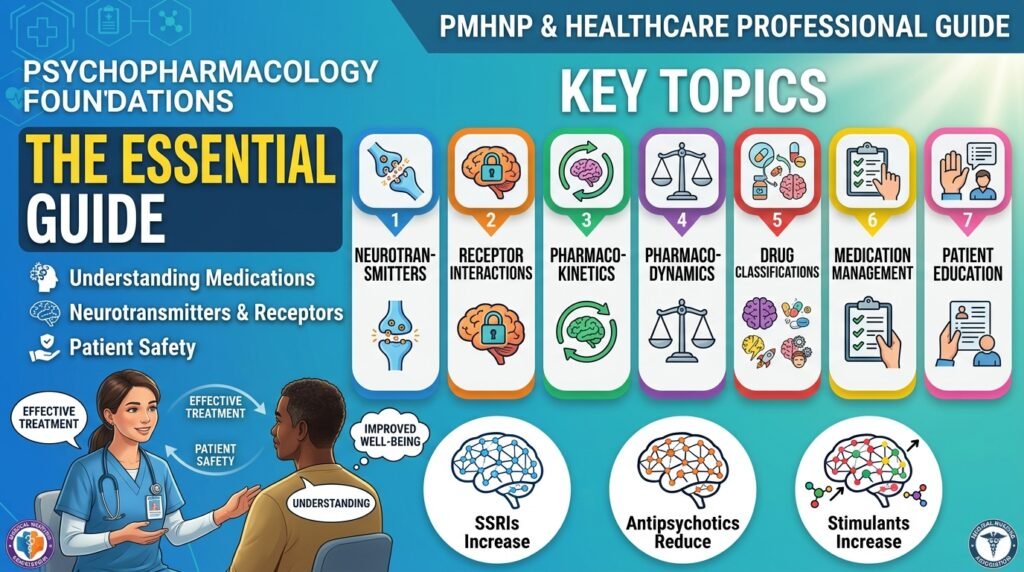
Psychopharmacology is a fundamental area of psychiatric mental health practice that focuses on how medications affect brain function, behavior, emotions, and mental health conditions. It helps healthcare professionals understand how psychiatric medications work, why they are prescribed, and how they influence symptoms associated with conditions such as depression, anxiety disorders, bipolar disorder, schizophrenia, and attention-deficit/hyperactivity

Foundations of Psychopharmacology Read More »

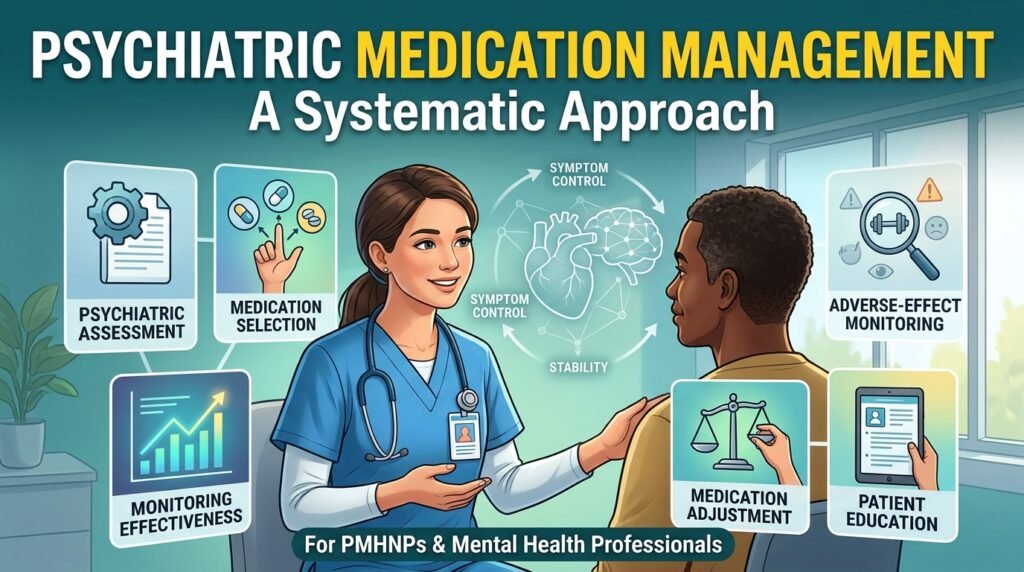
What Is Medication Management in Psychiatric Mental Health Practice?

Medication management is an essential part of psychiatric mental health care. It involves assessing a patient’s medication needs, selecting appropriate treatments, monitoring their effects, and making adjustments when necessary to improve mental health outcomes. It is particularly important for individuals living with conditions such as depression, anxiety disorders, bipolar disorder, schizophrenia, and attention-deficit/hyperactivity disorder (ADHD).

What Is Medication Management in Psychiatric Mental Health Practice? Read More »

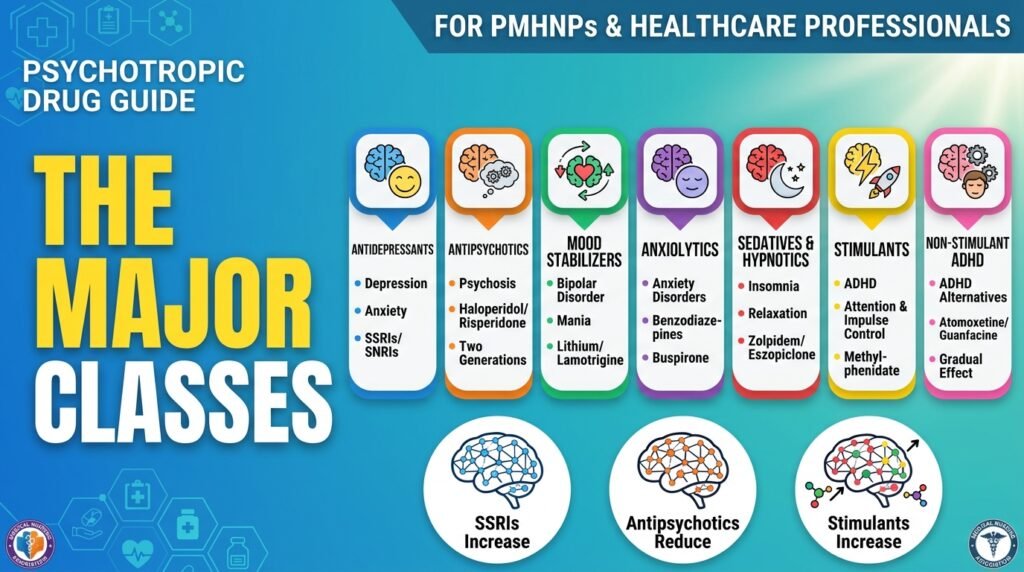
How Are Psychiatric Medications Classified? Types of Psychotropic Drugs

Psychiatric medications play an important role in managing mental health conditions such as depression, anxiety disorders, bipolar disorder, schizophrenia, and attention-deficit/hyperactivity disorder (ADHD). These medications are commonly called psychotropic drugs because they affect brain activity, mood, thoughts, emotions, behavior, or perception. Psychotropic medications are classified into different groups based on their primary therapeutic uses, mechanisms

How Are Psychiatric Medications Classified? Types of Psychotropic Drugs Read More »

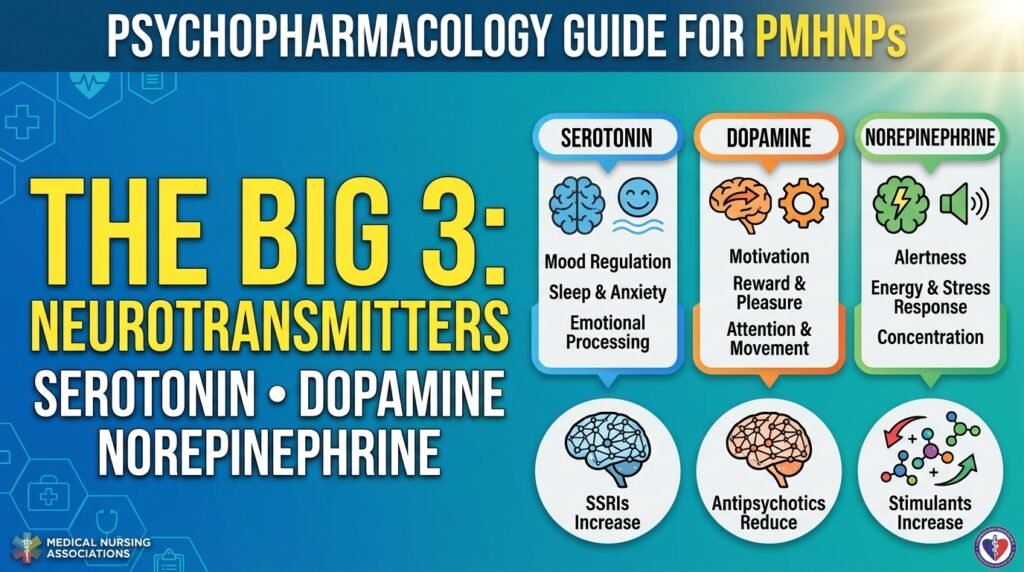
Serotonin, Dopamine, and Norepinephrine: Their Role in Mental Health

The brain relies on chemical messengers called neurotransmitters to regulate mood, emotions, attention, motivation, sleep, and behavior. Among the most important neurotransmitters studied in psychiatric mental health practice are serotonin, dopamine, and norepinephrine. These chemicals help nerve cells communicate and influence several functions that affect psychological well-being. Changes in neurotransmitter signaling are associated with different

Serotonin, Dopamine, and Norepinephrine: Their Role in Mental Health Read More »

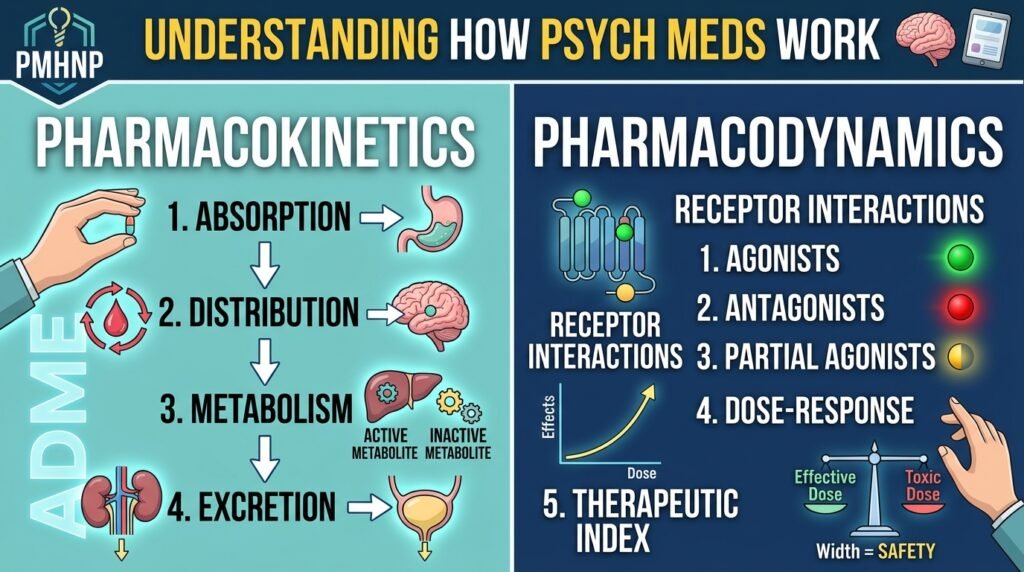
Pharmacokinetics and Pharmacodynamics in Psychopharmacology

Understanding how psychiatric medications work requires knowledge of how the body processes drugs and how those drugs affect the brain and nervous system. Two important concepts in psychopharmacology are pharmacokinetics and pharmacodynamics. These concepts help explain why medications produce different effects, how long they take to work, how they are eliminated from the body, and

Pharmacokinetics and Pharmacodynamics in Psychopharmacology Read More »

How Do Psychiatric Medications Work? Understanding Neurotransmitters

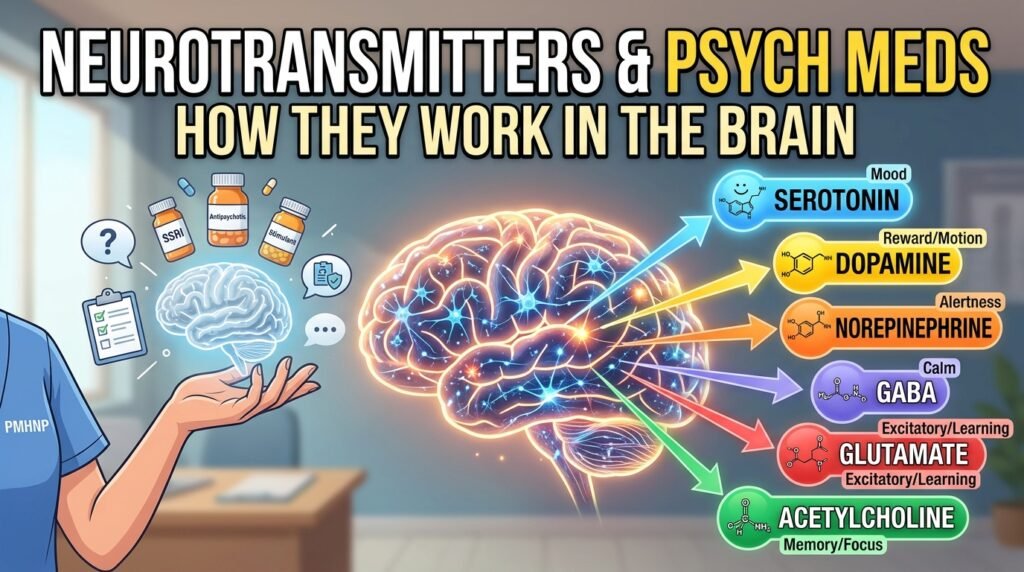
Psychiatric medications play an important role in managing mental health conditions by influencing chemical communication within the brain. These medications are used to treat conditions such as depression, anxiety disorders, bipolar disorder, schizophrenia, and attention-deficit/hyperactivity disorder (ADHD). To understand how psychiatric medications work, it is important to understand neurotransmitters and their role in brain function.

How Do Psychiatric Medications Work? Understanding Neurotransmitters Read More »

What Is Psychopharmacology? A Guide to Psychiatric Medications

Psychopharmacology is an important area of psychiatric mental health practice that focuses on how medications affect the brain, behavior, mood, and mental processes. Psychiatric medications are commonly used to manage mental health conditions such as depression, anxiety disorders, bipolar disorder, schizophrenia, and attention-deficit/hyperactivity disorder (ADHD). For Psychiatric-Mental Health Nurse Practitioners (PMHNPs), understanding psychopharmacology is essential

What Is Psychopharmacology? A Guide to Psychiatric Medications Read More »

Conflict Resolution and Negotiation in Healthcare Teams

Healthcare teams bring together professionals with different responsibilities, experiences, knowledge, and perspectives. Although collaboration is essential for delivering quality patient care, disagreements can arise when team members have different opinions about treatment decisions, workload distribution, communication, or professional responsibilities. When conflicts are not addressed appropriately, they can affect teamwork, staff relationships, and patient safety. Conflict

Conflict Resolution and Negotiation in Healthcare Teams Read More »

Shared Decision-Making in Advanced Nursing Practice

Healthcare decisions can significantly affect a patient’s health, quality of life, and treatment outcomes. Traditionally, healthcare professionals have often made treatment decisions based on their clinical knowledge and experience. However, modern healthcare recognizes that patients should also participate actively in decisions about their care. Shared decision-making is an important part of advanced nursing practice because

Shared Decision-Making in Advanced Nursing Practice Read More »