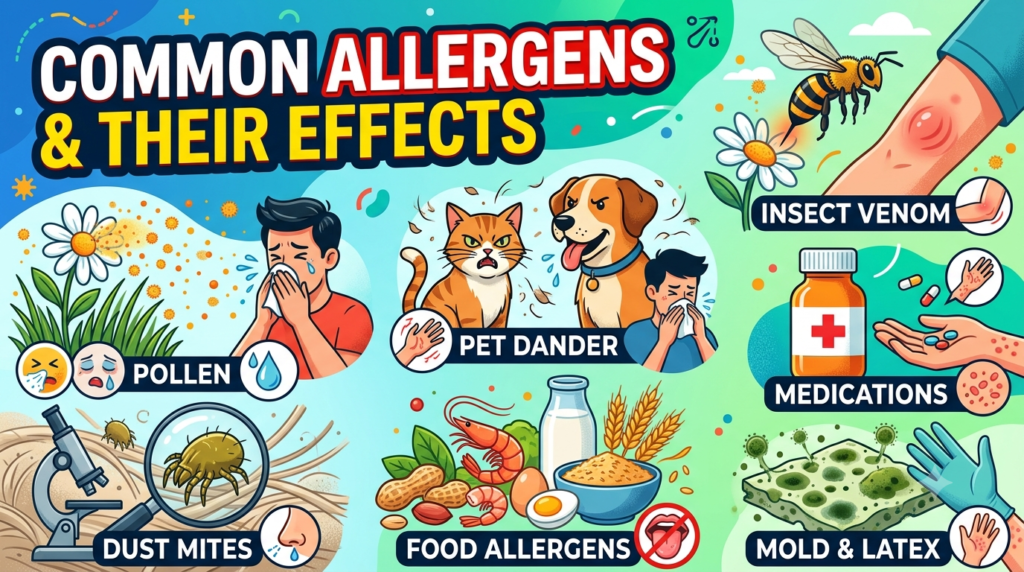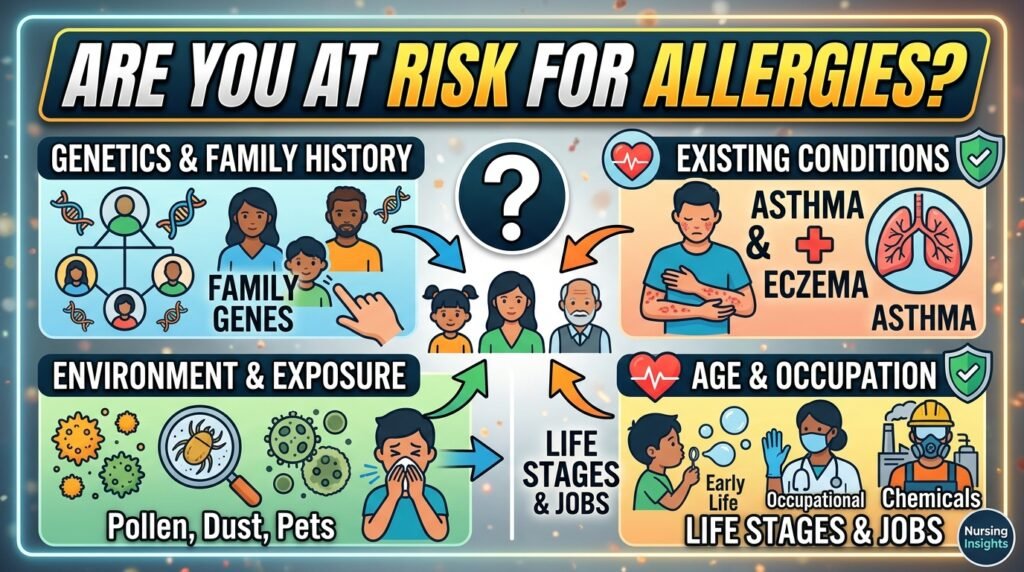
Risk Factors for Allergies: What Increases Your Risk?

Allergies can develop in people of all ages, but certain factors can make a person more likely to develop an allergic condition. These risk factors may be related to genetics, age, environment, lifestyle, or other health conditions. Understanding what increases the risk of allergies can help with prevention, early recognition, and appropriate management. What Are

Risk Factors for Allergies: What Increases Your Risk? Read More »
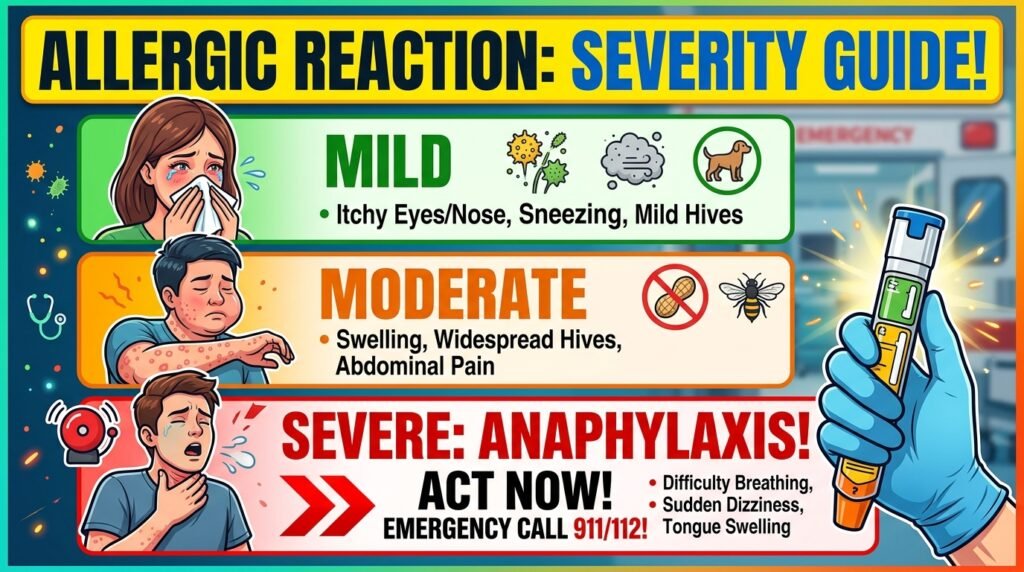
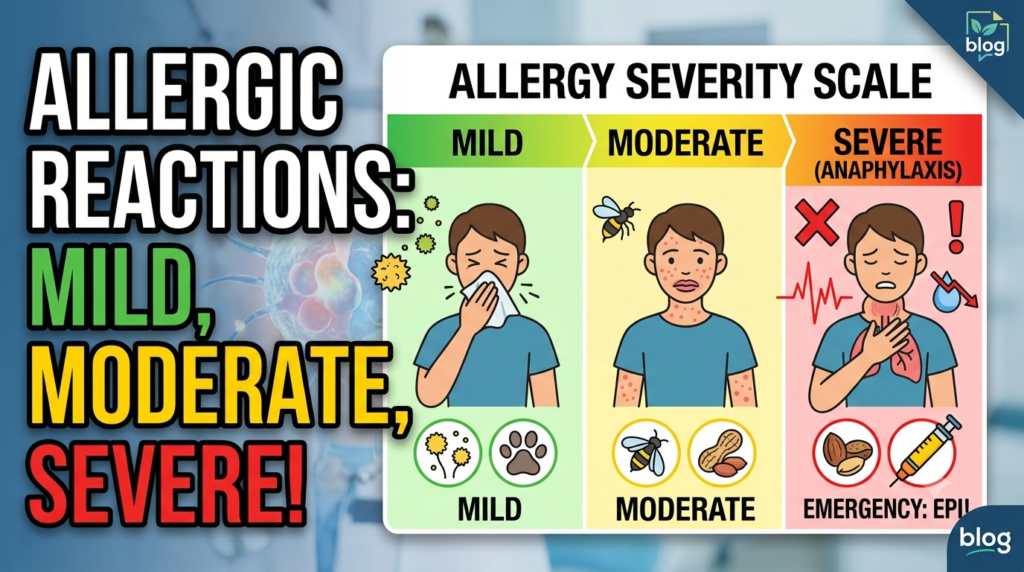
Allergic Reaction Symptoms: Signs, Severity, and When to Seek Help

Allergic reactions can affect different parts of the body and may range from mild symptoms such as sneezing and itching to severe, life-threatening reactions such as anaphylaxis. Recognizing the symptoms early is important because the severity of an allergic reaction can change quickly. Understanding common signs and knowing when medical attention is needed can help

Allergic Reaction Symptoms: Signs, Severity, and When to Seek Help Read More »

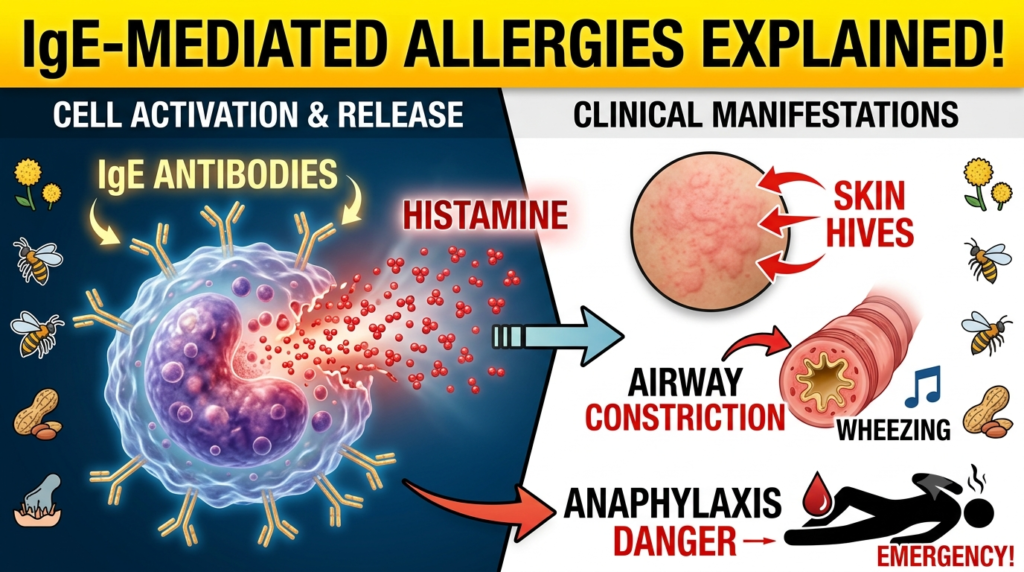
Types of Allergic Reactions

Allergic reactions occur when the immune system overreacts to a harmless substance known as an allergen. Common allergens include pollen, dust mites, certain foods, medications, insect stings, and pet dander. The severity of allergic reactions varies from person to person, ranging from mild symptoms that cause discomfort to severe reactions that can become life-threatening. Understanding

Types of Allergic Reactions Read More »

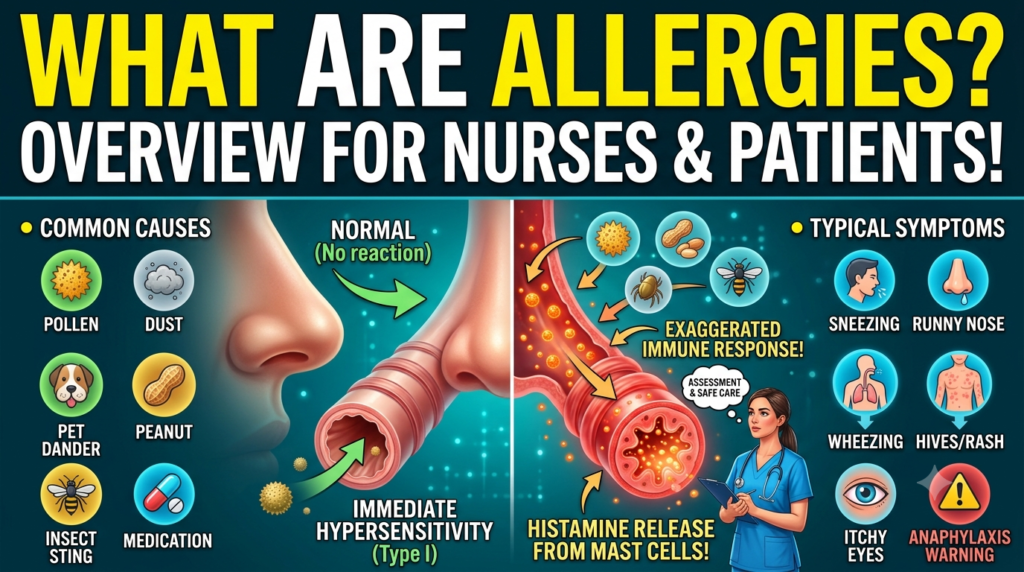
What Are Allergies?

Allergies are among the most common immune system disorders worldwide. They occur when the body’s immune system reacts excessively to substances that are normally harmless, such as pollen, dust, animal dander, certain foods, insect stings, or medications. These substances are called allergens. While the immune system is designed to protect the body from harmful pathogens,

What Are Allergies? Read More »

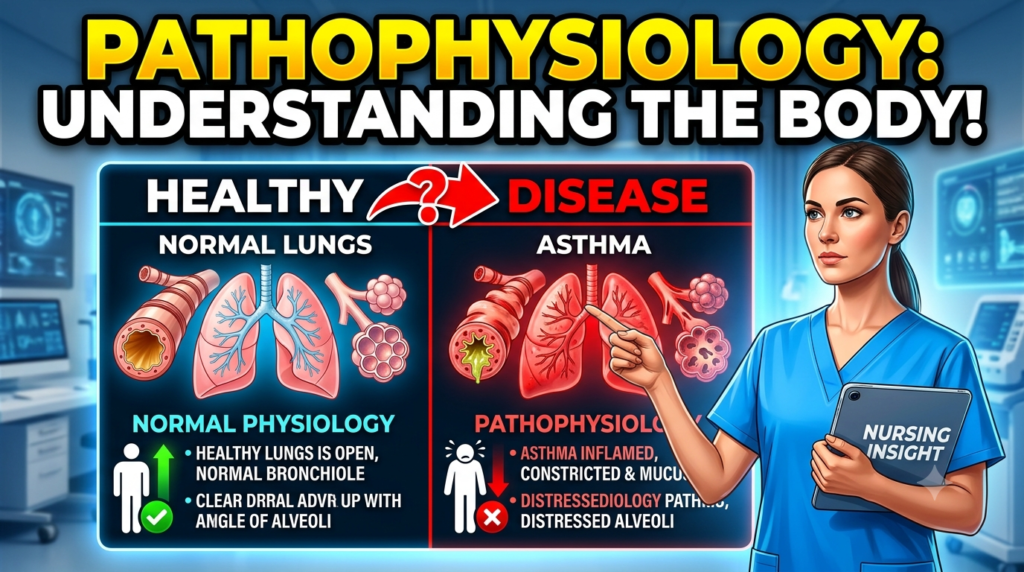
Pathophysiology

Pathophysiology is the study of how diseases and disorders affect the normal functioning of the human body. It explains the biological and physiological changes that occur when cells, tissues, organs, or body systems are damaged by disease, injury, or infection. Understanding pathophysiology helps nursing students and healthcare professionals recognize disease processes, interpret clinical manifestations, and

Pathophysiology Read More »

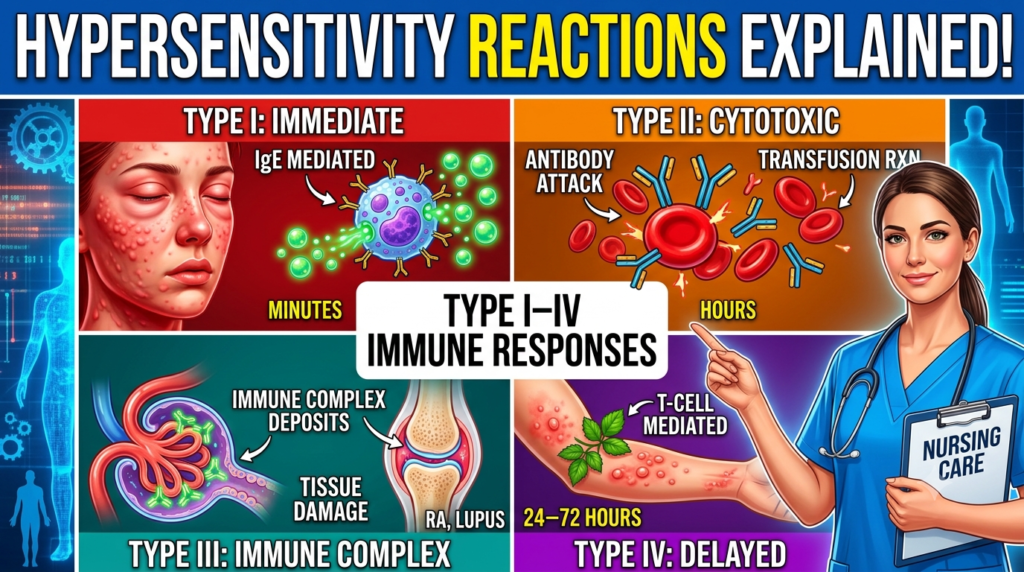
Types of Hypersensitivity Reactions (Type I–IV)

Topic: Pathophysiology Hypersensitivity reactions are exaggerated or inappropriate immune responses that occur when the body’s immune system reacts to substances that are normally harmless or reacts excessively to certain antigens. Although the immune system is designed to protect the body from harmful pathogens, hypersensitivity reactions can damage healthy tissues and lead to a variety of

Types of Hypersensitivity Reactions (Type I–IV) Read More »

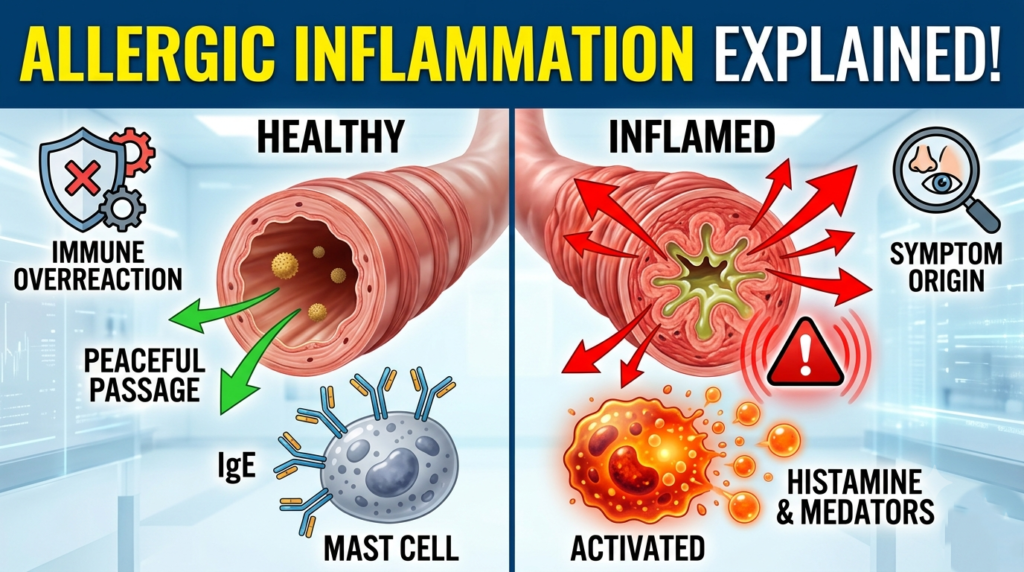
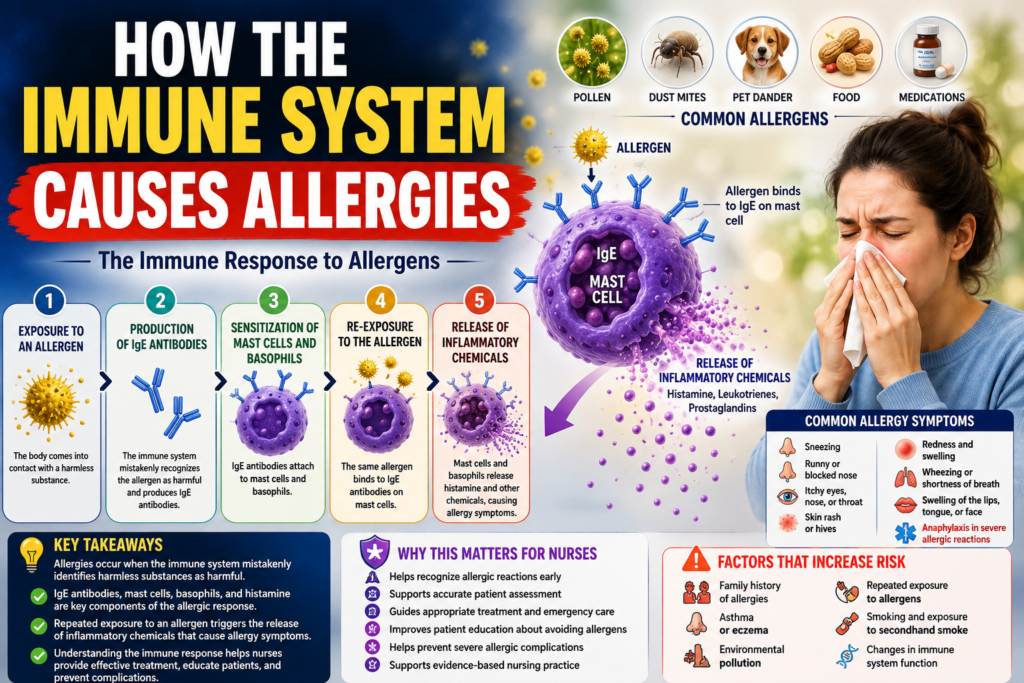
How the Immune System Causes Allergies

Topic: Pathophysiology The immune system protects the body from harmful microorganisms such as bacteria, viruses, fungi, and parasites. It identifies and destroys these harmful invaders to maintain health and prevent disease. However, in some individuals, the immune system mistakenly identifies harmless substances, known as allergens, as dangerous. This abnormal response leads to an allergic reaction.

How the Immune System Causes Allergies Read More »